The photos above were taken by me yesterday when I visited the Erith Quarry development. You can see the view from the centre of the site, where the site offices and visitor centre are currently located. Suffice to say that the views of the River Thames and the surrounding area will be stunning when the construction work is completed. The site is utterly huge - far larger in area that either the excellent Erith Park site, or the nearby Tower Hill development. It is being undertaken on the site of the former loam and gravel pit that is located on the parcel of land that is outlined by Fraser Road in Erith, Carlton Road, and Bexley Road in Northumberland Heath. At present the contractors have cleared the site, and have begun work on a small number of houses at the Fraser Road end of the site, but most of the building work is yet to begin. The up - market development will consist of 130 apartments, 470 family sized houses and a new primary school. I was given VIP treatment with an escort of a very helpful lady from the developers P.R company for the duration of my visit. Local historian Ken Chamberlain was on site with small display highlighting the history of the quarry site, and Teresa O'Neill, leader of Bexley Council (who some have, rather unkindly in my opinion referred to as Bexley's own incarnation of Jabba the Hutt) and an entourage also visited - I managed to avoid her, as many readers will know, I am not exactly her greatest fan, and I did not want to get into any awkward situations. The event was very well handled, despite the unsettled weather which promised rain, which for the most part failed to deliver, fortunately. One thing I observed, was that the main site entrance for the open day was in Carlton Road, Northumberland Heath; I feel that for any future events, it would aid accessibility if the other entrance in Fraser Road at the Pom Pom was opened - this is more easily accessed by many local people, and parking is more readily available. The event was very well organised, though as I arrived right at the beginning I am unable to comment as to how many local people turned up over the course of the entire open day. I had the opportunity to talk to one of the architects, and found her to be very conversant with local problems and concerns over the development. It sounds to me like it should be a very positive addition to the local community - as long as issues such as traffic flows and parking can be addressed, and that the ongoing problems with waste and foul water drainage that have blighted nearby areas such as Sandcliff Road can be resolved. More on activity in Carlton Road and the junction with Brook Street later - who says I don't plan these things?

The photo above was taken by one of my anonymous sources - it shows the instant the Police swooped on a local drug dealer who had parked up his Range Rover Evoque in the close just off Erith High Street, next to the WDS Signs facility. Apologies for the slightly below par picture quality - the photo was taken on a mobile phone through a double glazed window. I have tidied it up somewhat from the original. I am glad to see that the Police are taking the local drugs threat seriously. Quite why a drug dealer would use such a noticeable vehicle as a bright white Range Rover Evoque when carrying out their illegal activities is beyond me. One would have thought that discretion and subtlety would have been the order of the day, but it would seem not. My informant tells me that the expensive car was left in place after the drug dealer was arrested and taken to Bexleyheath Police station; it is ironic that there is every chance that the car could well end up subsequently being stolen - which is not beyond the realms of possibility. Still, it is one alleged dealer off the streets for now.
Christ Church Erith is quite unusual in that it has an active and well staffed team of bell - ringers - they practice every Monday evening - you can usually hear them at around 8.30pm, although the bells are muffled during practice sessions. The BBC recently surveyed delegates at the Central Council of Church Bell Ringers, and three quarters said it had become harder to recruit new members in the past decade, while eight in 10 said it was difficult to engage under-21s. Pete McCoy, the tower captain at St Mary's Church in Walkley in Sheffield - who met his wife Judith bell ringing - said teenagers today have more distractions than when he was young. He said: "There weren't so many things for a teenager or young person to do as there are today. And is it cool to ring bells? I think it is. But does everyone else?" Dickon Love, the Tower Captain at St James Garlickhythe in London, whose job is to direct the ringers, said young people viewed bell ringing in a similar bracket to Morris dancing – a pursuit for old men with beards. But he said that the hobby was stimulating and a good way to meet new friends. "Bell ringing is exciting for the mind," he said. "It's the best of form of heavy metal; it's a big loud noise, it keeps you fit, there's a competitive element as well. And it's a very social thing to do - after each practice without fail you can find us down the local pub." The Ring in 2000 campaign by the Central Council of Church Bell Ringers aimed to have every church tower in the country equipped with its own local band to ring in the new year and sparked a temporary boost in numbers. But the crisis has now become so bad that many campanologists are forced to dash from tower to tower on Sundays to ring the bells of several churches. Youngsters who do become bellringers through the Scouts, Guides or the Duke of Edinburgh often give up the hobby when they leave for university. You can see a short video featuring the Christ Church bell ringers below. Leave a comment below, or Email me at hugh.neal@gmail.com.
News was released this week that OFSTED have carried out unannounced spot checks on a number of local secondary schools, following the recent riot in Northumberland Heath, in which over a hundred local school children were involved. The OFSTED press release stated that “Ofsted inspected a number of schools without notice following reports of a disturbance involving a large number of children. These inspections were conducted to check on the school’s approach to promoting good behaviour, including assessing how well leaders and staff manage pupils’ behaviour and the extent to which the school’s culture promotes and supports good behaviour. We will write to the schools shortly and these monitoring letters will be published on our website.” From what I have heard, pupils from Erith School, St. Columba's and Bexleyheath School were involved in the riot, which is thought to have been the largest civil disturbance in the Borough for a century. There is currently also some debate about intimidating behaviour happening in Bexleyheath Broadway. There have been reports of groups of youths congregating, and aggressive bike riding on the pedestrianised areas of the shopping centre. I understand that Bexley Council are contemplating issuing a Public Space Protection Order. Public Space Protection Orders, or PSPOs, came into existence last year under the Anti-social Behaviour, Crime and Policing Act 2014. Similar to the much-derided anti-social behaviour orders (Asbos), PSPOs allow for broad powers to criminalise behaviour that is not normally criminal. But where asbos were directed at individuals, PSPOs are geographically defined, making predefined activities within a mapped area prosecutable. Unlike Asbo’s, which have to be issued by courts on the recommendation of the Police, PSPO’s can be issued by private security firms working on behalf of a council or property management company. Greater public awareness on PSPOs is needed – in part because they effectively outsource policing to private security, allowing “an authorised person” to issue fines and initiate prosecution. Furthermore, fines can be given out where there may have been a contravention, not where one has definitely taken place; so the process is a bit like a forced plea bargain – if a private security guard, potentially employed by a property developer, thinks you may have violated the PSPO, you must pay the fine or face prosecution. The suspicious part of me wonders if Bexley Council are using the PSPO as a revenue raiser, in a similar way that they already do with the Danson Lane Box Junction, where drivers who become involuntarily forced into the cross hatched area at the junction get automated fines – Malcolm Knight of Bexley is Bonkers covered this legalised scam last Sunday, which you can read here. The situation in Bexleyheath Broadway is somewhat more complex, as there are frequent fights and altercations with school children – we come back again to the recent issue of the Northumberland Heath riot, and how its’ roots began in Bexleyheath Broadway. Residents have expressed fears that unruly behaviour by gangs of teenagers is becoming increasingly common, and that the police are powerless to intervene. If a PSPO is enacted on the Broadway area, Loitering in large groups and ‘behaving in a manner which causes, or is likely to cause, harassment, alarm or distress to another person’ could all be banned under the proposed order, as could cycling or using a skateboard, roller blades, hover boards or any similar device in pedestrianised areas. “Failure to comply with the PSPO without a reasonable reason for doing so is a breach of the order and a criminal offence. Significant and/or persistent breaches of the order could lead to a fixed penalty notice being issued or a summons to court.” A council spokesperson explained to a reporter from the Bexley Times. It really depends on how the whole PSPO affair is handled. I have misgivings that private security contractors can be the equivalent of judge, jury, and executioner in issuing enforcement orders under the aegis of a PSPO. It does sound like Bexley Council are once again mixing their motivations; the ostensible desire to increase discipline and law and order in Bexleyheath Broadway may actually mask what the Council see as a prime money making exercise. Time will no doubt tell.


Popular local band The Priff Sticks are looking for a new guitarist. Vocalist and frontman Ian "The ReV" Doherty writes:- "Sadly Steve, after 7 years in the band, has decided to take a break from playing so The PRiff's are looking for a new guitarist to share lead and rhythm guitar. Steve's honouring the gigs we have till Christmas so we're going to use that time to find someone new and be ready for the beginning of 2017. Current set list is about 35 songs and we only really tend gig at weekends due to work commitments. Ideally the new guitarist will be within travelling distance of Dartford (as that's where we're based), not be a pretentious twiddler, have sense of humour, have a broad musical knowledge and of course have own gear and transport. We have our own rehearsal space, PA, full lighting rig and band van. We'd like to take this opportunity to thank Steve "The Noize" for being in The PRiff's, he is a good friend and a great guitarist and we're really going to miss his company and playing with him and wish him all the very best for the future!...although he's yet to explain why his decision to leave the band "coincided" with Bros announcing their comeback tour..."
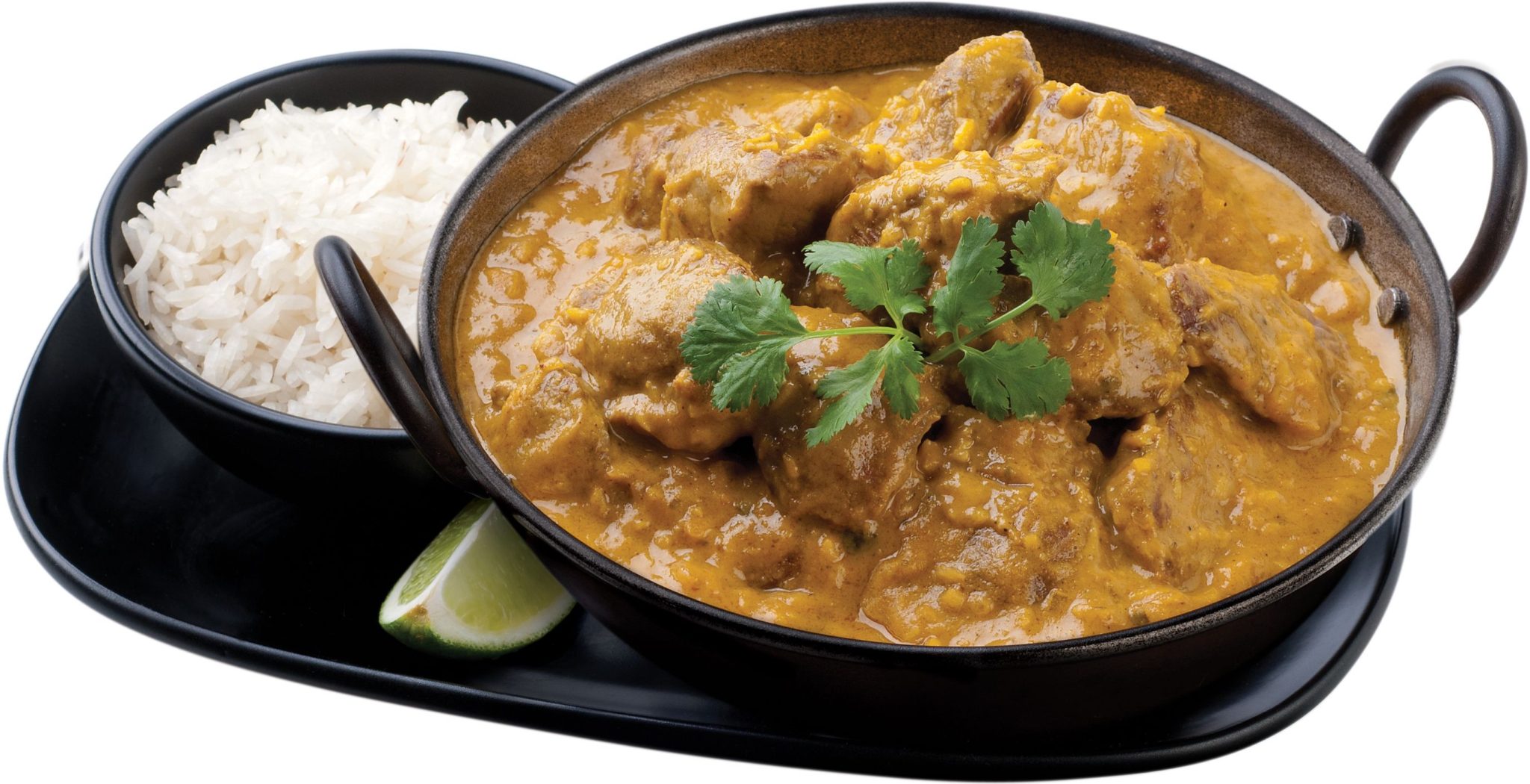
As the News Shopper have been eager to tell readers, it has been National Curry Week for the last week. I know many locals are very pleased that the team behind the Mambocino cafe and coffee bar in Erith Riverside Shopping Centre are now in the process of opening a fish and steak restaurant in the retail unit opposite the Argos store, which should be open in the not too distant future. Several readers have previously expressed to me that they also would like to see a proper "eat in" Indian restaurant in the town. I must admit that I have been giving quite a bit of thought, and some online research on the subject of the British Indian Restaurant. There were six 'Indian' restaurants in the whole of Britain in 1939 - three in London (one of which, the Halal in St Mark Street E1, is a former haunt of mine), and one each in Oxford, Cambridge and Manchester. In 2015 there are roughly 8,500. Eighty five percent are Bangladeshi-owned and with mainly Bangladeshi personnel. They have an annual market turnover of £2.5bn, representing a little over ten percent of all restaurant business in UK. There is direct employment at the curry restaurant of over 100,000 personnel. with an indirect additional employment in supply and related industries for a further 50,000 plus. The Bangladeshi run “Indian” restaurant has become a well – loved feature of many British high street - they offer their diners a large and comprehensive range of curries, many of which are of Indian origin, if somewhat modified over time, and engineered to suit local tastes. You will find a number of ‘restaurant favourites’ such as Samosas, Onion Bhaji, Kebabs, Chicken Tikka and its popular derivative Chicken Tikka Masala curry. Other famous curries included Korma, Bhuna, Pasanda, Jalfrezi, Byriani and Pilaf. The have developed a rapid production method for serving their food. The authentic curries and accompaniments of Bangladesh have much in common with those of Bengal, and indeed the whole of India, the spicing is distinctive and subtle. Beef is the prevalent meat, and duck is popular. Tropical fish and exotic vegetables (now available in the UK from many supermarkets, as well as specialist stores) form an indispensable part of the Bengali/Bangladeshi diet. They use mustard and poppy seed extensively. Their important five spice mixture, Panch Phoron, has differences as subtle as their spelling. For example, in Calcutta, Bengal’s capital, it will include white cumin, fennel, fenugreek, mustard or celery seed and wild onion. In Dhaka, Bangladesh’s capital, celery seed would not be used, but black cumin and aniseed would replace wild onion and fennel. Bangladeshi Garam Masala will, like as not, contain chilli. Surprisingly perhaps, Bangladeshis adore the chilli, and it appears in many forms, in many recipes, not so as to swamp the delicacy of the spicing - rather to punctuate it. Some curries may use as little as three of four spices, and the effect is remarkable. Coriander, turmeric and cassia , for example, are all that is needed to produce the Bangladeshi version of that old favourite, Bhuna, whilst their versions of Korma are creamy and mild. Yet the results are neither tame or bland. Bangladesh has a unique range of curry cooking. Nowhere else on the subcontinent has such an array of tastes - sour, bitter, sweet, hot, savoury, mild, pungent and fragrant. Bangladeshis adore all of these tastes, which they achieve by using tamarind and sour fruits, bitter vegetables, molasses, chillies and uniquely subtle blends of spices. Creamy curries, contrast with dry stir-fries, fluffy rice, with chewy breads. Sometimes cooked with nothing more than garlic with, a sprinkling of whole spice seeds and chilli, these recipes achieve great culinary heights, and are ideal for the health-conscious cook. Many British 'Indian' restaurants operate to a formula which was pioneered in the late 1940s. In those early restaurants, a way had to be found to deliver a variety of curries, without an unreasonable delay, from order to table. Since all authentic Indian recipes require hours of cooking in individual pots, there was no guarantee that they would even be ordered. So cubed meat, chicken or potatoes, dhal and some vegetables were lightly curried and chilled, and a large pot of thick curry gravy, a kind of master stock, was brewed to medium-heat strength. To this day, portion by portion, on demand, these ingredients are reheated by pan-frying them with further spices and flavourings. At its simplest, a Medium Chicken Curry, that benchmark of middle ground, is still on many menus, though sometimes disguised as Masala, and requires no more than a reheat of some gravy with some chicken. For instance, take a typical mixed order for a couple at a table for two. She wants Chicken Korma (fry a little turmeric, coriander and cumin, add six pieces of chicken, add a ladleful of curry gravy, plenty of creamed coconut, almonds maybe and a little cream – result, the additions make it mild and creamy-golden in colour), and with it she'll have Vegetable Dhansak (fry some cumin seeds, dry methi leaves, chopped onions, tomato, red and green bell pepper with the gravy, add dhal and some cooked veg – result, colourful, and still medium-strength). He wants Lamb Korma (as for the chicken recipe, instead using pre – cooked Lamb), and he wants Prawn Vindaloo (fry spices and chilli powder, add the gravy which at once goes red and piquant, then cooked peeled prawns, fresh tomato and potato, simmer and serve). Maybe they will also take a Sag Paneer (fry cumin seeds, some thawed creamed spinach and premade crumbled paneer together, add fresh coriander – and that is it). One cook can knock all these up, simultaneously, in five pans, within minutes. Rice is precooked, breads and tandoori items made to order by a different, usually junior chef. The order is thus successfully completed. Thus the menu can be very long, with an almost unlimited variety of dishes, sometimes numbered, sometimes heat-graded, mild, medium and hot, hottest, and any dish is available in lamb, chicken, prawn, king prawn, and most vegetables, too. That is the formula, and its perpetrator is the standard curry house. Just because this is not authentic as you would find in an Indian or Bangladeshi household does not make it bad. It can be, and variously is, done well. If you consult YouTube you will find dozens of videos showing you how to prepare both authentic Indian curries, and also BIR (British Indian Restaurant) curries. Personally I prefer cooking my curries from scratch, using individual spices – I certainly don’t use any pre – prepared cooking sauces, as making it the authentic way is not just a lot tastier, it is also far cheaper too.
The following historical piece was sent to me by regular Maggot Sandwich reader and occasional contributor Brian. The article was originally published back in 1925 in the Kentish Times - it was written by "Tumbler" Bell, the pioneering sportsman and union activist of late Victorian times who became a chronicler of old Erith in the pages of the then local newspaper. He wrote:- "Prior to the establishment of Messrs Easton and Anderson’s Engineering Works on the river bank at the bottom of what is now known as Manor-road, Erith, what was known as the Round House stood on the site. A short distance away was Anchor Bay Farm, occupied by old Mr and Mrs Harry Graham, who saw the rise, decline and passing of both the engineering works and Messrs J R White and Co’s brickfields. They lived to a ripe old age, deservedly respected by all who knew them. To provide housing accommodation for the workmen, the houses in Appold-street, Wheatley-terrace, James Watt-place, and Rumford-place were built, and owned by the proprietors of the engineering works. Houses were also built on one side of Manor-road, including the Royal Alfred public-house. After sundown the locality was very dark, the exception being the well-lighted Royal Alfred, consequently the spot for congregation was the “New Light”, and by that name the house was generally known. The youths of the neighbourhood used to meet outside this house to discuss Rugby football, quoits, running, etc. There were English, Irish, Scotch, and Welsh lads. Many could play fifes, whistles, etc. A fife and drum band was formed; practice was allowed in the “Shant” (a long, narrow wood building, in which Easton and Anderson’s workmen took meals). When proficient, the band paraded the streets, and a good show it made. All went well till the day it was discovered that the side drummer’s mother had converted the drum into a cinder sieve. The band broke up as a consequence. The “New Light” was used by workmen from both the works and the brickfields. Lively arguments took place as to who could run the faster, which usually ended with the men taking off coats, waistcoats, and boots, toeing a line in the centre of the road, and racing each other along the road, round the houses, or round the backs in the brickfield. That soon started the running craze, and young brickmakers and foundry workers were soon finding quiet spots for practising to prepare for racing each other at a given distance. When talking to admirers or critics some of the runners boasted of remarkable running feats done. One evening one of them visited the “New Light”. After drinking a quantity of liquor, he began to boast, and got so speedy that those present deliberately doubted his statements. “How far is it from the ‘Light’, up Manor-road, to Beadle’s Bridge, round Crescent-road, to the bridge at Whittingham’s shop, and back to the ‘Light’, and how long would it take you to do it?” He told them. Challenged, he took off coat, waistcoat, and boots, and toed the line in the road. Watch in hand, the time-keeper and starter got him off, and immediately stopped the watch. All went back into the “pub”, to wait. After a time the runner stumbled into the bar, panting heavily. The judge showed him the watch, and said, “You’ve done it in no time.” “If I hadn’t fallen down twice, I’d have done it much quicker,” said the runner. Amusements would be arranged to take place on the same day as major events. A farmer’s four-wheeled waggon was stood opposite the “pub”, to be used as a platform for singing contests, bobbing for apples, eating treacled rolls, etc. A well-greased pole with a leg of mutton tied at the top was erected for a climbing competition. Running races and other items took place. On these occasions Don Andrews (a local comic singer) would climb into the lamp frame at the top of the lamp standard nearby, and recite the words of a ditty, and finish each verse with “Sing, brethren, sing,” and the assembled crowd would join “Don” and sing wholeheartedly."
The end video this week is somewhat timely; it was sent to me late last night by a long - time Maggot Sandwich reader who chooses to remain anonymous. The short video, which has no sound, was taken by his car dash cam video recorder yesterday evening as he drove along Parsonage Manorway, then turned right into Brook Street. What happened next is recorded in the short clip below. Suffice to say that the two scumbags riding the motorcycle without helmets, and undoubtedly without any other technicalities such as a licence, insurance, or indeed being old enough to legally ride are members of the local criminal gang of illegal bike riders. I am somewhat disappointed to observe that from the evidence in the video, both seemed to escape any serious injury. They are a danger to themselves and others. It is now widely known that the scumbags deliberately don't wear crash helmets as they know the Police are forbidden from chasing riders minus protective equipment, and thus they use this to exploit the ruling to act in a completely irresponsible and criminal manner. If you recognise either of the young law breakers, drop me a line to hugh.neal@gmail.com and I will pass the information on to the local Police for action. Someone must recognise them.


Popular local band The Priff Sticks are looking for a new guitarist. Vocalist and frontman Ian "The ReV" Doherty writes:- "Sadly Steve, after 7 years in the band, has decided to take a break from playing so The PRiff's are looking for a new guitarist to share lead and rhythm guitar. Steve's honouring the gigs we have till Christmas so we're going to use that time to find someone new and be ready for the beginning of 2017. Current set list is about 35 songs and we only really tend gig at weekends due to work commitments. Ideally the new guitarist will be within travelling distance of Dartford (as that's where we're based), not be a pretentious twiddler, have sense of humour, have a broad musical knowledge and of course have own gear and transport. We have our own rehearsal space, PA, full lighting rig and band van. We'd like to take this opportunity to thank Steve "The Noize" for being in The PRiff's, he is a good friend and a great guitarist and we're really going to miss his company and playing with him and wish him all the very best for the future!...although he's yet to explain why his decision to leave the band "coincided" with Bros announcing their comeback tour..."
As the News Shopper have been eager to tell readers, it has been National Curry Week for the last week. I know many locals are very pleased that the team behind the Mambocino cafe and coffee bar in Erith Riverside Shopping Centre are now in the process of opening a fish and steak restaurant in the retail unit opposite the Argos store, which should be open in the not too distant future. Several readers have previously expressed to me that they also would like to see a proper "eat in" Indian restaurant in the town. I must admit that I have been giving quite a bit of thought, and some online research on the subject of the British Indian Restaurant. There were six 'Indian' restaurants in the whole of Britain in 1939 - three in London (one of which, the Halal in St Mark Street E1, is a former haunt of mine), and one each in Oxford, Cambridge and Manchester. In 2015 there are roughly 8,500. Eighty five percent are Bangladeshi-owned and with mainly Bangladeshi personnel. They have an annual market turnover of £2.5bn, representing a little over ten percent of all restaurant business in UK. There is direct employment at the curry restaurant of over 100,000 personnel. with an indirect additional employment in supply and related industries for a further 50,000 plus. The Bangladeshi run “Indian” restaurant has become a well – loved feature of many British high street - they offer their diners a large and comprehensive range of curries, many of which are of Indian origin, if somewhat modified over time, and engineered to suit local tastes. You will find a number of ‘restaurant favourites’ such as Samosas, Onion Bhaji, Kebabs, Chicken Tikka and its popular derivative Chicken Tikka Masala curry. Other famous curries included Korma, Bhuna, Pasanda, Jalfrezi, Byriani and Pilaf. The have developed a rapid production method for serving their food. The authentic curries and accompaniments of Bangladesh have much in common with those of Bengal, and indeed the whole of India, the spicing is distinctive and subtle. Beef is the prevalent meat, and duck is popular. Tropical fish and exotic vegetables (now available in the UK from many supermarkets, as well as specialist stores) form an indispensable part of the Bengali/Bangladeshi diet. They use mustard and poppy seed extensively. Their important five spice mixture, Panch Phoron, has differences as subtle as their spelling. For example, in Calcutta, Bengal’s capital, it will include white cumin, fennel, fenugreek, mustard or celery seed and wild onion. In Dhaka, Bangladesh’s capital, celery seed would not be used, but black cumin and aniseed would replace wild onion and fennel. Bangladeshi Garam Masala will, like as not, contain chilli. Surprisingly perhaps, Bangladeshis adore the chilli, and it appears in many forms, in many recipes, not so as to swamp the delicacy of the spicing - rather to punctuate it. Some curries may use as little as three of four spices, and the effect is remarkable. Coriander, turmeric and cassia , for example, are all that is needed to produce the Bangladeshi version of that old favourite, Bhuna, whilst their versions of Korma are creamy and mild. Yet the results are neither tame or bland. Bangladesh has a unique range of curry cooking. Nowhere else on the subcontinent has such an array of tastes - sour, bitter, sweet, hot, savoury, mild, pungent and fragrant. Bangladeshis adore all of these tastes, which they achieve by using tamarind and sour fruits, bitter vegetables, molasses, chillies and uniquely subtle blends of spices. Creamy curries, contrast with dry stir-fries, fluffy rice, with chewy breads. Sometimes cooked with nothing more than garlic with, a sprinkling of whole spice seeds and chilli, these recipes achieve great culinary heights, and are ideal for the health-conscious cook. Many British 'Indian' restaurants operate to a formula which was pioneered in the late 1940s. In those early restaurants, a way had to be found to deliver a variety of curries, without an unreasonable delay, from order to table. Since all authentic Indian recipes require hours of cooking in individual pots, there was no guarantee that they would even be ordered. So cubed meat, chicken or potatoes, dhal and some vegetables were lightly curried and chilled, and a large pot of thick curry gravy, a kind of master stock, was brewed to medium-heat strength. To this day, portion by portion, on demand, these ingredients are reheated by pan-frying them with further spices and flavourings. At its simplest, a Medium Chicken Curry, that benchmark of middle ground, is still on many menus, though sometimes disguised as Masala, and requires no more than a reheat of some gravy with some chicken. For instance, take a typical mixed order for a couple at a table for two. She wants Chicken Korma (fry a little turmeric, coriander and cumin, add six pieces of chicken, add a ladleful of curry gravy, plenty of creamed coconut, almonds maybe and a little cream – result, the additions make it mild and creamy-golden in colour), and with it she'll have Vegetable Dhansak (fry some cumin seeds, dry methi leaves, chopped onions, tomato, red and green bell pepper with the gravy, add dhal and some cooked veg – result, colourful, and still medium-strength). He wants Lamb Korma (as for the chicken recipe, instead using pre – cooked Lamb), and he wants Prawn Vindaloo (fry spices and chilli powder, add the gravy which at once goes red and piquant, then cooked peeled prawns, fresh tomato and potato, simmer and serve). Maybe they will also take a Sag Paneer (fry cumin seeds, some thawed creamed spinach and premade crumbled paneer together, add fresh coriander – and that is it). One cook can knock all these up, simultaneously, in five pans, within minutes. Rice is precooked, breads and tandoori items made to order by a different, usually junior chef. The order is thus successfully completed. Thus the menu can be very long, with an almost unlimited variety of dishes, sometimes numbered, sometimes heat-graded, mild, medium and hot, hottest, and any dish is available in lamb, chicken, prawn, king prawn, and most vegetables, too. That is the formula, and its perpetrator is the standard curry house. Just because this is not authentic as you would find in an Indian or Bangladeshi household does not make it bad. It can be, and variously is, done well. If you consult YouTube you will find dozens of videos showing you how to prepare both authentic Indian curries, and also BIR (British Indian Restaurant) curries. Personally I prefer cooking my curries from scratch, using individual spices – I certainly don’t use any pre – prepared cooking sauces, as making it the authentic way is not just a lot tastier, it is also far cheaper too.
The following historical piece was sent to me by regular Maggot Sandwich reader and occasional contributor Brian. The article was originally published back in 1925 in the Kentish Times - it was written by "Tumbler" Bell, the pioneering sportsman and union activist of late Victorian times who became a chronicler of old Erith in the pages of the then local newspaper. He wrote:- "Prior to the establishment of Messrs Easton and Anderson’s Engineering Works on the river bank at the bottom of what is now known as Manor-road, Erith, what was known as the Round House stood on the site. A short distance away was Anchor Bay Farm, occupied by old Mr and Mrs Harry Graham, who saw the rise, decline and passing of both the engineering works and Messrs J R White and Co’s brickfields. They lived to a ripe old age, deservedly respected by all who knew them. To provide housing accommodation for the workmen, the houses in Appold-street, Wheatley-terrace, James Watt-place, and Rumford-place were built, and owned by the proprietors of the engineering works. Houses were also built on one side of Manor-road, including the Royal Alfred public-house. After sundown the locality was very dark, the exception being the well-lighted Royal Alfred, consequently the spot for congregation was the “New Light”, and by that name the house was generally known. The youths of the neighbourhood used to meet outside this house to discuss Rugby football, quoits, running, etc. There were English, Irish, Scotch, and Welsh lads. Many could play fifes, whistles, etc. A fife and drum band was formed; practice was allowed in the “Shant” (a long, narrow wood building, in which Easton and Anderson’s workmen took meals). When proficient, the band paraded the streets, and a good show it made. All went well till the day it was discovered that the side drummer’s mother had converted the drum into a cinder sieve. The band broke up as a consequence. The “New Light” was used by workmen from both the works and the brickfields. Lively arguments took place as to who could run the faster, which usually ended with the men taking off coats, waistcoats, and boots, toeing a line in the centre of the road, and racing each other along the road, round the houses, or round the backs in the brickfield. That soon started the running craze, and young brickmakers and foundry workers were soon finding quiet spots for practising to prepare for racing each other at a given distance. When talking to admirers or critics some of the runners boasted of remarkable running feats done. One evening one of them visited the “New Light”. After drinking a quantity of liquor, he began to boast, and got so speedy that those present deliberately doubted his statements. “How far is it from the ‘Light’, up Manor-road, to Beadle’s Bridge, round Crescent-road, to the bridge at Whittingham’s shop, and back to the ‘Light’, and how long would it take you to do it?” He told them. Challenged, he took off coat, waistcoat, and boots, and toed the line in the road. Watch in hand, the time-keeper and starter got him off, and immediately stopped the watch. All went back into the “pub”, to wait. After a time the runner stumbled into the bar, panting heavily. The judge showed him the watch, and said, “You’ve done it in no time.” “If I hadn’t fallen down twice, I’d have done it much quicker,” said the runner. Amusements would be arranged to take place on the same day as major events. A farmer’s four-wheeled waggon was stood opposite the “pub”, to be used as a platform for singing contests, bobbing for apples, eating treacled rolls, etc. A well-greased pole with a leg of mutton tied at the top was erected for a climbing competition. Running races and other items took place. On these occasions Don Andrews (a local comic singer) would climb into the lamp frame at the top of the lamp standard nearby, and recite the words of a ditty, and finish each verse with “Sing, brethren, sing,” and the assembled crowd would join “Don” and sing wholeheartedly."
The end video this week is somewhat timely; it was sent to me late last night by a long - time Maggot Sandwich reader who chooses to remain anonymous. The short video, which has no sound, was taken by his car dash cam video recorder yesterday evening as he drove along Parsonage Manorway, then turned right into Brook Street. What happened next is recorded in the short clip below. Suffice to say that the two scumbags riding the motorcycle without helmets, and undoubtedly without any other technicalities such as a licence, insurance, or indeed being old enough to legally ride are members of the local criminal gang of illegal bike riders. I am somewhat disappointed to observe that from the evidence in the video, both seemed to escape any serious injury. They are a danger to themselves and others. It is now widely known that the scumbags deliberately don't wear crash helmets as they know the Police are forbidden from chasing riders minus protective equipment, and thus they use this to exploit the ruling to act in a completely irresponsible and criminal manner. If you recognise either of the young law breakers, drop me a line to hugh.neal@gmail.com and I will pass the information on to the local Police for action. Someone must recognise them.