Work has finally begun on repairing the fire damaged roof of Moat House in James Watt Way Erith; as you may recall, back in early August there was an extremely serious fire which destroyed much of the roof and top floor of the very recently opened block of apartments for affordable rent. All of the residents of Moat House were successfully evacuated from the building, and have subsequently been put up in temporary accommodation. The fire story made the national news. Things went very quiet since then, and my attempts at investigation had met with very little in the way of new information. I had heard contradictory reports regarding the standard of the temporary accommodation that the tenants had been moved into, but even those stories turned out to have little in the way of new information. Now things are finally moving. Over the last week scaffolding has been erected around Moat House, and preparations have begun to repair the damage the fire has caused have begun, as you can see in the photo above - click on it for a larger view. Moat House is one of the most notable buildings in the centre of town, and the building is high enough to make itself a local landmark. It is also an important building in terms of providing much needed, high quality housing for affordable rent. Erith ranks only second to Dagenham in being the cheapest place to live within an hour's commute of central London. It is therefore becoming an increasingly attractive place to move to. I have to be honest, twenty years ago, when I first moved to Erith it was not because of the scenery or the local amenities, it was because it was very cheap at the time. That was in the days of the old hideous concrete monstrosity shopping centre, before Morrison's had opened on the old Erith Deep Water Wharf site, and when the only supermarket in the town was the small Co-Op in what is now the Farm Foods shop. Back then Erith had little in the way of amenities - what it did have however was extremely cheap housing. I was able to to buy Pewty Acres for a very reasonable £42,500 - a figure completely unimaginable now. The intervening two decades have seen Erith change hugely for the better - the refurbished Erith Riverside Shopping Centre, the Sports Centre, the Health Centre and the forthcoming new Fit4Less gym, to name but a handful of many other local amenities that have arrived in the town over the last two decades. Erith is now in a better shape than it has been for over fifty years - new homes and businesses are opening up left and right, and an influx of new people are moving into the area. There is a fair way still to go, but in my opinion things are getting steadily better, and there is more improvement to come. One mixed thing that is coming out of the gradual "gentrification" (I hate that term) of the town is that property prices are on the up. The News Shopper are reporting that research has looked at how difficult it is for someone in London to buy their own home without help from the ‘bank of mum and dad’ or a partner. It took the average salary in the capital of £34,320, banks lending buyers up to four times this figure and the average cost of a flat in London being £457,000. It then calculated that if prospective property owners put 10 per cent of their net salary away each month it would take a typical Londoner 121 years to buy that first home. Even saving 20 per cent of take-home pay, it would still take 60 years to get the keys to an average priced flat. In Bexley it would take just under 36 years to £94,311 – start now and you’d be there around this time in 2052. There currently is simply too little property being built; and whilst the London Borough of Bexley does not suffer from the absentee owner / investors as some other parts of London does, as the Elizabeth Line opens, property investors will undoubtedly hit on the area. Also on the subject of property, a tenancy fraud has been uncovered, and a man has been found guilty at Bexley Magistrates Court. The Bexley Times have reported that on October 19th, Faruq Hameed, of Bainbridge Road in Dagenham, pleaded guilty to two charges of dishonestly sub-letting his social housing flat at Cobham House, Boundary Street. Evidence collected by investigators showed Hameed was making a profit of almost £200 a month from one sub-letter, charging monthly rent of £650 - significantly higher than the £482.71 charged by Orbit Housing. An investigation By Orbit's fraud team revealed Hameed was not living at Cobham House but had been sub-letting it to others between May 2014 and December 2015, and from January 2015 to August 2015. For each charge Hameed was given six weeks imprisonment suspended for 12 months, to run concurrently; a community order for 80 hours of unpaid work and an Unlawful Profit Order for £4,800. He was also ordered to pay £500 costs and £80 victim surcharge, and a collection order was made. It would appear that the fraud did not take very long to detect and prosecute, which is good to know. I believe that Cobham House is part of the proposed Arthur Street redevelopment which Orbit plan once they have finished the second phase of the Erith Park development on the other side of Northend Road is completed. What do you think? Leave a comment below, or Email me at hugh.neal@gmail.com.


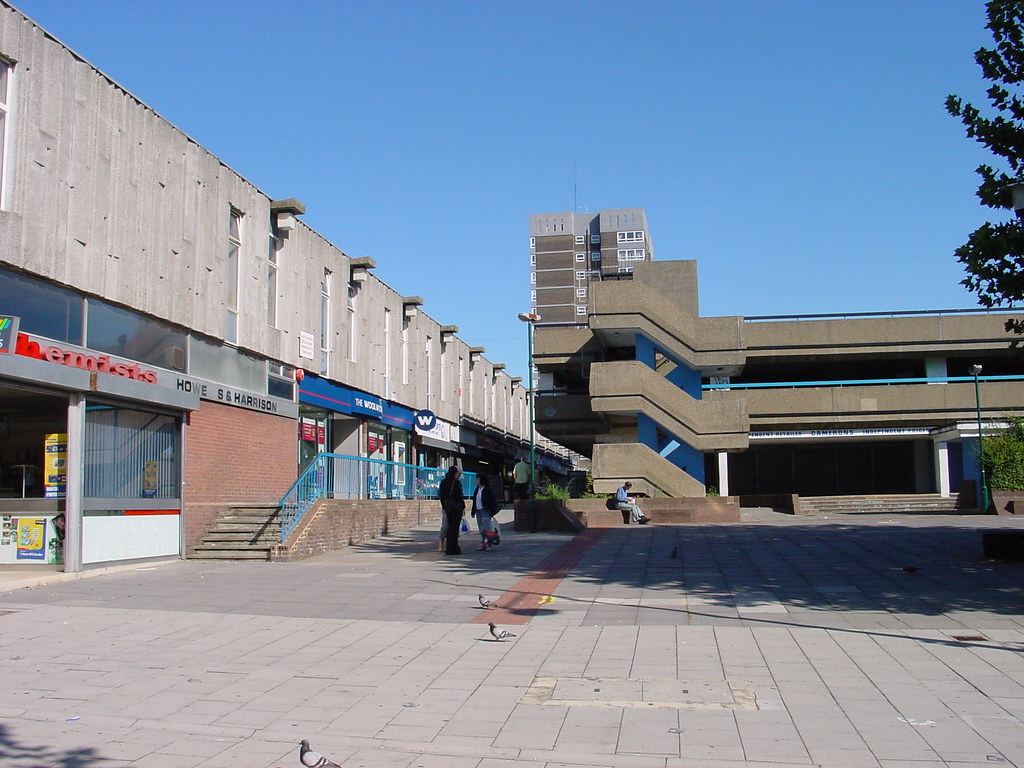
The photos above both shows Pier Road, Erith and how it looked in the past. Many thanks to the person who wishes to remain anonymous who sent me the upper black and white photo which shows the road in what appears to be the 1930's, and to Martin Barnes of the popular FaceBook group - Bexleyheath, Crayford and Erith, past, present and future, who sent me the lower colour photo of the same location, taken in 1966 shortly before the block of shops was demolished to make way for the much hated brutalist concrete shopping centre.
It would seem that some serious consequences have come from the recent riot that took place in Northumberland Heath, that made the national news. Schools inspector OFSTED have made unannounced inspections of several local secondary schools, and have published a pretty damning report on their findings. Inspectors visited St Catherine's Catholic School, St Columba’s Catholic Boys’ School, Woolwich Polytechnic School for Boys and Erith School. The report’s author, Sir Michael Wilshaw wrote:- “I found it difficult to comprehend how the individual schools did not pick up, at an early stage, that a significant number of students were plotting and planning a fight at the end of the school day. The pastoral and welfare systems of the schools should have been finely tuned to issues of this nature and particularly to the changing atmosphere in classrooms, playgrounds and corridors as students became excited and agitated by the prospect of trouble with other schools. All my experience has taught me that in good schools, when trouble is brewing, staff intervene and take action very quickly before events take over and escalate. This is worrying. Leaders do not ensure that the promotion of tolerance and respect towards pupils from different groups and cultures is effective. They do not ensure that staff consistently challenge pupils’ misconceptions and stereotypes. Good behaviour, both in and out of school, is not promoted well enough. Pupils do not receive enough information about how to keep themselves safe outside school. Leaders therefore do not fully prepare pupils for life in modern Britain.” The report follows the riot, which took place on the evening of the 19th September, involved more than a hundred youths; there were seven arrest made by the Police, and two people were taken to hospital as a result of injuries received during the mass disturbance. After extensive investigation, it would appear that the riot initially started in Bexleyheath Broadway. Even on a normal day, hundreds of pupils from schools in the area congregate here to catch buses home. There were rumours that teenagers from rival gangs were meeting to fight after the brother of one of them had been attacked. On school days, a couple of PCSO’s stand in the square to keep an eye on the children and to encourage them to move swiftly on to buses and out of the area. On the Monday of the riot, however, shopkeepers noticed a growing crowd of children. Soon skirmishes began, and when the PCSO’s and Police officers intervened, the youths used their free bus passes to travel to Northumberland Heath, where the main violence really kicked off. Initially it was thought to be inter – school rivalry, but subsequently evidence has come to light that there was almost certainly a racial element to the violence. Two local gangs – the Thamesmead based RA (Racial Attack) gang, which is composed of white youths were pitched against members of the Woolwich based black gang, T-Block. Several national tabloid papers have engaged in some pretty lurid speculation, but at the end of the day, the riot does not seem to be very much more than the usual lawless kids kicking off – aided by social media. Now the policing situation in Bexleyheath Broadway around the clock tower have changed markedly; instead of two PCSO's, there are ten PCSO's and full Police officers commanded by a sergeant who patrol the area from early afternoon until all of the school children have left the area. This must cost an utter fortune, and stopos officers from carrying out other duties. If you have any experiences or insight into this issue, please leave a comment below, or Email me at hugh.neal@gmail.com.
Bexley CAMRA have just published the following announcement regarding popular pub magazine "Draught Copy" :- "Given that "Draught Copy", which circulates to the majority of Bexley Branch pubs as well as to Maidstone/Mid-Kent and Gravesend and Darent Valley branches, urgently needs production hands, the editor has posted the item below in the latest pages. We would like to add our voices to the appeal for assistance. If you think either of the roles listed might be the thing for you or someone you know and you might like to try your hand at it then let us know in reply here and we will coordinate as appropriate. This is a first-class CAMRA campaigning opportunity. Last Copy? It is with considerable sadness that we tell you that with the departure of editor, Tim Mathews, to Emsworth, your free local newsletter must take a break until a new editor and production team can be mustered. Thank you for reading us over the many years that this publication has been available. Thank you, too, to our advertisers who have kept the production costs viable for us within the Maidstone & Mid-Kent branch. It has been an enjoyable time putting together Draught Copy and it will be missed. But we trust that this will only be a hiatus and not a funeral. If there are any members from the three branches Draught Copy represents, who would like to take on the role(s) of editor and typesetter, then do please let us know". It would be a real shame to see the end of "Draught Copy".
Many security organisations use high definition video cameras linked to sophisticated computer based facial recognition systems to detect and record the comings and goings of people in public areas and elsewhere. Facial recognition technology has improved markedly over the last decade. Although well-trained machines can recognise objects more quickly and accurately than most humans, they can’t handle change very well. Humans can still recognise the same faces even if they appear slightly differently, but for machines it’s more difficult because they process images by searching for particular features. Slight changes to images can mislead neural networks. Researchers from the Carnegie Mellon University and the University of North Carolina Chapel Hill announced. Results from their paper “Real and Stealthy Attacks on State-of-the-Art Face Recognition” were presented at last week’s ACM Conference on Computer and Communications Security in Austria. Criminals and ordinary people wishing to avoid being recognised simply had to be mistaken for some arbitrary face. For impersonation, the identity must be recognized as someone the system already knows. The team trained neural networks to recognize 2,622 celebrities, three researchers and two volunteers. During the trials, one of the researchers – a South Asian woman – was incorrectly read as a Middle Eastern man 88 per cent of the time. Her paper spectacles hoodwinked the artificial intelligence into simply not recognising her. Impersonation is a little tricker. Although one male researcher wearing the paper glasses could pass as Milla Jovovich, an actress and supermodel, almost 90 per cent of the time, another male researcher had a hard time trying to impersonate Clive Owen, an actor – only succeeding around 16 per cent of the time. There isn’t anything special about the spectacles themselves. The frames were just printed on paper and overlaid on proper glasses. Obviously there are simpler ways to trick facial recognition systems. People can wear face masks or heavy makeup, but the authors of the report wanted to look for ways to trick the system inconspicuously, without tampering with the facial biometric software before or during the training process. “Facial accessories, such as eyeglasses, help make attacks plausibly deniable, as it is natural for people to wear them,” the security research team said.
Erith has cropped up a few times in the course of the greater history of the United Kingdom, most famously as the place where Alexander Selkirk – the real life “Robinson Crusoe” came ashore after being shipwrecked and living on a desert island. Something that until now has been less known is that Erith is thought by some historians from Bexley Local Studies and Archive Centre to have played a pivotal role in the Gunpowder Plot. In some information they released just in time for Guy Fawkes’ Night back in 2012, when they indicated that their research showed that in the summer of 1605, Erith Manor House, which was located on what is now Erith High Street, was rented under a pseudonym by Anne Vaux, the daughter of Lord William Vaux, the head of one of the wealthiest and most prominent Catholic families in the country at the time. Anne Vaux was known to arrange for safe houses to be made available for Catholic priests to hide up and hold underground church services – Catholics were widely persecuted in England at the time. Erith Manor House was considered an ideal location for Robert Catesby, Guy Fawkes and the other plotters against the King to hide up, as it had, according to Catesby “a secluded but convenient location” on the banks of the Thames, which had the added benefit of offering an easy escape route by boat, should the situation arise. What the plotters did not realise was that the intelligence service of the time was aware of them – spymaster Sir Anthony Standen, first assistant to Sir Francis Walsingham, who was then head of the English Secret Service, working directly for King James I, had broken up a plot (The Bye Plot – click here for more details) eighteen months before hand, and was now acutely aware that other Catholic activists had designs on the life of the Protestant monarch. Sir Anthony had informants all over the place, and soon became aware of the small group of men who were acting very suspiciously in and around Erith. Several of the plotters had also been seen in a number of taverns in Southwark, and it is possible that they were followed back to Erith, where their safe house was then discovered. When agents subsequently raided the house, the conspirators had already made their escape, and the place was deserted. Some of this is extrapolation from verified facts – it is certain that Anne Vaux did indeed rent Erith Manor House using the cover name Mrs Perkins, though it is not certain the Gunpowder Plotters did use it as their primary base of operations – there may well have been an underground Catholic church in the house, which in itself would have aroused suspicions. Unfortunately there is no opportunity for Erith Manor House to become a tourist attraction, as it was demolished in the 19th century after falling into a state of disrepair. Personally I think the story is somewhat fanciful. A group of wealthy gentlemen taking residence would stand out like a sore thumb in a small fishing village, as Erith was back at that time. Their fine clothes and expensive horses would mark them as outsiders, and this would be certain to at the very least provoke curiosity from local people. I think it far more likely that their base of operations was located in Southwark, which in those days was effectively lawless.


The photos above both shows Pier Road, Erith and how it looked in the past. Many thanks to the person who wishes to remain anonymous who sent me the upper black and white photo which shows the road in what appears to be the 1930's, and to Martin Barnes of the popular FaceBook group - Bexleyheath, Crayford and Erith, past, present and future, who sent me the lower colour photo of the same location, taken in 1966 shortly before the block of shops was demolished to make way for the much hated brutalist concrete shopping centre.
It would seem that some serious consequences have come from the recent riot that took place in Northumberland Heath, that made the national news. Schools inspector OFSTED have made unannounced inspections of several local secondary schools, and have published a pretty damning report on their findings. Inspectors visited St Catherine's Catholic School, St Columba’s Catholic Boys’ School, Woolwich Polytechnic School for Boys and Erith School. The report’s author, Sir Michael Wilshaw wrote:- “I found it difficult to comprehend how the individual schools did not pick up, at an early stage, that a significant number of students were plotting and planning a fight at the end of the school day. The pastoral and welfare systems of the schools should have been finely tuned to issues of this nature and particularly to the changing atmosphere in classrooms, playgrounds and corridors as students became excited and agitated by the prospect of trouble with other schools. All my experience has taught me that in good schools, when trouble is brewing, staff intervene and take action very quickly before events take over and escalate. This is worrying. Leaders do not ensure that the promotion of tolerance and respect towards pupils from different groups and cultures is effective. They do not ensure that staff consistently challenge pupils’ misconceptions and stereotypes. Good behaviour, both in and out of school, is not promoted well enough. Pupils do not receive enough information about how to keep themselves safe outside school. Leaders therefore do not fully prepare pupils for life in modern Britain.” The report follows the riot, which took place on the evening of the 19th September, involved more than a hundred youths; there were seven arrest made by the Police, and two people were taken to hospital as a result of injuries received during the mass disturbance. After extensive investigation, it would appear that the riot initially started in Bexleyheath Broadway. Even on a normal day, hundreds of pupils from schools in the area congregate here to catch buses home. There were rumours that teenagers from rival gangs were meeting to fight after the brother of one of them had been attacked. On school days, a couple of PCSO’s stand in the square to keep an eye on the children and to encourage them to move swiftly on to buses and out of the area. On the Monday of the riot, however, shopkeepers noticed a growing crowd of children. Soon skirmishes began, and when the PCSO’s and Police officers intervened, the youths used their free bus passes to travel to Northumberland Heath, where the main violence really kicked off. Initially it was thought to be inter – school rivalry, but subsequently evidence has come to light that there was almost certainly a racial element to the violence. Two local gangs – the Thamesmead based RA (Racial Attack) gang, which is composed of white youths were pitched against members of the Woolwich based black gang, T-Block. Several national tabloid papers have engaged in some pretty lurid speculation, but at the end of the day, the riot does not seem to be very much more than the usual lawless kids kicking off – aided by social media. Now the policing situation in Bexleyheath Broadway around the clock tower have changed markedly; instead of two PCSO's, there are ten PCSO's and full Police officers commanded by a sergeant who patrol the area from early afternoon until all of the school children have left the area. This must cost an utter fortune, and stopos officers from carrying out other duties. If you have any experiences or insight into this issue, please leave a comment below, or Email me at hugh.neal@gmail.com.
Bexley CAMRA have just published the following announcement regarding popular pub magazine "Draught Copy" :- "Given that "Draught Copy", which circulates to the majority of Bexley Branch pubs as well as to Maidstone/Mid-Kent and Gravesend and Darent Valley branches, urgently needs production hands, the editor has posted the item below in the latest pages. We would like to add our voices to the appeal for assistance. If you think either of the roles listed might be the thing for you or someone you know and you might like to try your hand at it then let us know in reply here and we will coordinate as appropriate. This is a first-class CAMRA campaigning opportunity. Last Copy? It is with considerable sadness that we tell you that with the departure of editor, Tim Mathews, to Emsworth, your free local newsletter must take a break until a new editor and production team can be mustered. Thank you for reading us over the many years that this publication has been available. Thank you, too, to our advertisers who have kept the production costs viable for us within the Maidstone & Mid-Kent branch. It has been an enjoyable time putting together Draught Copy and it will be missed. But we trust that this will only be a hiatus and not a funeral. If there are any members from the three branches Draught Copy represents, who would like to take on the role(s) of editor and typesetter, then do please let us know". It would be a real shame to see the end of "Draught Copy".
Many security organisations use high definition video cameras linked to sophisticated computer based facial recognition systems to detect and record the comings and goings of people in public areas and elsewhere. Facial recognition technology has improved markedly over the last decade. Although well-trained machines can recognise objects more quickly and accurately than most humans, they can’t handle change very well. Humans can still recognise the same faces even if they appear slightly differently, but for machines it’s more difficult because they process images by searching for particular features. Slight changes to images can mislead neural networks. Researchers from the Carnegie Mellon University and the University of North Carolina Chapel Hill announced. Results from their paper “Real and Stealthy Attacks on State-of-the-Art Face Recognition” were presented at last week’s ACM Conference on Computer and Communications Security in Austria. Criminals and ordinary people wishing to avoid being recognised simply had to be mistaken for some arbitrary face. For impersonation, the identity must be recognized as someone the system already knows. The team trained neural networks to recognize 2,622 celebrities, three researchers and two volunteers. During the trials, one of the researchers – a South Asian woman – was incorrectly read as a Middle Eastern man 88 per cent of the time. Her paper spectacles hoodwinked the artificial intelligence into simply not recognising her. Impersonation is a little tricker. Although one male researcher wearing the paper glasses could pass as Milla Jovovich, an actress and supermodel, almost 90 per cent of the time, another male researcher had a hard time trying to impersonate Clive Owen, an actor – only succeeding around 16 per cent of the time. There isn’t anything special about the spectacles themselves. The frames were just printed on paper and overlaid on proper glasses. Obviously there are simpler ways to trick facial recognition systems. People can wear face masks or heavy makeup, but the authors of the report wanted to look for ways to trick the system inconspicuously, without tampering with the facial biometric software before or during the training process. “Facial accessories, such as eyeglasses, help make attacks plausibly deniable, as it is natural for people to wear them,” the security research team said.
Erith has cropped up a few times in the course of the greater history of the United Kingdom, most famously as the place where Alexander Selkirk – the real life “Robinson Crusoe” came ashore after being shipwrecked and living on a desert island. Something that until now has been less known is that Erith is thought by some historians from Bexley Local Studies and Archive Centre to have played a pivotal role in the Gunpowder Plot. In some information they released just in time for Guy Fawkes’ Night back in 2012, when they indicated that their research showed that in the summer of 1605, Erith Manor House, which was located on what is now Erith High Street, was rented under a pseudonym by Anne Vaux, the daughter of Lord William Vaux, the head of one of the wealthiest and most prominent Catholic families in the country at the time. Anne Vaux was known to arrange for safe houses to be made available for Catholic priests to hide up and hold underground church services – Catholics were widely persecuted in England at the time. Erith Manor House was considered an ideal location for Robert Catesby, Guy Fawkes and the other plotters against the King to hide up, as it had, according to Catesby “a secluded but convenient location” on the banks of the Thames, which had the added benefit of offering an easy escape route by boat, should the situation arise. What the plotters did not realise was that the intelligence service of the time was aware of them – spymaster Sir Anthony Standen, first assistant to Sir Francis Walsingham, who was then head of the English Secret Service, working directly for King James I, had broken up a plot (The Bye Plot – click here for more details) eighteen months before hand, and was now acutely aware that other Catholic activists had designs on the life of the Protestant monarch. Sir Anthony had informants all over the place, and soon became aware of the small group of men who were acting very suspiciously in and around Erith. Several of the plotters had also been seen in a number of taverns in Southwark, and it is possible that they were followed back to Erith, where their safe house was then discovered. When agents subsequently raided the house, the conspirators had already made their escape, and the place was deserted. Some of this is extrapolation from verified facts – it is certain that Anne Vaux did indeed rent Erith Manor House using the cover name Mrs Perkins, though it is not certain the Gunpowder Plotters did use it as their primary base of operations – there may well have been an underground Catholic church in the house, which in itself would have aroused suspicions. Unfortunately there is no opportunity for Erith Manor House to become a tourist attraction, as it was demolished in the 19th century after falling into a state of disrepair. Personally I think the story is somewhat fanciful. A group of wealthy gentlemen taking residence would stand out like a sore thumb in a small fishing village, as Erith was back at that time. Their fine clothes and expensive horses would mark them as outsiders, and this would be certain to at the very least provoke curiosity from local people. I think it far more likely that their base of operations was located in Southwark, which in those days was effectively lawless.
I know many law abiding local motorbike riders are heartily fed up with the illegal activities of Bike Life TV UK – the gang of feral scumbags who congregate on their stolen, uninsured and unlicensed mopeds, motorbikes and quad bikes and who criminally ride, pulling wheelies and other idiotic stunts on public roads, causing distress and danger to civilised local residents. They have seemingly ridden with impunity for the last couple of years, but it would appear that this is now thankfully changing. The gang (who laughingly refer to themselves as a “family” on their website – which may be true in a sense, as many of their members would appear to be knuckle dragging inbreds). Bike Life TV UK held a get together in Blackheath last Sunday, where over a hundred illegal riders raced along roads, many not wearing helmets; this time the Police were present, and a total of seventeen illegal bikers were stopped by the Police using stinger tyre deflation devices when the riders refused to stop when ordered. Four riders were subsequently arrested and charged with a variety of offences, including disorder and anti-social behaviour – a fact I find hard to reconcile with the fact that seventeen illegal bikers had to be forcibly stopped by puncturing their bike tyres – I would have expected all of them to have been arrested under the circumstances? Still – it is a start. The Police regularly confiscate and crush illegal bikes – the trouble is, the criminal bikers just go and steal new ones. It would seem that the events of Halloween eve in Blackheath may be the start of a well – overdue crackdown on the gang. Their principal areas of operation are Thamesmead, Lower Belvedere and the Slade Green Marshes, although Bike Life TV UK are now such a large criminal group that their activities spread to a far wider area nowadays. Several of the group have been injured in carrying out stunts on public roads, and two have actually been killed. This needs to stop.

Bexley Brewery have announced their real ale lineup for Christmas - you can see their order form above - click on for a larger version - please feel free to download the form to print out and place an order with them. If you have not sampled their ales before, they produce extremely high quality beers made with locally sourced ingredients; I am regular customer at their brewery and shop, located on the Manford Industrial Estate at the Slade Green end of Manor Road, Erith.
I have previously written at some lengths about by opposition to the government’s proposed roll – out of smart utility meters. News was published earlier this week that the IT system designed to underpin the smart meter roll – out remains unfinished. The last time it missed a smart meter deadline, the UK Department for Business, Energy and Industrial Strategy (BEIS) promised that “the new infrastructure is planned to go live at the end of September”. That did not happen. The IT system was initially planned to be up and running in April 2015, but was subsequently delayed until December 2015, then April 2016, then August 2016, and has now missed its September 2016 deadline. The project is being run by a subsidiary of Capita called The Data and Communications Company (DCC), which responsible for providing the communications infrastructure for smart meter readings. The smart meter infrastructure project was subject to an impact assessment back in 2014. The result of that assessment was that the project would come with an £11 billion bill to be paid by customers, and was described as “in danger of becoming a "costly failure" by a government report after a farcical number of delays and internal government warnings that it would most likely not be completed for another 50 years. Last year, the Institute of Directors warned that the smart meter project would add billions to consumers' bills and that the rollout "should be 'halted, altered or scrapped' to avoid a potentially catastrophic government IT disaster". As of today, the “timely rollout” of the smart meter system promised by the government has remained anything but, and the requirement to see domestic suppliers using the DCC by 1 August of next year seems as if it may not be met. The potential annual cost savings that energy companies claim, are frankly minuscule compared with an average household’s other outgoings, and certainly too small to warrant drastic changes like replacing the fridge or oven, or less drastic ones like pre-emptively changing the lightbulbs. The irony of course is that those who would benefit the most from reducing their energy bills are generally those without the cash to do something about it. I am sure a lot of people on the bread line would like to save £20 a month by upgrading their electrical appliances, but they are a bit stuffed by not having the money to do so. The best most of them can do is to turn things off, and you don't need a smart meter to tell you that. Germany has already cancelled their own domestic smart meter programme, on the grounds that forecasts showed that it was going to cost far more money than it would have saved, and that is aside from any personal privacy or network infrastructure security worries that I have outlined in the past.
Concerns are growing in respect of the future fate of Hall Place, the borough’s stately home located conveniently close to the A2 at Old Bexley. The trust which has run the historic house and formal gardens has announced that it is no longer able to operate. Cuts to the trust’s council grant and the prospect of becoming self-sufficient by 2020 mean the Tudor house and gardens will be handed back to the council as of April 2017 after a unanimous vote by trustees. Bexley Council have announced that the historic site is safe, but I share the concerns of many local residents. Speaking in the Bexley Times, Councillor Peter Craske said it was “a ‘difficult decision’ caused by the gradual removal of funding from central government. The council recognises the significance of Hall Place and Gardens - an important and well-loved heritage site – which is not only an impressive historic destination for residents and tourists, but also provides a premiere wedding and event venue. In recognition of its value, I would like to make it absolutely clear that it will be ‘business as normal’ for Hall Place House and Gardens – both as a visitor attraction and also as a wedding/event venue.” From the experience these reassurances may count for little, though at present it is too early to say for certain. I doubt that anything drastic will happen to Hall Place – I don’t foresee it being converted into a Travelodge, for example (Hall Place is a Grade 1 listed historic building) but I do think that changes are likely to take place. If you have any insight into this, please leave a comment below, or Email me at hugh.neal@gmail.com.
The ending video this week shows Erith Pier - the longest pier on the River Thames, and one of the most overlooked and underrated features of the town. The video shows the pier both with the tide out, showing the extensive mudflats, and at high tide. When the weather is nice there are few better places to be than strolling on the pier. Have a watch and see what you think.

Bexley Brewery have announced their real ale lineup for Christmas - you can see their order form above - click on for a larger version - please feel free to download the form to print out and place an order with them. If you have not sampled their ales before, they produce extremely high quality beers made with locally sourced ingredients; I am regular customer at their brewery and shop, located on the Manford Industrial Estate at the Slade Green end of Manor Road, Erith.
I have previously written at some lengths about by opposition to the government’s proposed roll – out of smart utility meters. News was published earlier this week that the IT system designed to underpin the smart meter roll – out remains unfinished. The last time it missed a smart meter deadline, the UK Department for Business, Energy and Industrial Strategy (BEIS) promised that “the new infrastructure is planned to go live at the end of September”. That did not happen. The IT system was initially planned to be up and running in April 2015, but was subsequently delayed until December 2015, then April 2016, then August 2016, and has now missed its September 2016 deadline. The project is being run by a subsidiary of Capita called The Data and Communications Company (DCC), which responsible for providing the communications infrastructure for smart meter readings. The smart meter infrastructure project was subject to an impact assessment back in 2014. The result of that assessment was that the project would come with an £11 billion bill to be paid by customers, and was described as “in danger of becoming a "costly failure" by a government report after a farcical number of delays and internal government warnings that it would most likely not be completed for another 50 years. Last year, the Institute of Directors warned that the smart meter project would add billions to consumers' bills and that the rollout "should be 'halted, altered or scrapped' to avoid a potentially catastrophic government IT disaster". As of today, the “timely rollout” of the smart meter system promised by the government has remained anything but, and the requirement to see domestic suppliers using the DCC by 1 August of next year seems as if it may not be met. The potential annual cost savings that energy companies claim, are frankly minuscule compared with an average household’s other outgoings, and certainly too small to warrant drastic changes like replacing the fridge or oven, or less drastic ones like pre-emptively changing the lightbulbs. The irony of course is that those who would benefit the most from reducing their energy bills are generally those without the cash to do something about it. I am sure a lot of people on the bread line would like to save £20 a month by upgrading their electrical appliances, but they are a bit stuffed by not having the money to do so. The best most of them can do is to turn things off, and you don't need a smart meter to tell you that. Germany has already cancelled their own domestic smart meter programme, on the grounds that forecasts showed that it was going to cost far more money than it would have saved, and that is aside from any personal privacy or network infrastructure security worries that I have outlined in the past.
Concerns are growing in respect of the future fate of Hall Place, the borough’s stately home located conveniently close to the A2 at Old Bexley. The trust which has run the historic house and formal gardens has announced that it is no longer able to operate. Cuts to the trust’s council grant and the prospect of becoming self-sufficient by 2020 mean the Tudor house and gardens will be handed back to the council as of April 2017 after a unanimous vote by trustees. Bexley Council have announced that the historic site is safe, but I share the concerns of many local residents. Speaking in the Bexley Times, Councillor Peter Craske said it was “a ‘difficult decision’ caused by the gradual removal of funding from central government. The council recognises the significance of Hall Place and Gardens - an important and well-loved heritage site – which is not only an impressive historic destination for residents and tourists, but also provides a premiere wedding and event venue. In recognition of its value, I would like to make it absolutely clear that it will be ‘business as normal’ for Hall Place House and Gardens – both as a visitor attraction and also as a wedding/event venue.” From the experience these reassurances may count for little, though at present it is too early to say for certain. I doubt that anything drastic will happen to Hall Place – I don’t foresee it being converted into a Travelodge, for example (Hall Place is a Grade 1 listed historic building) but I do think that changes are likely to take place. If you have any insight into this, please leave a comment below, or Email me at hugh.neal@gmail.com.
The ending video this week shows Erith Pier - the longest pier on the River Thames, and one of the most overlooked and underrated features of the town. The video shows the pier both with the tide out, showing the extensive mudflats, and at high tide. When the weather is nice there are few better places to be than strolling on the pier. Have a watch and see what you think.


.JPG)