The photo above shows the recently completed affordable housing development by Moat Housing Association which is located in James Watt Way, between Morrison's petrol station and the KFC drive through. The site used to be the location of Erith Trades and Social Club. It consists of a total of forty apartments for affordable rent; understandably interest in the apartments has been very high. The scheme has been finished well over a year later than planned, due mainly to the original building contractor going bust, and it taking a long time to source a replacement builder. The task was completed by Salford based Bowsall Ltd, and the flats are now occupied. In news this week, The Mayor of London, Sadiq Khan, plans to scrap viability assessments, which private developers use to determine how much affordable housing they can allocate to a site. Under his plans, announced in Estates Gazette, there will be a set rate of 35 per cent of affordable housing on every new housing development.
As reported a couple of weeks ago, Orbit Housing Association carried out a survey of the residents of the Arthur Street Estate, off North End Road, and opposite the newly built stage one of the Erith Park development. The current Arthur Street Estate is very old and shabby, and has an unfortunate reputation as a sink estate. Orbit Housing Association have carried out an in - depth consultation with residents, and the results have been pretty astonishing. Ninety percent of the hundred or so residents that attended the open day voted for the existing tower blocks and low level housing to be demolished and replaced with new housing stock, similar to that which Orbit have been constructing across the road in Erith Park since 2014. I cannot say that I am in any way surprised - the new Erith Park development is fantastic - well designed and constructed, thoughtfully laid out and much more energy efficient and wheelchair / buggy friendly than what stood there before. Understandably their neighbours on the other side of North End Road have seen this and would like the same themselves. I will be covering more on both the ongoing Erith Park and now the Arthur Street Estate redevelopment in future. It looks like being an interesting and fulfilling time for the residents of both estates. Lots of practical problems will have to be solved, such as where the existing Arthur Street Estate residents will live whilst their homes are torn down and rebuilt. I hope to be covering these kind of questions in the months to come. If you have any information or thoughts on the new redevelopment, leave a comment below, or Email me at hugh.neal@gmail.com.

Last Sunday saw the re - launch of a TV show that has been off the air for around thirteen years. Robot Wars is now showing each Sunday in the 8-9pm slot on BBC 2 previously occupied by the disastrous, pointless and little watched reboot of Top Gear. The Robot Wars reboot seems very similar to the original 1998 version, just with a much bigger budget and far slicker presentation. Motor, material and most importantly battery technology has come a very long way in eighteen years, and the new robots are far heavier, more powerful and better armoured than the old ones. Whilst the technology inside the competition robots has moved on, the kind of amateur engineers who enter their robots into the show have changed very little. Robot Wars is sport for the non - sporty. Back when the show originally ran, I had a friend, Adam Harper (see the photo above - click for a larger view); he used to run a small, independent bicycle shop in Nuxley Road, Upper Belvedere (NOT Nuxley Village – there is no such place – that name is an invention of Estate Agents). Adam’s bread and butter was selling and repairing conventional bikes, but he had an unusual and quite lucrative sideline. When Sinclair vehicles went bust after the commercial failure of their Sinclair C5 electric trike in the late 1980’s, Adam Harper bought up the entire unsold stock, which he then warehoused at a secret location in Bexleyheath. Harper correctly guessed that the C5 would become a cult item, and its value would rise accordingly. He was correct. When new, a C5 retailed at £399. Nowadays, an unused, crated C5 with all its accessories will sell for around £5000! Harper also sold nearly all of the electric motors used by the competing robots in the original series of “Robot Wars” – because of his expertise with electric motors, the producers of the show hired him as one of the three competition judges. Back in the day, the C5 motor was one of the most compact, efficient and powerful available - which made it a prime choice for robot builders. Now electric motor technology has moved far ahead, and there are far superior alternatives available for the budding combat robot engineer to utilise. But I digress. I accompanied Adam Harper on a number of occasions to the studio to watch the Robot Wars being filmed. Back in those days it was presented by Craig Charles and Philippa Forrester, and was filmed in an old warehouse building next to the Excel Centre in Custom House, East London. I would imagine that it has long been demolished and replaced with an office building or hotel by now. The programme production was all quite amateurish and cobbled together - unlike the rebooted show which has far higher production values - even if the kind of person who took part, whether as a competitor, or in the audience has stayed exactly the same. Back in the middle to late 90's, Anyone who initially met him would think Adam Harper was an open, friendly guy – which indeed he was. It was only when you got to know him well that you realised he was someone very unusual – he had a very strong drive and ambition, accompanied by an almost non – existent sense of self preservation. As a by product of selling C5’s, Adam used to take quite a lot of flak from sceptics, who thought the little vehicle somewhat ridiculous. Harper decided to counter this by modifying a Sinclair C5 to attempt to beat the then world land speed record for an electric three wheeled vehicle, and thus give the C5 an image boost. I spent a considerable amount of time helping him design and build the world record machine in the back room of his bicycle shop. The souped up C5 had special, high power motors, fed by a custom electronic power control unit. The batteries were extremely high powered (for the time) gel units for military use – he had to get special permission to get a licence to use them – I recall a meeting at Exide I attended with him – his considerable charisma and power of persuasion were tested to the limit before Exide relented, and not only granted him a licence, but became of his principal sponsors . The front wheel of the racing C5 was from a Harrier jump jet, and the rears from a Lynx attack helicopter. The front wheel had a small parking brake, but the main method of bringing the tiny vehicle to a halt was a parachute built by Irvin – the people who built the parachutes for the Space Shuttle. The underside of the C5 was fitted with an aerodynamic under tray of Harper’s own design, as was the aluminium nose cone – which was tested in the wind tunnel at MIRA - you can see this is the photo above. This might all sound like a bit of a diversion, but bear with me. Adam Harper realised once he had built the super C5 that he would need publicity before the world land speed record itself. Harper had been invited to join the Dangerous Sports Club, and considered what even by his own standards to be an absolutely hare – brained stunt. In the months before the Dartford river crossing bridge (now known as the QE2 Bridge) was completed, there was a large gap in the middle, before the North and South side roadways were joined up. Adam wanted to jump the gap in the super C5! He went as far as contacting the contractors, and both Thurrock and Dartford councils. Understandably, all parties immediately said no. Adam parted company with Robot Wars after he disagreed with the producer over the direction the show was heading in. The Producer wanted to introduce (scripted) feuds between the competing robot teams, and have the team shouting threats at each other to mimic the manufactured rows between rivals in WWE wrestling. Adam disagreed with this, as he felt it gave out the wrong message to young viewers; he was of the opinion that the robot fighting was merely a means to an end - in getting young people interested in science, technology and engineering through constructing robots for use in combat. He called it "education by the back door". Needless to say the producer got his way, and Robot Wars and Adam Harper and the show parted their ways. Unfortunately I lost contact with him not long thereafter. A real character and a pleasure to know.

For those local residents living in and around Fraser Road, Alford Road and Pembroke Road (the area often better known as the "Pom Pom") you may well have noticed that after quite a few months of preparation work, construction has finally started on the Erith Quarry site. I understand that building work to create an initial forty seven new homes on the eastern boundary, by Birch Walk is now under way. It would seem that the main access point for the site is the land which once housed a petrol station on Fraser Road. I would imagine that the owners of the piece of vacant land on the corner of Pembroke Road and Fraser Road, opposite the site entrance must be rubbing their hands in glee; I am pretty certain the property departments of the big supermarket chains such as Tesco and Sainsbury's must be looking to build and open a large convenience store so close to the new housing development. I reckon the existing Londis store will also do well out of it too.
News reaches me this week that something that has been locally rumoured for years actually turns out to have a basis in truth. The Driving Test Centre in Woolwich Road, Upper Belvedere (based in what was once Belvedere Police Station) is the second hardest place to pass a driving test in the whole of the UK. It is only beaten by the test centre in Wanstead, East London. In 2013/ 2014 The Belvedere test centre was the toughest in the entire UK - and was even featured on the BBC News website at the time, which you can read here. Currently if you take your driving test at the Belvedere test centre, you have a sixty seven percent chance of failing. The reasons for the high failure rate are not clear; it may be a combination of factors.

Now that Boris Johnson is now longer Mayor of London, and has been carted off to the relative obscurity of the Foreign Office, it may well be that his high concept “Boris Island” airport scheme gets quietly dropped. The plan had all sorts of problems, many of which could not easily be resolved. As I wrote extensively back in January 2012, not least of these is the ever worsening threat posed to the lower Thames and estuary by the abandoned wreck of the wartime cargo ship the SS Richard Montgomery. As you may recall, back in the day I almost had a too close encounter with the infamous shipwreck – more on this later. In case you are not aware, the remains of the SS Richard Montgomery are one of the most contentious and controversial wrecks in the World. The American Liberty Ship, loaded with bombs and ammunition, sank in a storm in 1944, and broke in half in the Thames Estuary, between Sheerness on the Kent side of the river, and Southend on the Essex side. Contemporary accounts say that on 20th August 1944, she started dragging her anchor, and despite warning sirens from surrounding ships ran aground on a sandbank around 270 yards from the main Medway Approach Channel, in a depth of 33 feet of water. Normally a Liberty Ship has an average draught of 28ft but the Montgomery, at this time, actually drew 31ft. Her overloaded, shoddily built and early welded construction made her vulnerable to the severe stress of grounding, and several serious cracks appeared in her hull, she eventually broke her back on the sand banks near the Isle of Sheppey about 1.5 miles from Sheerness and 5 miles from Southend. As the tide ebbed the ships plates snapped with a sharp crack heard over a mile away and the crew, mindful of its hazardous cargo, abandoned ship at 0300hrs using floats and lifeboats. A Rochester-based Master Stevedore T.P.Adams of Watson and Gill, was given the urgent and highly hazardous job of removing the cargo, which began on 23rd August 1944 at 1000hrs, using the ship's own cargo handling equipment, driven by a venerable, old (and expendable) steam ship the “Empire Nutfield” moored alongside. By the next day, the ship's hull had cracked open further, causing several cargo holds at the bow end to flood. The salvage operation continued until 25th September, when due to a severe gale they were forced to finally abandon the ship before all the cargo had been recovered. Subsequently, the ship broke into two separate parts, roughly at the midsection. During the enquiry following the shipwreck it was revealed that several ships moored nearby had noticed the Montgomery drifting towards the sandbank. They had attempted to signal an alert by sounding their sirens but without response, as Captain Willkie of the Montgomery was asleep. The ship's chief officer was unable to explain why he had not alerted the captain or carry out any remedial action. A Board of Inquiry held aboard the ship during the initial unloading, concluded that the ship’s crew had acted in accordance with their instructions and that the anchorage the harbour master assigned had possibly placed the ship in jeopardy, and returned the Montgomery's captain to full duty. The salvage of the SS Richard Montgomery was abandoned shortly thereafter, and the vessel was declared a hazard to shipping and marked by several warning buoys. It has stayed in position ever since. According to a 2008 survey, the wreck is at a depth of 49ft, on average, and leaning to starboard. At all states of the tide, its three masts are visible above the water. The Maritime and Coastguard Agency nevertheless still believe that the risk of a major explosion is remote. The UK government's Receiver of Wrecks commissioned a risk assessment in 1999, but this risk assessment has never been published. The Maritime and Coastguard Agency convened with local and port authorities to discuss the report in 2001 and concluded that "doing nothing was not an option for much longer." The New Scientist magazine carried out an investigation concluded in 2004, based partly on government documents released in that year, that the cargo was still deadly, and could be detonated by a collision, an attack, or even the shifting of the cargo in the tide. The bad condition of many of the bombs is such that they could explode spontaneously. Documents declassified shortly before, revealed that the wreck was not dealt with immediately after it happened, or in the intervening 60 years, due solely to the expense. According to a survey conducted in 2000 by the United Kingdom Maritime and Coastguard Agency, it was confirmed the wreck still held munitions totalling approximately 1,400 tons. This is thought to consist of:- "13,064 general purpose 250lb bombs, 9,022 cases of fragmenting bombs (these would produce massive amounts of shrapnel.), 7,739 semi-armour piercing bombs, 1,522 cases of fuses, 1,429 cases of phosphorous bombs, 1,427 cases of 100lb demolition bombs, and 817 cases of small arms ammunition". However, because the emergency unloading was carried out in great haste and under less than ideal conditions, no check or tally was made of exactly what was unloaded. Due to this, estimates of explosives remaining in the holds vary between the official figures of approx. 1400 tons and 3600 tons which was the unofficial estimate made by the stevedores and confirmed by the SS Richard Montgomery’s First Officer back in 1944 when the abortive salvage attempt was made. Although the published breakdown of cargo carried appears to be comprehensive, a ship's manifest exists which indicates, that in addition, she was carrying 240 Mustard Gas bombs and other unidentified munitions. Although chemical weapons were not used by either the Allies or Axis powers during WWII, both sides did stockpile such weapons for potential use. A BBC news report in 1970, speculated that if the wreck of the SS Richard Montgomery exploded, it would throw a 1,000-foot-wide column of water and debris nearly 10,000 feet into the air and generate a wave 16 feet high. Almost every window in Sheerness (population 37,852 (2011 census)) would be broken and buildings would be structurally damaged by the blast. This, however, is a very conservative view based on 1400 tons of explosive detonating in a chain explosion rather than one single detonation. The opinion was sought in October 1964 of retired Royal Engineer Major A. B. Hartley, MBE, GM., Britain's then most famous bomb disposal expert. His initial analysis said that "Some sixteen different basic combinations of explosives were used in American fragmentation bombs during the war. Those that were filled with TNT might remain comparatively safe for a long time provided, of course, the TNT hadn't crystallized (crystalline TNT is so unstable that the tip of a penknife blade scraped across its surface may cause it to detonate). And provided that the TNT was pure to begin with. But the production standards of all explosives made by the warring nations Allied and Axis became less rigid toward the end of the war. And by 1944 manufacturers were required only to produce explosive fillings with sufficient 'shelf life' to get them through the war. Those bombs inside your ship have existed long past their intended shelf life." His conservative forecast would be for windows to be shattered in Southend-on-Sea, Westcliff-on-Sea, Leigh-on-Sea, Shoeburyness, all some 6.5 miles away in Essex, and a number of smaller communities with a population totalling at least 375,000. In addition all these places might also suffer a heavy fall of shrapnel. The ship and cargo are closer still to the town of Sheerness, Kent and it is estimated that that damage and casualties might well be severe. A tidal wave would inevitably follow the huge explosion, which could wash away sea walls and flood defences. The bombs also happen to lie alongside the Thames main fairway used by thousands of the world's merchant ships including LPG Gas tankers feeding a huge gas terminal and storage, also seriously at risk and countless amateur yachtsmen at various marinas. There is no doubt that any ships, however large or small, in the vicinity of the explosion would go down. A tidal wave could sweep up the River Medway to cause havoc in Rochester, Chatham, Gillingham and a dozen or more outlying places in Kent. If Mustard Gas bombs are indeed also on board as has been claimed, the results of any detonation could potentially involve widespread chemical contamination on top of any blast and tidal wave damage. In the late 1980’s when I was working for Radio Caroline, we would often make tender runs from Strood on the River Medway, out into the Southern North Sea, and the South Falls Head, where the Radio Caroline ship, the Ross Revenge was moored, outside British territorial waters, and thus outside of the law. These trips were invariably made at the dead of night, navigating by radar and from navigational buoy to navigational buoy using good old fashioned charts and a compass. On one occasion I was at the wheel of the thirty foot fishing cruiser we were using as a covert supply vessel; we had to time our trips precisely; at that time, the Olau Line ferry company operated a couple of very large passenger ferries out of Sheerness. The skipper of the Olau Britannia was a great friend to Radio Caroline, and would often go out of his way to help us. One way he gave us practical help was by allowing us to exit the Thames Estuary in the huge vessels’ radar shadow, thus hiding our activities from the authorities. I was concentrating on staying in formation with the giant car ferry, when I suddenly noticed a series of warning buoys dead ahead – I was steering the vessel straight into the wreck of the SS Richard Montgomery! Needless to say, I came around hard to Starboard, to the consternation of the skipper and the rest of the crew, who were thrown around by my sudden course changes, and we narrowly avoided a collision. I reckon if we had have hit the wreck, we would probably have been the first fishing cruiser in orbit!
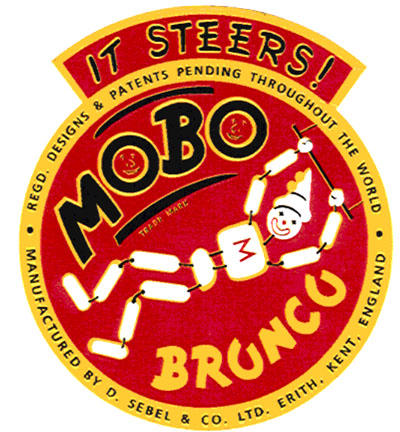
The vintage Pathe News clip below shows events from back in 1952. It features children "testing" some toys for the newsreel cameras. The toys were manufactured by D. Sebel and Co., trading as the Mobo Toy Company, whose factory and offices were located in West Street, Erith in part of the works originally occupied by the Vickers armaments factory. Mobo toys were a premium brand that were sold all over the world, and were particularly popular in the USA. The company eventually disappeared in the early 1970's with the import of cheaper (and less well made) rivals from the Far East. Mobo toys are now highly collectible. Leave a comment below, or Email me at hugh.neal@gmail.com.
News reaches me this week that something that has been locally rumoured for years actually turns out to have a basis in truth. The Driving Test Centre in Woolwich Road, Upper Belvedere (based in what was once Belvedere Police Station) is the second hardest place to pass a driving test in the whole of the UK. It is only beaten by the test centre in Wanstead, East London. In 2013/ 2014 The Belvedere test centre was the toughest in the entire UK - and was even featured on the BBC News website at the time, which you can read here. Currently if you take your driving test at the Belvedere test centre, you have a sixty seven percent chance of failing. The reasons for the high failure rate are not clear; it may be a combination of factors.

Now that Boris Johnson is now longer Mayor of London, and has been carted off to the relative obscurity of the Foreign Office, it may well be that his high concept “Boris Island” airport scheme gets quietly dropped. The plan had all sorts of problems, many of which could not easily be resolved. As I wrote extensively back in January 2012, not least of these is the ever worsening threat posed to the lower Thames and estuary by the abandoned wreck of the wartime cargo ship the SS Richard Montgomery. As you may recall, back in the day I almost had a too close encounter with the infamous shipwreck – more on this later. In case you are not aware, the remains of the SS Richard Montgomery are one of the most contentious and controversial wrecks in the World. The American Liberty Ship, loaded with bombs and ammunition, sank in a storm in 1944, and broke in half in the Thames Estuary, between Sheerness on the Kent side of the river, and Southend on the Essex side. Contemporary accounts say that on 20th August 1944, she started dragging her anchor, and despite warning sirens from surrounding ships ran aground on a sandbank around 270 yards from the main Medway Approach Channel, in a depth of 33 feet of water. Normally a Liberty Ship has an average draught of 28ft but the Montgomery, at this time, actually drew 31ft. Her overloaded, shoddily built and early welded construction made her vulnerable to the severe stress of grounding, and several serious cracks appeared in her hull, she eventually broke her back on the sand banks near the Isle of Sheppey about 1.5 miles from Sheerness and 5 miles from Southend. As the tide ebbed the ships plates snapped with a sharp crack heard over a mile away and the crew, mindful of its hazardous cargo, abandoned ship at 0300hrs using floats and lifeboats. A Rochester-based Master Stevedore T.P.Adams of Watson and Gill, was given the urgent and highly hazardous job of removing the cargo, which began on 23rd August 1944 at 1000hrs, using the ship's own cargo handling equipment, driven by a venerable, old (and expendable) steam ship the “Empire Nutfield” moored alongside. By the next day, the ship's hull had cracked open further, causing several cargo holds at the bow end to flood. The salvage operation continued until 25th September, when due to a severe gale they were forced to finally abandon the ship before all the cargo had been recovered. Subsequently, the ship broke into two separate parts, roughly at the midsection. During the enquiry following the shipwreck it was revealed that several ships moored nearby had noticed the Montgomery drifting towards the sandbank. They had attempted to signal an alert by sounding their sirens but without response, as Captain Willkie of the Montgomery was asleep. The ship's chief officer was unable to explain why he had not alerted the captain or carry out any remedial action. A Board of Inquiry held aboard the ship during the initial unloading, concluded that the ship’s crew had acted in accordance with their instructions and that the anchorage the harbour master assigned had possibly placed the ship in jeopardy, and returned the Montgomery's captain to full duty. The salvage of the SS Richard Montgomery was abandoned shortly thereafter, and the vessel was declared a hazard to shipping and marked by several warning buoys. It has stayed in position ever since. According to a 2008 survey, the wreck is at a depth of 49ft, on average, and leaning to starboard. At all states of the tide, its three masts are visible above the water. The Maritime and Coastguard Agency nevertheless still believe that the risk of a major explosion is remote. The UK government's Receiver of Wrecks commissioned a risk assessment in 1999, but this risk assessment has never been published. The Maritime and Coastguard Agency convened with local and port authorities to discuss the report in 2001 and concluded that "doing nothing was not an option for much longer." The New Scientist magazine carried out an investigation concluded in 2004, based partly on government documents released in that year, that the cargo was still deadly, and could be detonated by a collision, an attack, or even the shifting of the cargo in the tide. The bad condition of many of the bombs is such that they could explode spontaneously. Documents declassified shortly before, revealed that the wreck was not dealt with immediately after it happened, or in the intervening 60 years, due solely to the expense. According to a survey conducted in 2000 by the United Kingdom Maritime and Coastguard Agency, it was confirmed the wreck still held munitions totalling approximately 1,400 tons. This is thought to consist of:- "13,064 general purpose 250lb bombs, 9,022 cases of fragmenting bombs (these would produce massive amounts of shrapnel.), 7,739 semi-armour piercing bombs, 1,522 cases of fuses, 1,429 cases of phosphorous bombs, 1,427 cases of 100lb demolition bombs, and 817 cases of small arms ammunition". However, because the emergency unloading was carried out in great haste and under less than ideal conditions, no check or tally was made of exactly what was unloaded. Due to this, estimates of explosives remaining in the holds vary between the official figures of approx. 1400 tons and 3600 tons which was the unofficial estimate made by the stevedores and confirmed by the SS Richard Montgomery’s First Officer back in 1944 when the abortive salvage attempt was made. Although the published breakdown of cargo carried appears to be comprehensive, a ship's manifest exists which indicates, that in addition, she was carrying 240 Mustard Gas bombs and other unidentified munitions. Although chemical weapons were not used by either the Allies or Axis powers during WWII, both sides did stockpile such weapons for potential use. A BBC news report in 1970, speculated that if the wreck of the SS Richard Montgomery exploded, it would throw a 1,000-foot-wide column of water and debris nearly 10,000 feet into the air and generate a wave 16 feet high. Almost every window in Sheerness (population 37,852 (2011 census)) would be broken and buildings would be structurally damaged by the blast. This, however, is a very conservative view based on 1400 tons of explosive detonating in a chain explosion rather than one single detonation. The opinion was sought in October 1964 of retired Royal Engineer Major A. B. Hartley, MBE, GM., Britain's then most famous bomb disposal expert. His initial analysis said that "Some sixteen different basic combinations of explosives were used in American fragmentation bombs during the war. Those that were filled with TNT might remain comparatively safe for a long time provided, of course, the TNT hadn't crystallized (crystalline TNT is so unstable that the tip of a penknife blade scraped across its surface may cause it to detonate). And provided that the TNT was pure to begin with. But the production standards of all explosives made by the warring nations Allied and Axis became less rigid toward the end of the war. And by 1944 manufacturers were required only to produce explosive fillings with sufficient 'shelf life' to get them through the war. Those bombs inside your ship have existed long past their intended shelf life." His conservative forecast would be for windows to be shattered in Southend-on-Sea, Westcliff-on-Sea, Leigh-on-Sea, Shoeburyness, all some 6.5 miles away in Essex, and a number of smaller communities with a population totalling at least 375,000. In addition all these places might also suffer a heavy fall of shrapnel. The ship and cargo are closer still to the town of Sheerness, Kent and it is estimated that that damage and casualties might well be severe. A tidal wave would inevitably follow the huge explosion, which could wash away sea walls and flood defences. The bombs also happen to lie alongside the Thames main fairway used by thousands of the world's merchant ships including LPG Gas tankers feeding a huge gas terminal and storage, also seriously at risk and countless amateur yachtsmen at various marinas. There is no doubt that any ships, however large or small, in the vicinity of the explosion would go down. A tidal wave could sweep up the River Medway to cause havoc in Rochester, Chatham, Gillingham and a dozen or more outlying places in Kent. If Mustard Gas bombs are indeed also on board as has been claimed, the results of any detonation could potentially involve widespread chemical contamination on top of any blast and tidal wave damage. In the late 1980’s when I was working for Radio Caroline, we would often make tender runs from Strood on the River Medway, out into the Southern North Sea, and the South Falls Head, where the Radio Caroline ship, the Ross Revenge was moored, outside British territorial waters, and thus outside of the law. These trips were invariably made at the dead of night, navigating by radar and from navigational buoy to navigational buoy using good old fashioned charts and a compass. On one occasion I was at the wheel of the thirty foot fishing cruiser we were using as a covert supply vessel; we had to time our trips precisely; at that time, the Olau Line ferry company operated a couple of very large passenger ferries out of Sheerness. The skipper of the Olau Britannia was a great friend to Radio Caroline, and would often go out of his way to help us. One way he gave us practical help was by allowing us to exit the Thames Estuary in the huge vessels’ radar shadow, thus hiding our activities from the authorities. I was concentrating on staying in formation with the giant car ferry, when I suddenly noticed a series of warning buoys dead ahead – I was steering the vessel straight into the wreck of the SS Richard Montgomery! Needless to say, I came around hard to Starboard, to the consternation of the skipper and the rest of the crew, who were thrown around by my sudden course changes, and we narrowly avoided a collision. I reckon if we had have hit the wreck, we would probably have been the first fishing cruiser in orbit!
The vintage Pathe News clip below shows events from back in 1952. It features children "testing" some toys for the newsreel cameras. The toys were manufactured by D. Sebel and Co., trading as the Mobo Toy Company, whose factory and offices were located in West Street, Erith in part of the works originally occupied by the Vickers armaments factory. Mobo toys were a premium brand that were sold all over the world, and were particularly popular in the USA. The company eventually disappeared in the early 1970's with the import of cheaper (and less well made) rivals from the Far East. Mobo toys are now highly collectible. Leave a comment below, or Email me at hugh.neal@gmail.com.