Showing posts with label Crossrail development. Show all posts

Sunday, August 06, 2017

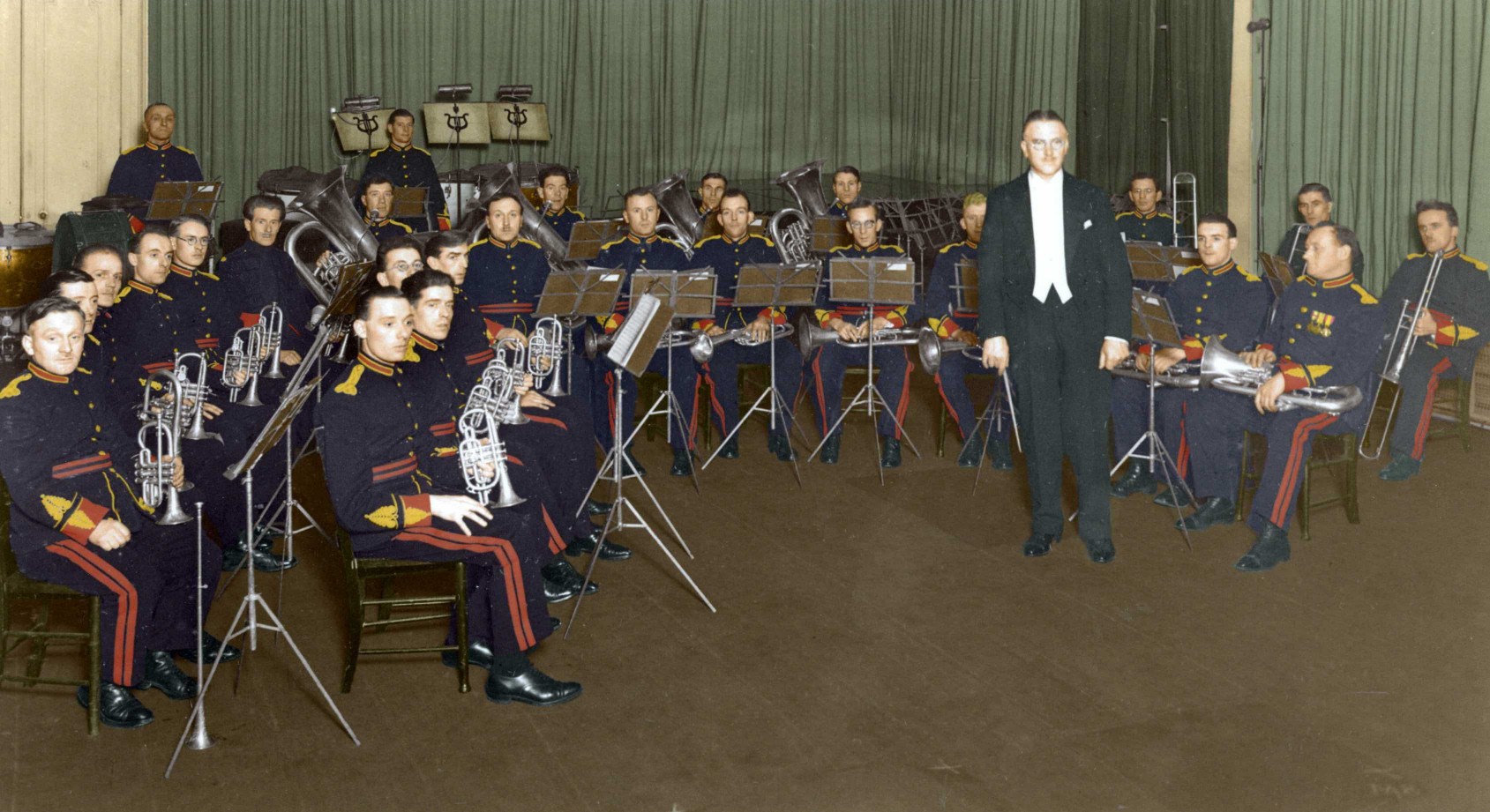
Callender's Band.


The photos above show Erith Bowls Club in Avenue Road; it is a part of town not known by all, and a very pleasant place to be. The club is well patronised, and hosts many matches with other local clubs. This is somewhat at variance with the usual image of Erith, and I think it illustrates well the real diversity in the local area.

There has been another spate of fraudulent / misleading door to door clothing collection bags delivered in the Erith, Slade Green and Northumberland Heath area over the last couple of weeks; I have previously reported on the activities of door to door clothing collections, many of which purport to be collecting for charities and other good causes, but many of these collections give little if anything to the charities, and some of which are nothing but downright fraudulent. By law, door-to-door textile collection companies must obtain a licence from the local authority they are operating in and register with the environmental watchdog. Despite the threat of legal action, and action actually being taken against them, many of these illegal collectors continue to operate. For example, one was taken to court in 2013 for operating without a licence while another had its licence revoked for unscrupulous practices. A third company came under fire the same year for using the Save the Children logo on its bags, even though it had no links to the charity. The annual value of the worldwide second-hand clothes market is estimated at £2.8 billion. Good-quality textiles sell at around £300 per tonne – down from more than £650 three years ago. Some firms donate just £50 per tonne while others hand over a set amount – meaning it could be far less. This chimes with research which shows that in some cases just five percent of the profits from collections run by commercial companies ends up in the hands of good causes. According to the latest available figures, the UK exported more than £380m, or 351,000 tonnes, worth of discarded fashion overseas in 2015. That works out as seventy percent of all reused clothing going abroad. I understand that both Romania and Bulgaria have chains of commercial shops which sell nothing but good quality used clothing from Marks and Spencer and John Lewis. All of the money raised goes into private pockets, and not to good causes as many of the people who donated the clothes in the first place were led to believe. You are better off donating your unwanted clothes to high street charity shops, where even if they then resell the clothes to a wholesaler, the charity will be getting all of the money - and that usually includes getting the tax refunded by Gift Aid. It might be slightly less convenient than leaving a bag on your doorstep, but at least you know the money raised from the donated clothes is actually going to charity, and not a shyster's pocket.


Local transport enthusiast Dana Wiffen submitted the following report:- "South Eastern Trains held their annual open day on the 15th July at their Slade Green Depot. With activities for children including face painting, bouncy castle, police and fire officers on site with opportunities for children to board both a fire engine and police van. Also present and on display was a red RT-type London Transport Bus and Maidstone & District bus and a wonderfully restored Jaguar Car. Two miniature trains had a short stretch of line set-up for rides, this included the ever popular Swanley New Barn Miniature Railway and the Falconwood Miniature Railway and there were also several displays of model railways. Inside the depot were numerous electric trains some were the very ones used by commuters into London also on display and the public allowed on board was the HS1 395 “Javelin” train as well as several diesel locos. In the vintage section, which was probably the highlight for railway enthusiasts was a freshly painted EMU No:5759 (old slam door train), which has been undergoing restoration at Southall since leaving the East Kent Railway. It is owned by the EPB group who with a few other preservation groups are struggling to ensure that the old slam door trains are not lost forever. For more information on how to help them with electric train preservation go to;- www.epbpg.co.uk Getting the award for the cleanest train inside and out was Hastings Diesel 1001, which also allowed on board access and was polished and cleaned to a very high standard. This train used to run from Charing Cross Station Platform 6 into Hastings and is unique in that it is slightly narrower that standard trains of that time, and was built to cope with narrower tunnels on that route. This train now runs a charter service to various destinations around the UK from Hastings-for more information go to: www.hastingsdiesel.co.uk It was a very interesting day two disappointments were that there were no standard  gauge train rides being offered and the second was that a number of the commuter trains on display had not been cleaned, otherwise it was a great day for all that visited". Many thanks for a fascinating account Dana - I have to admit that I did not know the Slade Green Depot open day event was planned, otherwise I might well have gone along myself.


One of the most widely known companies to have a historic association with Erith was Callender's Cables, formerly known as The Callender Bitumen, Telegraph and Waterproof co. Originally the company was primarily concerned with the production of bitumen and waterproof damp course material for the building trade, with cable making little more than a side line. The rapid growth in telecommunications in the late Victorian era led to cables becoming the company's main product, and in 1896 the firm was reorganised as The Callender Cable and Construction co, which was later changed to British Insulated Callenders Cables, or BICC. By 1965 the Erith based factory was the principal manufacturing facility for the world's largest cable group - the production area covered some 65 acres and provided employment for 1,300 local workers. Callenders were one of the main manufacturers of PLUTO (Pipeline Under The Ocean). Callenders also contributed much to the area of culture and the arts; Callenders Cableworks Band, which was started in 1890 as a Salvation Army band. Some members wanted to play a wider variety of music, so the band was relaunched as a temperance promoting popular music band. Callender's employees included at least a hundred instrumentalists who spent their leisure time in four band groups. The Senior Band consisted of 31 picked men: this was the band which broadcast on BBC Radio. There was also the A-band, the B-band and a learner's class of beginners from school age onwards; the A- and B-band members and the learners could all be promoted upwards as their skills developed and vacancies occurred. There was also a degree of "poaching" of skilled instrumentalists from other bands, not necessarily local to the area; It was kept quiet at the time, but in August 1925 when the St Hilda Colliery in South Shields temporarily closed, seven members of the colliery band, which was undoubtedly one of the best in the UK at the time, were all offered positions working at Callenders, even though they were miners, not cabling engineers. It is understood that their "day jobs" were nominal at best - making the tea or doing a bit of sweeping up - they were actually recruited primarily for their musical talents, and the prestige that they would bring to the company. This "poaching" of the best musicians from other brass bands carried on over the next ten years or so - a period when the Callenders Cableworks Band were considered the very best in the country. They became popular around the country and gave many public performances, and had a regular feature on pioneering radio station 2LO during the early days of radio. The Band's first broadcast was from radio station 2LO on 27 February 1925. By 1932 the Band had twice toured all stations of BBC Radio, and they were to broadcast there twice again in April of that year, by which time they had broadcast 72 times on radio. By 16 December of that year, they had broadcast 80 times. They aspired to performing music which was "out of the rut of marches, operatic selections and other pier head pieces." They performed on 5 March 1932 at the Queen's Hall, London. On the afternoon and evening of Sunday 20 March of the same year, they performed at the opening of the new art deco frontage of the Central Bandstand, Herne Bay, Kent. On 18 December 1932 they took part in a special BBC Radio programme in which most of the music had been composed especially for them. Under the name of Callenders Senior Band they recorded Colonel Bogey, Entry of the Gladiators, Le Grenadier, Les Huguenots (parts 1 and 2), Three Dale Dances and Triana on 78 rpm disks. They recorded A Sailor's Life (Descriptive Fantasia), parts 1 and 2, conducted by Tom Morgan, on two Broadcast Twelve disks. Broadcast Twelve Records was a United Kingdom based record label introduced in 1928 to partner the regular "Broadcast" brand records introduced in 1927. These brands replaced the Aco Records label. The manufacturer of the discs were the Vocalion Gramophone Company. "Broadcast" discs were 8-inch (later increased to 9-inch) and "Broadcast Twelve" discs were 10-inch 78rpm gramophone records, but with small labels and a fine groove pitch so they would play as long as regular 10 and 12-inch discs respectively. They ceased production in 1934. The label was a subsidiary of the British branch of Vocalion Records. In brass band competitions over the years they had 25 wins, 11 second places and 3 third places. For some years they took part in the Elthorne Band Contest which started in 1919 at Elthorne Park. The competition had four sections with many entries, and a massed band concert. They won the competition on 20 May 1924 and 3 May 1925, and again on 7 June 1930. The band was disbanded at the start of World War 2, and reformed at the end of the war; though it never regained the prestige it had once held - and in any case brass band music was losing favour with the listening public. The band struggled on until 1961, when it was finally wound up due to a lack of members. Ironically the history of the band is now starting to come to the fore again, and interest in what Callenders did in the early decades of the twentieth century is now starting to grow. 

Bexley Council have finally codified something that I have been writing about for a couple of years. They have unanimously agreed that they support the extension of Crossrail (it will only get called The Elizabeth Line when it actually opens in December 2018) out to Ebbsfleet, and the planned new garden city to be built there. In a very unusual move, both the ruling Conservative councillors and the opposition Labour councillors were in complete agreement. Councillor Daniel Francis, the leader of the Labour opposition group said in an interview that:-"The regeneration of this borough is too fundamental to be a political football. Tonight we've committed to making Bexley better and to work with our local communities to make sure that regeneration works with them, not in spite of them". The Elizabeth line will launch in December 2018 and stretch from Reading to Abbey Wood. The Garden City in Ebbsfleet will feature 15,000 new homes as well as a new city centre. Much of this is also dependent on the troubled theme park development that Paramount recently pulled out from. Doubts exist as to the viability of any major theme park if it no longer has the themes to attract sufficient numbers of the paying public. I get the feeling this issue will continue to develop for some considerable time. You can see a video update on the latest Crossrail construction at the end of the update for this week. 


The winner of the competition to create a public art installation on Erith Pier has now been announced. Art commissioning group The Exchange made the following announcement:- "Artist Julia Snowdin has been chosen by public vote to be the first artist to reimagine the unique location of Erith Pier for the inaugural Pier Commission. Changing Sails will celebrate the ever-changing nature and dynamic history of the pier through the installation of decorated sails that will animate the space with the wind and light of the Thames. The sails will be produced through a series of community workshops that explore the town’s history as pleasure resort and industrial centre, and allow the public to work with the artist to decorate the sails using holes to draw shapes and patterns that will depict Erith’s past and present. The sails will be suspended on the pier to create new spaces for the community to relax and play within. The patterned holes will create light spots on the pier during the day and evening. At night, the sails will be lit with different hues of colour creating new ‘rooms’ in which the community can relax, picnic and unwind. Julia Snowdin uses textiles to create unexpected and interactive spaces for communities to come together to share experiences and craft new stories. She has created work across the country, including for the Herbert Art Gallery in Coventry, the Nuneaton Museum and Art Gallery, and at Art in the Park in Leamington Spa and the Kidderminster Arts Festival. Caroline Field, Regeneration Manager at Orbit, said: “Having worked in partnership with Wates Residential on the regeneration of Larner Road into the award-winning Erith Park, we understand our role in place making and the role our developments can play in regenerating the wider locality and this is why we are sponsoring this fantastic event, celebrating culture and creativity in Erith. We can’t wait to see Julia’s inspired concept transform the Pier.” Paul Nicholls, Managing Director at Wates Residential South, said: “We were really impressed with the standard of entries for this Commission and delighted that we could be involved in it with our partners. I’m now really looking forward to Julia’s designs coming to fruition and bringing the Pier back to life.” London Borough of Bexley’s Cabinet Member for Regeneration and Growth, Cllr Linda Bailey said: “Congratulations to Julia for being the first artist chosen by the public to install work at our fantastic Erith Pier. What is especially exciting are her plans to involve the local community in creating this original piece. Erith has a fantastic past and an exciting future and we hope that this artwork will set the scene for all the great things happening in the town.”The commission is organised by The Exchange and sponsored by Orbit and Wates Residential. The partners invited proposals from practitioners to develop an idea that would transform this new public art space for the period of the Totally Thames Festival. A total of 75 proposals were submitted from all over the world, and with the support of a group of judges, this number was whittled down to four. The judging panel consisted of the project partners, Totally Thames, Port of London Authority, The Decorators (the group responsible for Erith Lighthouse), and local artists Guy Tarrant and Gary Drostle". I am sure that I am not alone in looking forward to seeing this when it is revealed in place on the pier on the 6th September. It is really great to see something innovative and unusual happening locally; I get the feeling that this will be far from the only new and exciting project in the future. 


Do you know the identity of the individual in the photo above? If so, Bexley Police would like to hear from you. He was captured on a car dash cam when he started a "Road Rage" incident in Cedar Road, Slade Green back on June the 22nd. If you know who he is, you can dial 0800 555 111 and speak to Crime Stoppers; alternatively if you would like to pass on the information without getting involved, Email me at hugh.neal@gmail.com and I will inform the Police for you, keeping you completely anonymous. This week's reports as usual from the Bexley Borough Neighbourhood Watch Association:-  Belvedere Ward: From Police SNT Team - PCSO Jamie Worrall. "Over the last week, the team have completed reassurance visits and enquiries in relation to a recent attempted burglary in Coleman Road. We have been carrying out regular patrols of the newly opened Belvedere Beach park and the nearby Albert Road recreation ground as there is usually an upturn in anti - social behaviour by youths around this time of year. These patrols will continue throughout the summer months. A few days ago, after reports of a male begging in Picardy Street, the team stopped and spoke to a male well known to the team. He admitted his involvement and was given strong words of advice by PC Holmes. Lastly, with the help of the NHW office, we have now set up Shop Watch in Nuxley Road". Northumberland Heath Ward:- "There was a Northumberland PSP meeting On Monday 31st July, with the many partners present that have helped to reduce the problems in this ward, all were pleased to report that things have improved although all parties want to be keep on top of the situation.. A "week of action" to tidy up the area which will include litter picking, repainting signage, CCTV cameras made vandal proof, as well as improved street lighting in some areas, it is also hoped to recruit new NW-Coordinators in roads were we have no cover. This will be during the week of 21st August 2017". From Crayford Ward:- "Motor vehicle crime is still the most prevalent crime in Crayford. There have been two theft of motor vehicles, two criminal damage to motor vehicles and a theft from motor vehicle. These have not occurred in any one particular location. Our thanks to our hosts at Crayford Mosque for allowing us to hold our Ward Panel meeting there on Tuesday evening. Our promises will be to continue to reduce motorcycle crime and address traffic issues in CRAYFORD WAY. We have been reliably informed that the Post Office will be returning to Crayford at the end of September and will be based at the Library".

Many will know that I am not a fan of social media; I don't have a FaceBook account or any online presence with any of the other outlets such as Twitter - I simply don't personally feel the need' on top of this I can very tightly control information made public about myself with the Blog - with social media one loses much of this control - something I am personally not prepared to do. I am happy however, that some local people have set up a FaceBook page which acts like a village notice board for the Erith / Northumberland Heath / Barnehurst and surrounding areas. By the look of it, the page was set up to be primarily accessed via a mobile phone or tablet, as many of the images posted on it do not scale properly to a larger screen size; having said that, it is a great local asset that you may well wish to check out. You can find the Erith and North Heath News and Gossip page by clicking here

Some major disruptive road works in and around Bexleyheath has now begun. Albion Road has been closed since July the 31st for traffic travelling towards Crayford between the bowling alley to Townley Road. Traffic needing to access the area behind the Premier Inn has to use the bus lane from Townley Roundabout, which is currently suspended. Construction on the two new roundabouts planned on Gravel Hill at the junctions with Albion Road and Broadway and Watling Street is now under way. Bexley Council are currently claiming that the number of road traffic accidents has gone down since the new "Shared Space" road and pavement designs were introduced in 2014 - including the "non - roundabout" at the junction of Albion Road and Bexleyheath Broadway. in an interview with the News Shopper, a council representative said:- "Looking at collisions across the whole of the first phase of the scheme, including both the Albion Road/Broadway junction and the similar junction at the police station, collisions resulting in injury have reduced by 25 per cent.” I find this very hard to believe, and I know I am not alone in this. There have been 21 collisions resulting in injury since the scheme first started three years ago. The severity of collisions has reduced according to the council, with five serious injuries in the three years before the scheme and none since. Much has been written about Bexley Council and their policy of installing "Shared Space" street furniture, and paying contractors to redesign areas including Sidcup High Street and Bexleyheath Broadway to blur the distinction between the road and the pavement; the idea being that bother drivers and pedestrians will proceed more cautiously when they are unsure of what is road and what is actually pavement. The origin of term is generally linked with the work of Dutch traffic engineer Hans Monderman, who pioneered the method in the Dutch province of Friesland. Prior to the adoption of the term, street design projects carried out in ChambĂ©ry, France, by Michel Deronzier from the 1980s used the term "pedestrian priority".found that some of the claims made for shared space schemes were not justified by the evidence—particularly the claims that pedestrians are able to follow desire lines, and that shared space reduces traffic speeds. Their primary research in Ashford, Kent, suggested that in streets with high volumes of traffic, pedestrians are more likely to give way to vehicles than vice versa. Most people, but particularly women and older people, found the shared space intimidating and preferred the previous layout with conventional crossings. A study by space planning academics Hammond and Musselwhite using a case study of Widemarsh Street in Hereford found that if traffic volume was relatively low and speeds of vehicles slow anyway then vulnerable road users found it easier to share the area with vehicles, including those blind or partially sighted and older people with mobility impairments. There are wide-ranging reservations about the practicality of the shared space philosophy. In a 2006 report from the Associated Press, it was commented that traditionalists in town planning departments say the schemes rob the motorists of vital information, and reported that a spokesman for Royal National Institute of Blind People criticised the removal of familiar features such as railings, kerbs, and barriers. Shared space is bitterly opposed by many organisations representing blind, partially sighted and deaf people. Some of their members avoid shared space areas entirely. Shared surfaces, which are generally used in shared space schemes, can cause concern for the blind and partially sighted who cannot visually negotiate their way with other road users, as the lack of separation implicit in these features has also removed their safe space. The UK's Guide Dogs for the Blind Association's "Say No to Shared Streets" campaign has the support of more than thirty other disability organisations. There have been similar concerns raised by other groups representing some of the more vulnerable members of society, including Leonard Cheshire Disability, Action on Hearing Loss, and Mencap, who have noted problems when negotiating a route with motor vehicle users, leading them to challenge its fundamental premise. Lord Holmes' 2015 report Accidents by Design found that sixty-three per cent of respondents reported a negative experience of shared space, and thirty-five per cent said they actively avoided it. Lord Holmes attacked the concept as a recipe for "confusion, chaos and catastrophe". What do you think? Leave a comment below, or alternatively Email me at hugh.neal@gmail.com

The end video this week is the latest quarterly update on the progress on The Crossrail Project, which is on schedule to be completed and operational by Christmas of 2018. Give it a watch and see what you think. It is certainly a very impressive feat of engineering. 

Sunday, January 03, 2016

New Year - old problems.


Well, here is the first Maggot Sandwich blog update for the New Year. Already we have had controversy from Southeastern Trains (yet again) who promised a Saturday equivalent service in the period between Christmas Eve and the 4th of January, despite the huge amount of engineering work being undertaken on the Crossrail Project between Abbey Wood and Plumstead stations, and the refurbishment and rebuilding going on at London Bridge station over the holiday period. I have however had a number of reports of an absolutely terrible level of service on the North Kent Line - one reader reported to me that he waited for forty minutes at Belvedere station for a short and overcrowded train on more than one occasion. All services on the Dartford to London Bridge via Greenwich Line were understandably diverted to New Cross due to the London Bridge building work, but the lack of trains even at peak times on what in many cases were normal working days for many people is just not in any way acceptable. Bexley Councillor David Leaf has been vocal over the issue after carrying out some research into the service levels promised by Southeastern, and the levels actually achieved; The train company promised to provide a Saturday service on the working days between Christmas and New Year's Eve. However Councillor Leaf calculated that there were 57 per cent less trains to London terminals compared to a normal Saturday morning (between 6.30-9.30am). He said in an interview with the News Shopper that "Commuters already facing severe disruption are being misled by Southeastern. Local residents from Bexley who need to commute into London to work will be hit by a triple whammy of disruption from the London Bridge upgrade works, fewer services and the inevitable overcrowding which will occur. There may also be shorter formed trains during this period and local commuters, paying peak fares for an off-peak service, will feel short-changed. "We all know that upgrade works to London Bridge are important, but the replacement services put in place by Southeastern are thoroughly inadequate." Once again the residents of the North of the London Borough of Bexley are treated as second class citizens. Have you had any travel disruptions because of poorly planned engineering work, or inadequate service provision by a train company? Do let me know.

The law of unintended consequences has seemingly come into force yet again; I have been talking to a couple of (anonymous) contacts I have in retail management. It would seem that the recent ban on giving away free plastic carrier bags at supermarkets has been successful in reducing the number of disposable bags shifted by the stores, but it has had an effect that has at the time of writing proved to be far more economically damaging. What has happened is that criminals are now able to walk around supermarkets with large reusable shopping bags on their arms, and can easily shoplift items into the anonymous bags. For shop security staff, someone carrying a large shopping bag around the store used to be a significant indicator that they could well be a shoplifter, and the security staff would consequently pay them more attention. Now that virtually all shoppers carry their own bags round the store, the criminals can far more easily blend in with the innocent shoppers. I have been told that the increased levels of stock loss have completely wiped out the lowered costs of supplying single use shopping bags in many high - street stores, but the management do not want to highlight the issue for fear of being thought of as "anti environment".  On top of this, the loss levels of wire shopping baskets has markedly increased; major supermarkets have already ordered thousands of extra wire baskets, as more of them go missing as shoppers turn to theft rather than pay for plastic bags, and the figures would seem to back this up - but once again the industry is incredibly reticent about discussing the phenomenon, as they fear it will affect corporate images. Over the course of a year, one major store in Wales had almost five hundred wire shopping baskets stolen when it began charging 5p for plastic bags - resulting in a four-figure loss from just one site. Although research predicts it will cost shoppers just £6.50 a year, history shows that some shoppers will resort to theft to get around the new law. What retailers do not want to be seen doing is restricting the use of wire baskets in the way most already do with the more valuable shopping trolleys. Whilst many have debated fitting security tags to shopping baskets in the way trolleys have had for the best part of twenty years, the cost / benefit balance is far less compelling, and they are worried about discouraging shoppers in what is already a cut - throat market place. What do you think? Drop me a comment below, or Email me at hugh.neal@gmail.com.

Recently I took a couple of friends from out of the area on a pub visiting tour of Dartford. It is the town closest to Erith which has a decent variety and quality of pubs, the best of which in my opinion is the Malt Shovel in Darenth Road, Dartford - a serious rival to my favourite pub of all, the Robin Hood and Little John, in Lion Road, Bexleyheath. My companions were not familiar with Dartford, and as we walked around the town, they asked why I had not suggested that we pay a visit to the Royal Victoria and Bull pub in the town centre. Locally it is better known as the Bull and Vic; I explained that whilst the pub / hotel was a great looking historical building, the clientele that frequent the place were really not our sort of people; basically it is a chav trap full of lager drinking yobs and other undesirables. This is a real pity as the building is one of the oldest in Dartford, and has been the location of a number of historic events. The pioneering steam engineer and mining expert Richard Trevithick died in the hotel (at that time known just as The Bull) back in April 1833. He had been lodging there for some months. Following a week's confinement in bed he died on the morning of 22 April 1833. By this stage in his life, he had been declared bankrupt; he was penniless, and no relatives or friends had attended his bedside during his illness. His colleagues at Hall's works (where he has been an engineering consultant) made a collection for his funeral expenses and acted as bearers. They also paid a night watchman to guard his grave at night to deter grave robbers, as body snatching was common at that time. Trevithick was buried in an unmarked grave in St Edmunds Burial Ground, East Hill, Dartford. The burial ground closed in 1857, with the gravestones being removed in the 1960s. A plaque marks the approximate spot believed to be the site of the grave. The plaque lies on the side of the park, near the East Hill gate, and an unlinked path. Richard Trevithick, was born in Illogan, Cornwall, in 1771. He was educated at Camborne School, but he was more interested in sport than academic learning. Trevithick was six feet two inches high and was known as the Cornish giant. He was very strong lad and by the age of eighteen he could throw sledge hammers over the tops of engine houses and write his name on a beam six feet from the floor with half a hundredweight hanging from his thumb. Trevithick also had the reputation of being one of the best wrestlers in Cornwall. Trevithick went to work with his father at Wheal Treasury mine and soon revealed an aptitude for engineering. After making improvements to the Bull Steam Engine, Trevithick was promoted to engineer of the Ding Dong mine at Penzance. While at the Ding Dong mine he developed a successful high-pressure engine that was soon in great demand in Cornwall and South Wales for raising the ore and refuse from mines. Trevithick also began experimenting with the idea of producing a steam locomotive. At first he concentrating on making a miniature locomotive and by 1796 had produced one that worked. The boiler and engine were in one piece; hot water was put into the boiler and a red hot iron was inserted into a tube underneath; thus causing steam to be raised and the engine set in motion. This was not a practical design, as without a firebox, the steam pressure could only be maintained over very short journeys. Even when this problem was solved, he encountered more issues with the rails on which his steam engine travelled - at that time the rails were made of cast iron, rather than rolled steel, and they were very brittle as a result. In the summer of 1808 Trevithick erected a circular railway in Euston Square and during the months of July and August people could ride on his locomotive on the payment of one shilling. Trevithick had plenty of volunteers for his locomotive that reached speeds of 12 mph (19 kph) but once again the rails broke and he was forced to bring the experiment to an end. Without financial backing, Richard Trevithick had to abandon his plans to develop a steam locomotive. Trevithick now found work with a company who paid him to develop a steam dredger to lift waste from the bottom of the Thames. He was paid by results, receiving sixpence for every ton lifted from the river. Trevithick found it difficult to make money from his steam dredger and in 1816 he accepted an offer to work as an engineer in a silver mine in Peru. After some early difficulties, Trevithick's steam-engines were very successful and he was able to use his profits to acquire his own silver mines. However, in 1826 war broke out and Trevithick was forced to flee and leave behind his steam-engines and silver mines. He was a good engineer, but it is generally accepted that he was an exceptionally poor businessman. Although inventors such as George Stephenson argued that Trevithick's early experiments were vital to the development of locomotives, in February 1828, the House of Commons rejected a petition suggesting that he should receive a government pension. After this, and several other misguided schemes failed, Trevithick was forced to seek paid employment at the Hall's engineering works in Dartford, where he later died. It is a great pity that no monument to the great contributor to engineering and the Industrial Revolution has no monument in Dartford, and that the Royal Victoria and Bull Hotel does not have some form of commemoration for the great man, whose last months were spent as a lodger there.


The photo above was sent to me recently by a reader; it shows Erith High Street and the old Odeon cinema - (click here to see some photos of the building in its heyday); it was taken back in the spring of 1966, not long before the row of shops was demolished - the giveaway is the name of the film being shown at the cinema. The film "Life at the Top" was released in the UK in March 1966; it was the sequel to the film "Room at the Top". The plot can be summarised as "Joe Lampton thought he had really made it by marrying the boss's daughter in his northern mill town. But he finds he is being sidelined at work and his private life manipulated by his father-in-law. Even so, he ignores an offer of a job in London and keeps away from attractive TV presenter Norah. When he finds his wife is having an affair, he reconsiders on both counts. But can he make it on his own ability down south?" Anyway, the photo is pretty precisely dated, and may be one of the last taken before demolition began. No building in the photo is still standing, though the Odeon did survive the demolition ball at least until 1999, when it was demolished to make way for a block of flats and offices.

I get some very positive reader feedback regarding the articles I post on old technology; the recent piece on Capacitance Electronic Disk (CED) analogue video disks went down particularly well. This week I have a piece on a radio technology that was never deployed in the UK, but was very popular in parts of the world, and is still in somewhat limited use today. AM Stereo broadcasting was a technology that enabled (relatively) high quality stereo broadcasts on the Medium Wave band, instead of the usual low fidelity mono audio that is transmitted by a conventional AM system. AM Stereo is a term given to a series of mutually incompatible techniques for wireless radio broadcasting stereo audio in the AM band in a manner that is compatible with standard AM receivers. There are two main classes of systems: independent sideband (ISB) systems, promoted principally by American broadcast engineer Leonard R. Kahn; and quadrature amplitude modulation (QAM) multiplexing systems (conceptually closer to FM stereo). Initially adopted by many commercial AM broadcasters in the mid to late 1980s, AM Stereo broadcasting soon began to decline due to a lack of receivers (most "AM/FM stereo" radios only receive in stereo on FM), a growing exodus of music broadcasters to FM and / or DAB, concentration of ownership of the few remaining stations in the hands of large corporations and the removal of music from AM stations in favour of news/talk or sports broadcasting. By 2001, most of the former AM Stereo broadcasters were no longer stereo or had left the AM band entirely. In the UK, the only station which planned to use AM Stereo was the ill - fated Stereo Hits 531 (or Stereo Hits 576) in the late 1980's. This was a planned offshore radio station which never actually got beyond a short test transmission. The station was based on a former freighter, the M.V Nannell; The name Nannell was chosen in honour of a senior lady in the owners family - Nellie, who was known to her many grandchildren as Nan Nell. Harvey Metals sold the MV Nannell to Worldwide Broadcasting Corporation during a voyage from Southampton to Spain. In February 1986 the MV Nannell sailed from Southampton to her home port of Santander via Gijon. The vessel was taken to the Alantico shipyard to be converted into a radio ship. The British Government put pressure on Spain to prevent further conversion work taking place. Spain demanded that the work should stop and insisted that, since the MV Nannell was a Honduran ship it should also have a Honduran licence for radio broadcasts. In March the MV Nannell left the Atlantico shipyard stating her destination as Oran, Algeria, however the ship had stayed without completing advice from professionals that the 240 feet tall antenna mast be fully stayed. Within a few miles of the coast it hit huge 'Bay of Biscay' rolling waves, the ship pitched, rolled one way - and the mast collapsed and had to be cut free. Minus the antenna system, instead of Algeria, the ship sailed for France. At the end of April new backers had been found and the MV Nannell sailed back to Santander under a different flag with all the correct paperwork. More financial problems slowed the project down. By June 1989 the MV Nannell was anchored off the Belgian coast, but some months later, it headed for Portsmouth harbour. In 1990 the owners of the ship decided to scrap the ship, which had now been renamed Mia Migo in the meantime. In September the Mia Migo was scrapped In ZeebrĂĽgge (Belgium). Thus AM Stereo broadcasting in the UK ended before it had even really begun. You can see some period photos of the M.V Nannell being converted into a radio ship by clicking here.


Back in September of last year, I reported a very strange experience I had undergone, and I asked if any reader had seen the same thing as me; I was quite surprised to only get one positive response from a lady in New Eltham. At about 8.30pm on the evening of Monday the 21st September, I was returning home to Pewty Acres after an evening shopping trip to the Morrison’s supermarket in James Watt Way, Erith. As many will know, the supermarket is located on the banks of the River Thames, which you can see in the photo above - click on it for a larger view. As I walked home across Morrison’s car park, I looked out over the river. Normally one can see ships moving up or down river, or aircraft coming in to land at London City Airport. This time I saw something which immediately grabbed my attention. I saw a total of eighteen (and yes, I did count) balls of bright light in the sky, travelling at what appeared to be several hundred miles an hour eastwards, away from London. Each ball of light was roughly the same orange colour of a sodium street light, and they were arranged in formations of three, in a chevron pattern. They appeared to be following the course of the river, and they travelled silently. I also saw much higher up a passenger plane making a descent to London City Airport. I watched the formation of lights for around two minutes as they travelled from horizon to horizon. I could hear no engine sounds from the lights (although I could hear the jet engine sounds from the passenger jet travelling in the opposite direction).  Normally if I saw an orange light moving in the sky, I would immediately identify it as a Chinese sky lantern, but these lights were travelling in formation, were far too bright to be lanterns, and were travelling far too quickly to have been blown by the wind (which in any case was blowing in nearly the opposite direction).  I have absolutely no idea what the lights were, but I am certain that many other people must have seen them as well. I am really surprised not to have seen any mention of this puzzling event on the local or regional press; I assumed that thousands of other people must have seen what I saw. Did you see the lights too?  I am surprised that I did not get more of a response when I originally posted this account. Do let me know if you saw the same thing – drop a line to me at hugh.neal@gmail.com.  

As a one - off feature, I print below an original recipe which I created a couple of years ago, and make regularly. If you like curry from an Indian restaurant, I reckon you will like this - it is similar to Garlic Chilli Chicken, but is far healthier for you, and has tons of delicious vegetables in it. Feel free to alter the quantity of spices to make a milder or hotter dish, but I would recommend that you keep the proportions the same, in order to maintain the unique fresh and light flavour.

Hugh's Chicken A La Belvedere Curry Recipe.

Ingredients.

1 large onion, finely chopped
1 tin of chopped tomatoes
1 small green chilli – finely chopped.
1 green capsicum pepper (sliced)
6 -7 cloves fresh garlic, crushed then finely diced
Large piece of root ginger, peeled and grated
1 vegetable stock pot
1 tablespoon vegetable / corn oil
1 tablespoon of tomato puree
Small bag of washed baby spinach leaves
Half a punnet of chestnut mushrooms, sliced
Two skinned, boned and sliced chicken breasts (optional – omit for a vegetarian curry)
1 teaspoon of hot chilli powder
1 teaspoon garam masala powder
1 teaspoon hot Madras curry powder
2 teaspoons of ground cumin powder
1 teaspoon of ground coriander powder
1 teaspoon of turmeric powder
1 bunch of fresh coriander leaves

Method.

Makes enough for two large / three medium portions. Fry off the onion, garlic, chopped fresh chilli pepper, and ginger in the vegetable / corn oil in a large pan or Wok until the onion goes translucent and the garlic, chilli  and ginger soften. Then add all of the dry spices and fry for a few minutes – if the ingredients are too dry, add a little water to loosen the mixture. Then add the chopped tomato and the tomato puree, the stock pot and stir for ten minutes until a thick and spicy gravy is formed – a little additional water may be required. Then add the sliced chicken breast; when this has cooked through and changed colour, add the chopped mushrooms and the sliced bell pepper. Cook for 10 – 15 minutes until all are soft. Add the spinach and half of the fresh coriander leaves, and cook for another 5-7 minutes as the spinach wilts down and melts into the curry gravy. Keep stirring the mix in the pan to stop it from burning. Serve with boiled basmati rice and the rest of the chopped coriander leaf served as a garnish. The curry is a healthy, light, medium hot dish – please feel to experiment with the ingredients, and let me know what you think. If you would like a PDF copy of the recipe, drop me a line, and I will Email it to you.

The end video this week features aerial drone footage taken over the River Thames at Erith, showing Erith Pier (the longest pier on the River Thames, and a much overlooked summer tourist attraction) along with Morrison's supermarket. By the looks of things, the video was shot very early on a summer morning, as so few people are visible on the ground, and the supermarket car park is almost empty.

Sunday, May 17, 2015

A spring clean for Southeastern Trains?


I took the photo above last Sunday morning; it shows the shopping trollies and an old scooter that had been fished out of the River Thames mud during low tide by Erith Pier. The event was organised by the environmental charity Thames21 in conjunction with a troop of local army cadets. Every year Thames21 arrange a cleanup session at Erith - and they usually get quite a haul of stuff that has been thrown into the river by local scumbag low lives. Morrison's sponsor the cleanup event - which is rather appropriate when one considers that much of the recovered hardware originates from the adjacent supermarket. Thames21 might not be the most high profile or glamorous of charities, but they quietly go their own way, cleaning up the banks of the River Thames and making the place a much better place to be. 

Southeastern Trains have been making a lot of noise in the local press in the last couple of weeks; apart from the dire reliability they are already notorious for – once again this week signal failure at Lewisham has caused extensive cancellations and delays to trains on both the Greenwich and Lewisham lines. This is on top of the delays, cancellations and disruption caused by both the Crossrail building work being undertaken between Abbey Wood and Plumstead stations, which means regular closure of the line at weekends, and also the huge demolition and reconstruction project at London Bridge station which has also adversely affected local trains. All in all we have close to a “perfect storm” of problems for the rail operator. So what do Southeastern do? Launch a publicity drive to tell the great travelling public that their fleet of trains is being given a spring – clean. They have been very vocal in the press – even releasing a time – lapse video showing a team cleaning a Networker train at their Slade Green depot. Southeastern say that this is all part of a £5.7 million improvement plan to both rolling stock and stations between now and October next year. The Networker trains have now been in service for fifteen years, and are halfway through their designed service life. This is all very well, but as an almost daily commuter on the very trains that have been deep cleaned, I can state that in my opinion, they are just as filthy and uncared for as ever. I travel regularly on other suburban rail services such as London Midland from Euston to Watford Junction, and their trains are either brand spanking new Siemens models, or older rolling stock of comparable age to the Southeastern Networker trains – the difference is that the London Midland older rolling stock is very well maintained, clean and free of vandalism. I think this is in part due to the presence of a conductor / train manager who walks around the train keeping an eye on things, whereas Southeastern don't bother with such niceties. In contrast Southeastern trains have graffiti scratched windows, dirty seats, locked and out of order toilets (I have been told that on some occasions the toilets are not locked due to the actions of vandals, but so they don't have to pay for a cleaner), and something I have never seen on any other rail line – water in the gap between the two panes of glass in the odd window – which sloshes backwards and forwards with the motion of the train. None of this has changed since the alleged deep clean project has been under way. I wonder where all of the money and effort has actually gone? If you have any insight into this matter, please either leave a comment below, or Email me at hugh.neal@gmail.com.


Regular readers may well recall that I have covered the issue of unlicensed riders illegally riding off – road and motocross bikes on the Slade Green Marshes, an area of outstanding natural beauty and a designated conservation zone. In my role as Neighbourhood Watch Co-ordinator, I was aware that the Police were planning a series of operations against the illegal riders, but did not know the specifics – and in any case would not have published them had they become available, as there would always be the risk that one or more of the offenders could get tipped off by the news. I am delighted to publish the following announcement by the North End Safer Neighbourhood Police Team:- “As you may remember, at the recent North End Ward Panel meeting, one of the promises chosen was Off Road Bike issues. Last weekend (2/3 May) an Operation was carried out by ourselves along with several other officers from Bexleyheath including an off road bike officer. During the Operation on the Saturday, 4 bikes were stopped close to Erith Yacht club and Section 59 warnings given to the riders. It seems that word quickly spread as there were no more bikes seen on the Saturday and on the Sunday (always the busiest day) not one bike was seen riding at the location. We have carried on the operation on a smaller scale this weekend (5 officers) and another 6 Section 59 warnings have been given. Due to legislation, no bikes were seized at this time but the warning means the bikes are seized if caught again. We are now hoping that the word will spread among the Off road bike community that if anyone is caught at this location, warnings will be given and any repeat offenders or anyone riding along the footpath will have their bikes confiscated with a fine imposed. Patrols will be ongoing when the team is on shift. The landowner and partners responsible for access have also been in the hope that all access points will be made more secure in the future”. Good news indeed – hopefully the criminals who were illegally riding on this area which is a designated nature reserve will now realise the error of their ways. As I have said previously, I think it would be good to create a dedicated facility for off road bikers to use safely and legally, perhaps on one of the many brown field sites that litter the local area. Personally I am not anti-off – road biker, just anti the crooks who break the law with off – road bikes, which is a different thing altogether. We know that there is a problem with both off – road and on road bikes in Erith, Lower Belvedere and Thamesmead, as has been covered recently; both the News Shopper and the Bexley Times have covered the story in recent weeks. The problem is not going to go away.


Guest writer Dana Whiffen has written an outline on Bexley's own stately home - Hall Place. "Hall Place House dates back to 1540, and was once the home of wealthy merchant Sir John Champneys. There were alterations made in 1560 and a second wing added by the house's second owner Sir Robert Austen who was the Sheriff of Kent in 1724 and MP for New Romney from 1728 to 1734. The main 16th century building is built from recycled stone taken from a nearby Lesnes Abbey (yet another monastery demolished by Henry V111), while the rest is built from 17th century red brick. The house remained with the Austen family until 1772 when Sir Francis Dashwood purchased it and it remained with the Dashwood family until 1926 even though it was used as a boarding school for much of the 19th century and later leased to various tenants, which included from 1917 The Countess of Limerick whose social gatherings at Hall Place, included George V1. Bexley Council took over the house and gardens in 1935 complete with Lady Limerick as sitting tenant until she died in 1943, in 1944 the building was used by The American Army as a intercepting wing of Beltchley Park and post-war the house became an annex for a local girls school. The house was later restored by Bexley Council and used by them between 1968-1995, although the gardens were open to the public. Now with both the house and gardens fully restored from a £2M lottery grant in 2005, both are now open to the public and the boast the following for visitors to see, Hothouse Gardens including Lemon and Banana trees and fish, a Butterfly garden and Owl house as well as a gallery (named the Limerick Gallery), plant shop, wonderful gardens that sit either side of the River Cray and a riverside cafĂ©. There are often exhibitions on in the main house that does charge an admission fee though. This is one of the few historic and picturesque jewels in Bexley and is well worth a visit for more information visit: www.bexleyheritagetrust.org.uk'. Hall Place has the River Cray running through its gardens. The River Cray is an important freshwater river in the borough; it used to be the home for a large population of water voles, but these indigenous wild creatures are under threat from a number of sources. A recent report by the Canal and River Trust analysed water vole sightings dating back as far as 1970, and found that they were seen in only half as many locations in the past fifteen years as they were in the thirty years before that date. Between 1970 and 1999 water voles were spotted at 53 locations along nearly 270 miles of waterways managed by the trust; between 2000 and 2015 there were water vole sightings at 38 locations covering 141 miles. The decline in water vole population has continued, despite an investment of £500,000 since 1980 in forty projects designed to protect them from predation by American Mink, who were introduced into the British countryside when animal rights protesters illegally released them from fur farms. Water voles are one of the most endangered species in the country, and are fast becoming a rare sight on Britain’s canals and rivers. Non – indigenous mink are one threat, but another, less well known creature is an even greater threat to British Water Voles. In the last twenty years, the American Signal Crayfish has spread like wildfire in British waterways. The creatures, which look like mini lobsters, and are typically 6–9 centimetres (2.4–3.5 in) long, although sizes up to 16–18 cm (6.3–7.1 in) are possible. They are bluish-brown to reddish-brown in colour with robust, large, smooth claws. They have a white to pale blue-green patch near the claw hinge, like the white flags that signalmen used for directing trains—hence the name. The Crayfish burrow into the banks of the river, destroying Water Vole homes and causing the banks to crumble. The infestation of American Signal Crayfish has affected many of the fresh water courses in the UK. The little critters are very difficult to eradicate, as they breed quickly and produce around 200–400 eggs  after mating in the autumn, and are carried under the female's tail until they are ready to hatch the following spring. The eggs hatch into juveniles, which pass through three moults before leaving their mother. Sexual maturity is reached after two to three years, and the life span can be up to 20 years. You have the worst combination – the creatures are quick to breed, long lived, and have no native predator. The American Signal Crayfish does have one key weakness however – once boiled, they are delicious to eat. It is quite legal to hunt wild American Signal Crayfish – all you need to do is to apply for a hunting licence from the Environment Agency. Most licences to hunt wild animals are quite expensive, and limit the size of the hunters bag to only a few animals, in order to limit the impact on the population of that animal. Tellingly, the Environment Agency website has an unlimited bag size and a free licence when it comes to hunting invasive crayfish. Once you have your hunting licence and officially approved design of trap (designed specifically not to trap Water Voles or Otters), you only need the permission of the land owner (who will almost certainly be more than glad that someone is willing to rid them of the infestation of the destructive species).  You can then trap American Signal Crayfish for your table – and you can feel that not only are you going to have a fine feed, but you will be doing the environment some real good in the process. Watch the video clip below to understand just what a plague the American Signal Crayfish has become in the UK.


If you are a big coffee fan, and use the Starbucks chain, you may well have a Starbucks loyalty / gift card. To date there have been no reports of problems in the UK, but there have been serious problems with these cards in both the USA and Australia. have been stung by scammers through their Starbucks accounts. Those at risk are Starbucks customers who have linked either a payment card or PayPal to their online account, which can be used to send gift cards to others with a preloaded balance. Fraudsters have been taking aim at Starbucks accounts for at least a couple of years. The card itself can be used to pay for items in a store, and the online account can be used to send someone an e-gift certificate by email. It’s also a loyalty tool, with Starbucks offering free food and drink rewards and other discounts. Like many online services, Starbucks requires a username and password to access it, which means cyber criminals who obtain those credentials can get in. It appears that hackers have obtained large numbers of Starbucks account credentials, according to a forum post on the shady  Evolution marketplace. Evolution, which went offline for unknown reasons in March, was a website for illegal goods along the lines of the Silk Road online drugs bazaar. A scan of archived posts showed a thriving marketplace in hacked and stolen Starbucks ID's. Shortly before Evolution shut down, one vendor wrote that “we are in the process of sifting through thousands and thousands of possible logins for Starbucks with balance.” Since people often reuse login credentials on many different web services, hackers will try to see if the details unlock another service. That’s especially dangerous for Starbucks accounts since customers can set their cards to auto top-up with funds from a payment card or PayPal. The cards can hold up to a $500 balance in the USA. As mentioned, no security breaches have yet been reported in the UK, but from the sound of it, this will be only a matter of time. I expect this story to be published in the general press very soon. At present very few people outside of the specialist IT security industry are aware of it.

Another Erith based criminal gang has been busted and sentenced this week; an organised group of teenaged crooks; Their arrests were part of a two-year operation to dismantle organised criminal networks suspected of committing hundreds of offences including burglary, theft, fraud, motor vehicle crime, drug dealing, money laundering and violent crime.  A total of seventy people were arrested in connection with the operation - code-named Belmont - in March this year.  The teenagers sentenced committed a string of crimes in Erith, where they stole a computer, a satellite navigation system, power tools and cycles, sold class B drugs and even stole medicines from the back of an ambulance. The criminals were aged between fifteen and nineteen, with many too young to be named publicly. What struck me was that despite the severity of the offences, none of the scrotes was sent down for a proper custodial sentence – and it was clear that for many of them it was far from their first offence. Of those old enough to be named and shamed were Mark Tworek, 18, of Birling Road, Erith, was charged with two counts of theft, after he stole power tools and jewellery. He was given a 12-month community order with a 12-week curfew and electronically tagged. Connor Smith, 19, of Brook Vale, Erith, was charged with one count of theft, one count of sell/supply prescription-only medicine and one count of possessing a controlled drug of class B.  He was given a 12-month community order, issued with an eight-week curfew and fined £325. Quite why they did not go to prison is beyond me. Please don’t get me wrong; I am far from a “hang them and flog them” advocate, but at the same time a message needs to be sent to the scumbags that make our streets unsafe. I have on several occasions overheard conversations between convicted criminals, and they regard tags as a badge of honour.


I have written in the past about former local resident, and prolific inventor and businessman Hiram Maxim – inventor of the Maxim Machine Gun, the first person to fly a heavier than air craft, several years prior to the Wright Brothers (he, along with his technical team can be seen with the Maxim flyer in the photo above - click on it for a larger view - Maxim is the chap in the middle with the white hair and bushy beard) and the man that invented both the fire sprinkler and the sprung mouse trap. Maxim also invented the car exhaust silencer, and as an off – shoot (if you will excuse the pun) his son, the American inventor Hiram Percy Maxim, is usually credited with inventing and selling the first commercially successful model of gun suppressor circa 1902 (patented 30 March 1909). Maxim gave his device the trademarked name Maxim Silencer, and they were regularly advertised in sporting goods magazines. The muffler for internal combustion engines was developed in parallel with the firearm suppressor by Maxim in the early 20th century, using many of the same techniques to provide quieter-running engines (in many English-speaking countries automobile mufflers are still called silencers). Former president of the United States Theodore Roosevelt was known to purchase and use Maxim Silencers. So, it is not too much of a stretch to say that many inventions that we all take for granted were either invented in Erith or Crayford at the two Maxim / Vickers factories, or by people also living in the same area. We for example also had the first petrol – powered tricycle, several years before the Benz automobile, which was tested along Manor Road, and the first submarine capable of firing a torpedo whilst submerged was created by the Nordenfeldt works, also located in Erith. The end of the nineteenth and beginning of the twentieth century were a real hot house of inventive talent in the local area – some of the most cutting edge engineering took place in and around Erith. I don't feel that we do enough to celebrate our strong links to key moments in the history of Britain. What do you think? Would you like to see Erith Museum resurrected in a more complete form than the current token couple of cabinets in the new Erith Library? Should the old museum in the upper floor of the old Andrew Carnegie gifted library in Walnut Tree Road be refurbished and re-opened as a more fitting tribute to all of the accomplishments that have happened locally? Let me know your views. Hiram Maxim had a rival in a chap called William Cantelo, who allegedly was the original inventor of the recoil operated machine gun. Cantelo was a Southampton pub landlord with a flair for mechanical engineering whose experiments with firearms in the extended cellar of his pub often caused consternation to both his regulars and his neighbours, though Cantelo was highly secretive, as he realised the engineer who could invent an automatic, repeat firing rifle would make a fortune. Once he was confident that his machine gun was ready for the world, he packed several prototypes up and went off to market the weapon. That was the last anyone ever saw of him. Not long afterwards, Erith's own Hiram Maxim (born in America, but a naturalised Briton) started producing his range of Maxim Guns - touted as the first recoil operated machine gun, which were made at his large factory in Fraser Road, Erith - to this day the area is known locally as "The Pom Pom" - after the noise of the guns being tested on the range to the rear of the factory. Investigators have noticed that Cantelo and Maxim looked remarkably similar - and certain conspiracy theorists have had a field day in supposing what the connection between the two men was. The thing is, back in the late Edwardian period, most men over the age of thirty had large bushy beards - as did both Cantelo and Maxim, and a lot of their physical similarity would seem to be due to the beard element. Later, Hiram Maxim claimed that he had a double who was impersonating him, but this was never independently confirmed (Maxim was a bit of a showman, and fond of making sweeping statements, so this was nothing remarkable or at all unusual). Maxim was already a wealthy man, having the patents for the aforementioned fire extinguishing water sprinkler and the sprung mousetrap, amongst others. Personally I feel that the whole Cantelo / Maxim conspiracy is a fictional construct – Cantelo probably did what many adventurous entrepreneurs did in Victorian times, and emigrated to America (ironically the direct opposite of what Maxim did a few years earlier) – and then disappeared from history. The story makes a good yarn however. An episode of Punt PI, a BBC Radio 4 light – hearted investigative series, covered the Cantelo story with Steve Punt investigating Cantelo's disappearance. He discovered that Maxim had complained about a man who was impersonating him in America. He also showed a photograph of Cantelo next to his machine gun to the Royal Armouries, who stated that the weapon appeared to be the same as the Maxim gun. A facial expert who compared the images of Cantelo and Maxim highlighted that there were visible differences between the two men. Punt cast doubt on the idea that Cantelo and Maxim were the same person but noted the coincidences.

Malcolm Knight of the excellent "Bexley is Bonkers" blog has been covering the Crossrail development work that has been going on between Abbey Wood and Plumstead in great detail over the last couple of years. He lives virtually on top of the main works, which makes it convenient to take late night / early hours of the morning photographs of the engineering works that have to be done when the North Kent rail line is not running. The whole Crossrail Project is a massively ambitious piece of extremely large scale civil engineering. At peak time, twelve Crossrail trains an hour will make it significantly quicker and easier to get to a range of destinations across London and the South East. More than a mile of new track has been laid by Network Rail, representing the first section of dedicated Crossrail track to be installed anywhere along the route. The Crossrail route will pass through forty stations and run more than a hundred kilometres from Reading to Heathrow. Work has included the realignment of the existing North Kent Line, which serves trains between London and Kent, and the replacement of the Church Manor Way footbridge. Once fully open in 2018, the new tracks will link Abbey Wood to the rest of London like never before, providing local people with a dramatically improved rail service. From 2018 there will be a train every five minutes during peak times from Abbey Wood and Woolwich, allowing residents to travel through the capital without having to change to the tube or bus. The journey from Abbey Wood to Canary Wharf and Bond Street will be twenty minutes quicker and passengers travelling to Heathrow will be able to cut 40 minutes off their journey. The brand new Crossrail station at Abbey Wood will also be connected to North Kent line. A new station will also be built in Woolwich, with two portals at North Woolwich and Plumstead where Crossrail trains will surface. On top of this, a residential development is planned; The Armourer's Court will be a  394-unit residential development, which is to be built above Crossrail's Woolwich Station. To be located at the eastern end of the station, the residential development will consist of five buildings of varying heights. The Royal Borough of Greenwich gave planning permission to the Crossrail station and approved the plan for The Armourer's Court in September 2014. My concern is that these apartments will be designed and constructed to appeal to absentee foreign investors, rather than existing local residents. This has already happened with the similar but smaller residential tower being constructed outside of Abbey Wood station. The development has been heavily promoted in the Far East, and much made of the fact that it will not contain any provision for "affordable housing" - estate agent speak for "don't worry, you won't actually come into contact with any of the unwashed locals". Not that the new foreign buyers are likely to actually live in either the Woolwich or Abbey Wood developments - they are merely investments, as the UK is regarded as having a stable, largely incorrupt and dependable government and judiciary. Wealthy oligarchs would not dream of venturing outside of Kensington and Chelsea when they visit the UK. They do want somewhere they can invest their cash so that the likes of Vladimir Putin cannot get their hands on it, should they fall out of favour, or forget to pay the right bribes. Anyway, to end this edition, here is a video I found on YouTube which shows the engineering work that is currently being undertaken between Abbey Wood and Plumstead as part of the greater Crossrail project. Leave a comment below, or Email hugh.neal@gmail.com.

Sunday, June 29, 2014

A first look at the new Bexley College campus.


Casual visitors to the Maggot Sandwich could quite easily get the impression that the blog is exclusively concerned with the building work going on in and around Erith. Though this is very far from the case, it is true however that there is currently more construction going on than at any time in my memory. Last week I covered the construction of Erith Park, the new housing development on the site of the old and mostly unlamented Larner Road estate. Erith Park looks extremely promising, and it will be great to revisit the development as work progresses. This week another key site in Erith receives my attention. The new Bexley College campus between Stonewood Road and Walnut Tree Road is getting close to completion. On Thursday I was invited for a private VIP tour by Danny Ridgeway, the college Principal, and Martin Peat, the Deputy Principal. We met on site and had to don hi Vis waistcoats, hard hats and goggles; as I habitually wear steel toecapped construction boots I did not need to change footwear. We then proceeded onto the site itself. The photo above shows Martin and Danny looking symbolically back from the new college to the old college building in Tower Road about a mile away, which is now closed to students, and will soon be demolished to make way for housing. I have heard several people comment that the new building looks too small to accommodate all of the thousand or so students and the classrooms and other facilities that will be required. I can categorically state that this is not the case. The interior of the new building is absolutely huge compared to the old tower; there is really no comparison. The new campus is very high tech and green - the main heating system is powered by a biomass converter, the air conditioning system filters the incoming air to remove pollutants, including vehicle emissions from the nearby roads, and the design of the structure allows for large windows in the internal walls, meaning that natural light penetrates even the deepest parts of the interior. Many college facilities will be open to the public, including a coffee shop, the hair and beauty suite where people will be able to get haircuts and beauty treatments from students. This was the case in the old campus, but the steep climb up the hill in Tower Road put many older customers off. The new campus has full wheelchair access throughout, WiFi internet access, a large library, a gym open to students and staff, a state of the art refectory and some cutting edge classrooms.


The photo above shows final construction work on the roof terrace, which is invisible from the ground. Students and lecturers will be able to use this external space for learning activities, and I think this will be a very popular destination when the weather is fine.


The photo above shows an alternative view of the roof terrace from the inside; as you can see the glazed area is huge; the artificial  lighting level required during daylight will be minimal, keeping bills down.


The photo above shows a fairly typical classroom, prior to the furniture and fittings being installed. Click on any picture for a larger version. 


This large space is where the gymnasium will be located; I understand that the windows will be fitted with an optical obscuring film in due course. The lighting throughout the campus is provided by energy efficient LED flat panels, which use less than ten percent of the power required by traditional light bulbs, and last much longer.


The last photo shows the space in which the college refectory and kitchens will be installed; as with everything in the new building, it is far larger than the facility in the old building which it is replacing. 

Erith hit the headlines on Tuesday night / Wednesday morning; a scrap yard and car repair centre on the Darent Industrial Estate on the Slade Green Marshes had a major fire, which drew fire fighters from Erith, Lee Green, Plumstead, Sidcup and Bexley to put it out. One problem that exacerbated the situation was the current closure of Manor Road for remodelling work; the road is the main route to the industrial estate; indeed one of the principal reasons the road is closed is to repair the wear and damage caused by trucks and heavy vehicles travelling to and from the industrial estate.  I saw a couple of fire engines get as far as the "King of the Grill" Kebab shop at the Western end of Manor Road. The drivers seemed not to have been informed about the ten week road closure, and had to turn around and take the lengthy diversion via North end Road and parts of Slade Green. I have no way of knowing if this contributed to the size and duration of the fire, but having some of the fire fighting resources tied up travelling on a circuitous one and a half mile diversion cannot have helped. If the fire had been on somewhere like the Frobisher Road estate, where the houses and flats are very densely populated, I hate to think what could have happened. As it is I understand that no lives were at risk in the breakers yard, although any place where high pressure bottled gas comes into contact with intense heat is always a risk. During the last fire in the same location, a number of propane cylinders exploded, which could have caused fatalities. It would seem to me that the fire safety record of the Darent Estate needs to be called into question, as these serious and potentially life threatening outbreaks are far too frequent.

Local resident Joan Newall has asked me to pass on the following information:- The Children's Society, are having a DO afternoon on Saturday 12th July 2pm to 5pm, at All Saints Church Hall, Nuxley Road,  Belvedere. We will be having a silly olympics afternoon with other games to play. We are asking everyone to bring their own picnic, we will play gamesfor the first half, with the parachute, and a hunt the thimble, catch the rat etc. then the picnic followed by silly olympics all we do will be suitable for all ages including the adults. There will be prizes and medals. Refreshments will be available at reasonable prices. there will also be a cake stall, and handmade cards for sale among other things. A number will be on the back of their ticket for a raffle prize. Entrance will be £2.00 each or £5.00 for a family ticket.

The local area seems to be targeted by a number of companies offering credit cards to people on low incomes and with poor credit histories. I have had a series of envelopes posted through my front door, which I generally remove any personal details, then take round to be recycled. This time I decided to read through the documentation just to see what was on offer. Personally I don’t own a credit card, as I have little or no need for one. If I cannot afford something immediately, I save up until I can. I am not a believer in personal debt – I have my (small) mortgage, but that is it. When I read the small print of the credit card application leaflet from a company called Vanquis Bank, I was appalled. You may recall that not long ago I wrote that being on a low income is very expensive. Lenders charge far higher interest rates to people they feel are a bad credit risk; conversely this means that the borrower is actually more likely to default due to the crippling interest charges. The Vanquis Bank credit card has a base interest rate of 39.9 to 59.9 percent, depending on the financial situation of the applicant. The card offers a very low initial credit limit, from £150 to £1,000, though the bank does state that if card repayments meet certain criteria, the credit limit can be raised every four months to a maximum level of £3,000.  Compared to this, Barclaycard, MBNA, Sainsbury Nectar and Leeds Building Society all offer a credit card that charges a fixed 18.9 percent interest rate and far superior terms and conditions. Vanquis Bank is an operating arm of the Provident Financial Group, a financial services company with an income in excess of £1 billion a year, and Vanquis is designed to siphon as much of that cash from low income earners as possible. Once again the poor get financially hammered for being poor. It is a vicious circle. If this was not bad enough, the largest payday lending company in the UK is Wonga – they have dreadful adverts on television so frequently that they feel like they are shown on a loop. Wonga got in very hot water this week after they got caught red handed sending out fake solicitors letters to borrowers who had not repaid their loans on time. To add insult to injury, Wonga were then adding “solicitors” fees to the amount of the outstanding loan. They have been fined £2.6 million for these fraudulent actions, but nobody has been prosecuted. I feel fortunate that I have a healthy income and don’t need to worry as the end of the month approaches, but I am acutely aware that many people are not nearly so lucky. Organisations like Vanquis and Wonga are exploiting people who have little other financial choice. It may be legal (or not, in Wonga’s case) but in my books it is certainly not moral.


Locals may have noticed an increase in the number of commercial ships mooring on Erith Pier over the last couple of years. I know for certain that some of the anglers who fish off the pier have been none too happy regarding the increase in shipping traffic that periodically stops on the pier. The reason that mostly bulk freighters stop on the pier is simple; they are being used to transport millions of tonnes of earth from the tunnels dug for the Crossrail Project, and take them to Wallasea Island in Essex, where the soil is used to enlarge the Wallasea Island nature reserve, one of the most successful wetland bird reserves in the UK, which specialises in the conservation of wading birds.

Long time Maggot Sandwich readers may have seen some disturbing similarities between the story printed last week in the News Shopper about the illegal rave planned to go ahead in the Arjo Wiggins fine paper factory in Turpin Lane, Off Manor Road in Erith. Police got wind of the plan and descended mob handed on the place before the organisers could get the sound system set up. After the stories in the national press over a 15 year old boy’s death at another rave in Croydon, the Police are understandably concerned about something similar happening locally. Some years ago there was a nightclub / bar in Manor Road actually on the industrial estate. The place was called “The Wardrobe”, and from what I can gather it was very dodgy indeed. It was run from a car breakers yard, and I am pretty sure that it did not have a licence. Nowadays it is long gone, and largely forgotten. The most blatant illegal nightclub in the area was one I am happy to say that I had a small part in getting closed down. Back in November 2008 GC’s Nightclub opened in an old and abandoned industrial unit in the Europa Industrial Estate on Fraser Road. The club was unlicensed and had no fire certificate. The people behind it hid behind an obscure law which states that unlicensed premises can be used to hold entertainment events up to twelve times per year. The law was intended to allow youth clubs and scout / guide troops to hold cabarets and pantomimes in their village halls without needing to get council approval. Unscrupulous operators use the law to set up nightclubs in old and often unsafe buildings; they set up the club, then just before opening to the public, they apply for planning permission and an entertainment licence. In most instances, this prevents the council from closing them immediately – they have to wait for the often lengthy process of licence approval / denial to go through. In the meantime the club operates with virtual impunity – usually over the Christmas period. The owners know that they have no realistic chance of getting their application approved, and this really is not the point – they get to open over the lucrative Christmas period, only to close up shop as soon as the licence application is thrown out. They then disappear without paying any bills. This is exactly the situation than nearly happened with GC’s Nightclub, but so much negative publicity was generated via both the Maggot Sandwich, and the News Shopper that the venue only opened for three nights before the operators pulled out. It was just as well, as I understand the place was full of blue asbestos, the wiring was condemned and it had no fire escape. The operators disappeared as suddenly as they had appeared, and nothing has been heard of them since. I am all for new leisure and entertainment facilities in the local area; there is very little to do in and around Erith in the evenings at the moment, but they need to be legal and safe, and GC’s was neither. There is a very bright light on the horizon in this respect, and I will be going into greater detail in the weeks that come. For the moment however, I am sworn to secrecy, as the project is not yet quite ready for launch. Watch this space.


Local MP Teresa Pearce is running a jobs fair and workshop for local people at the Belvedere Community Centre on the 11th July - details on the poster above. Click on it for a larger view. A very worthwhile scheme, and I hope that it does well.

At work I am currently involved in testing Microsoft Office 2013 for deployment. Large companies are usually very cautious when deploying new software, especially when the application forms a core of their business. You will often find that they are at least one, if not two versions behind the current one for this very reason. Personally I only use MS Office during my paid work; The current Office 2013 is a fine product, and a major improvement on Office 2007 which was a pain to use with an inconsistent and unintuitive user interface. Office 2013 is cleaner, clearer and generally a better thought out application. What does strike me about the new look and feel Microsoft are deploying in many if not all of their products is that they are being designed to look good in a browser window. Microsoft now offer a web based office suite called Office 365, and it is immediately apparent that the locally installed Office 2013 mimics the look and feel of the online product. I am pretty certain that Microsoft have been watching Google and their Google Docs online, web based office suite for some time. Google Docs is an excellent product that I use on a regular basis; it does not however have all of the enterprise functions and features that MS Office does – but for most people it is “good enough”.  The other striking point about Google Docs is that it is free to use,  though corporate can pay for 24/7 technical support, and for it to be branded with their company design and logo. I think that Microsoft will reduce emphasis on the old “big iron” MS office locally installed application, and instead promote their Office 365 web based solution, which will be available by corporate and individual subscription. The other benefit of a web based application is it is far easier to issue patches and updates, as no software needs to be installed on the client machine – all it needs is a web connection and a suitable web browser to operate. This is where the market is heading, and I would not be at all surprised if Office 2013 is the last version that will be locally installable. The technology has moved ahead, and Microsoft are fully aware that they can no longer rely on shifting boxes. The market is now online. The debate is now, how long, rather than if software will make the transition from something installed on your computer hard drive, to something accessed over the web. When this is done well (examples include the aforementioned Google Docs, Gmail and Flickr) it is impossible for the user to tell where the work is actually taking place – just as it should be. Your thoughts and feedback are welcomed below’; alternatively Email me at hugh.neal@gmail.com

A development has happened this week that will mean little to most people who don’t come from a North African background. The Government has decided to make the stimulant plant Khat illegal, and in this respect Khat is now a class C prohibited drug. The drug comes in the form of a small, green leafed plant, which is chewed to get a mild stimulant effect; I am told it is roughly similar to a cup of strong coffee. Khat has been legally sold in Britain for many years, mainly from African greengrocers. The drug is only effective when the Khat leaves are fresh, so it tends to be sold in plastic bags to keep the leaves moist. I have seen Khat on sale in Plumstead and Woolwich on many occasions, but not in Erith. I think the main reason for this is that there is a substantial Yemeni and Somalian presence in Plumstead and Woolwich, which is not the case in Erith, where most residents of African origin come from Nigeria. Culturally the chewing of Khat leaves seems to be isolated to a handful of countries, and Nigeria is not amongst them. I am somewhat ambivalent about the way in which the government is handling the situation; they are keen to align themselves with several European countries, Canada and the USA which have already banned the sale and consumption of Khat, yet by the same token they risk driving it underground and creating a new revenue stream for drug dealers, as the demand for it will not stop just because of the ban. Khat has been graded as the least addictive and least damaging recreational drug that is in common use – way lower than Alcohol, Tobacco or Cannabis. Whilst personally I would question why anyone would want to chew a bunch of leaves that turn your saliva and eventually your teeth green, I fail to see a compelling argument for the banning of it.  This is what the Metropolitan Police official statement on the banning says:-

Engagement

The Metropolitan Police Service (MPS) has been working with their partners to prepare for the change to the law, and have listened to the concerns of community leaders and groups. The Police have been talking to khat users, retailers and mafreshi and cafĂ© owners. Distributing \'reassurance messages\', leaflets, posters, and press releases and speaking to the media - examples of relevant video footage are shown below: Link to YouTube footage of interview with Brent Police Partnership Lead, Simon Rose and the Association of Chief Police Officers Drugs Lead, Andy Bliss:
http://www.youtube.com/watch?v=B_uQJBuEq2U&sns=tw Link to a YouTube footage of khat classification infomercial: http://youtu.be/_Nb4fBdtbgY

Enforcement

The police have taken steps to ensure that their officers are aware of the cultural issues surrounding the use of khat and they have been told to adopt a sensitive, appropriate and proportionate approach to enforcement. Following national guidelines on personal possession, in the first instance possession will be dealt with by way of a Khat Warning. On the second occasion, a £60 Penalty Notice for Disorder (PND) will be issued. Further possession offences will likely lead to arrest for possession of a controlled Class C drug and further action. The importation, supply and distribution of khat will be dealt with far more severely. For example the maximum punishment for importation of a Class C Drug is 14 years imprisonment. 

Monitoring

The impact of police enforcement in the MPS will be reviewed after one, three, six and twelve months when each borough will be required to review stop and search, khat related interventions, incidents of anti-social behaviour, domestic violence, community tension and public confidence in the police.

For more information

To contact your local Safer Neighbourhood Policing Team visit the Met Police website at:


I have been conducting a bit of a study, with some interesting results. Back in August 2008, I wrote the following:-“ I have been carrying out an unscientific and informal investigation - I have been counting the number of discarded beer cans I see in the street and in hedge rows. So far the results seem pretty conclusive; for every ten discarded cans I see, one is Heineken, one is Fosters and EIGHT are Stella Artois! It would seem the street drinkers' tipple of choice is indeed Stella. Please read the article here - unfortunately sourced from the daily paper I most despise, but the article is well written and puts some valuable points into consideration. Stella Artois has indeed "done a Burberry" and ruined its' own reputation.” I have carried out the same informal investigation into discarded beer cans once again, and the results were surprising to say the least. This time only four out of ten cans were Stella Artois, and I think I know the reason why. Back when I carried out my original, very unscientific survey, Stella was brewed so that each can contained 5.2 percent alcohol, which is what gave it the unofficial title of “wife beater”. Nowadays the alcohol content has been reduced to 4.8 percent, making it a less attractive option for al fresco topers.  Nowadays I see more white cider cans, some of which have an alcohol content of between seven and nine percent – as strong as some wines. It would appear that Stella has been edged out of the wino market by stronger and cheaper brews. Nevertheless it is still vile, tasteless and gassy rubbish.

Going back to where we started for the ending video; here is a visual run through of what Bexley College will look like when it is fully finished and open to students. Please feel free to leave a comment below as always.