Showing posts with label PLUTO. Show all posts

Sunday, August 06, 2017

Callender's Band.


The photos above show Erith Bowls Club in Avenue Road; it is a part of town not known by all, and a very pleasant place to be. The club is well patronised, and hosts many matches with other local clubs. This is somewhat at variance with the usual image of Erith, and I think it illustrates well the real diversity in the local area.

There has been another spate of fraudulent / misleading door to door clothing collection bags delivered in the Erith, Slade Green and Northumberland Heath area over the last couple of weeks; I have previously reported on the activities of door to door clothing collections, many of which purport to be collecting for charities and other good causes, but many of these collections give little if anything to the charities, and some of which are nothing but downright fraudulent. By law, door-to-door textile collection companies must obtain a licence from the local authority they are operating in and register with the environmental watchdog. Despite the threat of legal action, and action actually being taken against them, many of these illegal collectors continue to operate. For example, one was taken to court in 2013 for operating without a licence while another had its licence revoked for unscrupulous practices. A third company came under fire the same year for using the Save the Children logo on its bags, even though it had no links to the charity. The annual value of the worldwide second-hand clothes market is estimated at £2.8 billion. Good-quality textiles sell at around £300 per tonne – down from more than £650 three years ago. Some firms donate just £50 per tonne while others hand over a set amount – meaning it could be far less. This chimes with research which shows that in some cases just five percent of the profits from collections run by commercial companies ends up in the hands of good causes. According to the latest available figures, the UK exported more than £380m, or 351,000 tonnes, worth of discarded fashion overseas in 2015. That works out as seventy percent of all reused clothing going abroad. I understand that both Romania and Bulgaria have chains of commercial shops which sell nothing but good quality used clothing from Marks and Spencer and John Lewis. All of the money raised goes into private pockets, and not to good causes as many of the people who donated the clothes in the first place were led to believe. You are better off donating your unwanted clothes to high street charity shops, where even if they then resell the clothes to a wholesaler, the charity will be getting all of the money - and that usually includes getting the tax refunded by Gift Aid. It might be slightly less convenient than leaving a bag on your doorstep, but at least you know the money raised from the donated clothes is actually going to charity, and not a shyster's pocket.


Local transport enthusiast Dana Wiffen submitted the following report:- "South Eastern Trains held their annual open day on the 15th July at their Slade Green Depot. With activities for children including face painting, bouncy castle, police and fire officers on site with opportunities for children to board both a fire engine and police van. Also present and on display was a red RT-type London Transport Bus and Maidstone & District bus and a wonderfully restored Jaguar Car. Two miniature trains had a short stretch of line set-up for rides, this included the ever popular Swanley New Barn Miniature Railway and the Falconwood Miniature Railway and there were also several displays of model railways. Inside the depot were numerous electric trains some were the very ones used by commuters into London also on display and the public allowed on board was the HS1 395 “Javelin” train as well as several diesel locos. In the vintage section, which was probably the highlight for railway enthusiasts was a freshly painted EMU No:5759 (old slam door train), which has been undergoing restoration at Southall since leaving the East Kent Railway. It is owned by the EPB group who with a few other preservation groups are struggling to ensure that the old slam door trains are not lost forever. For more information on how to help them with electric train preservation go to;- www.epbpg.co.uk Getting the award for the cleanest train inside and out was Hastings Diesel 1001, which also allowed on board access and was polished and cleaned to a very high standard. This train used to run from Charing Cross Station Platform 6 into Hastings and is unique in that it is slightly narrower that standard trains of that time, and was built to cope with narrower tunnels on that route. This train now runs a charter service to various destinations around the UK from Hastings-for more information go to: www.hastingsdiesel.co.uk It was a very interesting day two disappointments were that there were no standard  gauge train rides being offered and the second was that a number of the commuter trains on display had not been cleaned, otherwise it was a great day for all that visited". Many thanks for a fascinating account Dana - I have to admit that I did not know the Slade Green Depot open day event was planned, otherwise I might well have gone along myself.


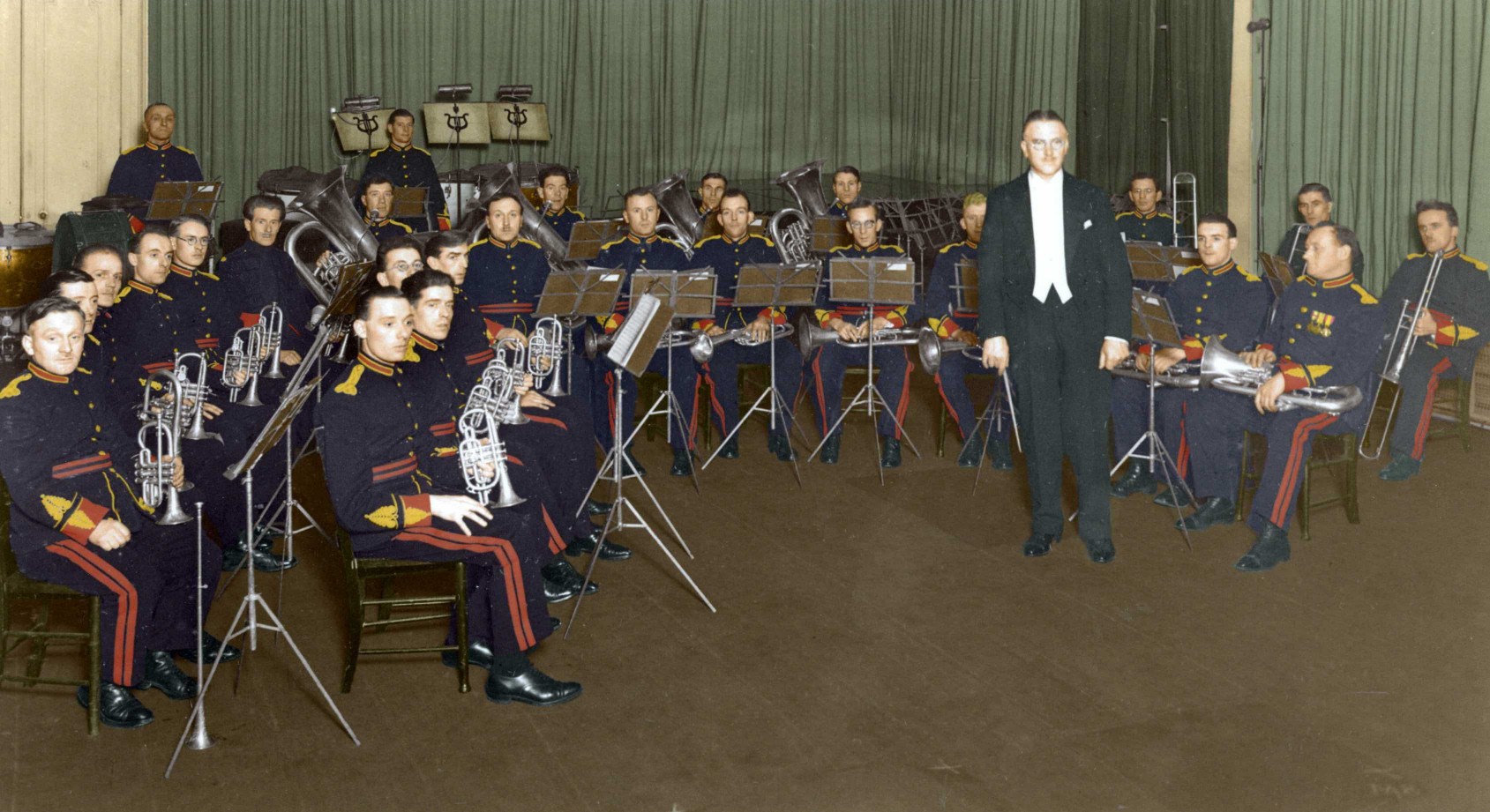
One of the most widely known companies to have a historic association with Erith was Callender's Cables, formerly known as The Callender Bitumen, Telegraph and Waterproof co. Originally the company was primarily concerned with the production of bitumen and waterproof damp course material for the building trade, with cable making little more than a side line. The rapid growth in telecommunications in the late Victorian era led to cables becoming the company's main product, and in 1896 the firm was reorganised as The Callender Cable and Construction co, which was later changed to British Insulated Callenders Cables, or BICC. By 1965 the Erith based factory was the principal manufacturing facility for the world's largest cable group - the production area covered some 65 acres and provided employment for 1,300 local workers. Callenders were one of the main manufacturers of PLUTO (Pipeline Under The Ocean). Callenders also contributed much to the area of culture and the arts; Callenders Cableworks Band, which was started in 1890 as a Salvation Army band. Some members wanted to play a wider variety of music, so the band was relaunched as a temperance promoting popular music band. Callender's employees included at least a hundred instrumentalists who spent their leisure time in four band groups. The Senior Band consisted of 31 picked men: this was the band which broadcast on BBC Radio. There was also the A-band, the B-band and a learner's class of beginners from school age onwards; the A- and B-band members and the learners could all be promoted upwards as their skills developed and vacancies occurred. There was also a degree of "poaching" of skilled instrumentalists from other bands, not necessarily local to the area; It was kept quiet at the time, but in August 1925 when the St Hilda Colliery in South Shields temporarily closed, seven members of the colliery band, which was undoubtedly one of the best in the UK at the time, were all offered positions working at Callenders, even though they were miners, not cabling engineers. It is understood that their "day jobs" were nominal at best - making the tea or doing a bit of sweeping up - they were actually recruited primarily for their musical talents, and the prestige that they would bring to the company. This "poaching" of the best musicians from other brass bands carried on over the next ten years or so - a period when the Callenders Cableworks Band were considered the very best in the country. They became popular around the country and gave many public performances, and had a regular feature on pioneering radio station 2LO during the early days of radio. The Band's first broadcast was from radio station 2LO on 27 February 1925. By 1932 the Band had twice toured all stations of BBC Radio, and they were to broadcast there twice again in April of that year, by which time they had broadcast 72 times on radio. By 16 December of that year, they had broadcast 80 times. They aspired to performing music which was "out of the rut of marches, operatic selections and other pier head pieces." They performed on 5 March 1932 at the Queen's Hall, London. On the afternoon and evening of Sunday 20 March of the same year, they performed at the opening of the new art deco frontage of the Central Bandstand, Herne Bay, Kent. On 18 December 1932 they took part in a special BBC Radio programme in which most of the music had been composed especially for them. Under the name of Callenders Senior Band they recorded Colonel Bogey, Entry of the Gladiators, Le Grenadier, Les Huguenots (parts 1 and 2), Three Dale Dances and Triana on 78 rpm disks. They recorded A Sailor's Life (Descriptive Fantasia), parts 1 and 2, conducted by Tom Morgan, on two Broadcast Twelve disks. Broadcast Twelve Records was a United Kingdom based record label introduced in 1928 to partner the regular "Broadcast" brand records introduced in 1927. These brands replaced the Aco Records label. The manufacturer of the discs were the Vocalion Gramophone Company. "Broadcast" discs were 8-inch (later increased to 9-inch) and "Broadcast Twelve" discs were 10-inch 78rpm gramophone records, but with small labels and a fine groove pitch so they would play as long as regular 10 and 12-inch discs respectively. They ceased production in 1934. The label was a subsidiary of the British branch of Vocalion Records. In brass band competitions over the years they had 25 wins, 11 second places and 3 third places. For some years they took part in the Elthorne Band Contest which started in 1919 at Elthorne Park. The competition had four sections with many entries, and a massed band concert. They won the competition on 20 May 1924 and 3 May 1925, and again on 7 June 1930. The band was disbanded at the start of World War 2, and reformed at the end of the war; though it never regained the prestige it had once held - and in any case brass band music was losing favour with the listening public. The band struggled on until 1961, when it was finally wound up due to a lack of members. Ironically the history of the band is now starting to come to the fore again, and interest in what Callenders did in the early decades of the twentieth century is now starting to grow. 

Bexley Council have finally codified something that I have been writing about for a couple of years. They have unanimously agreed that they support the extension of Crossrail (it will only get called The Elizabeth Line when it actually opens in December 2018) out to Ebbsfleet, and the planned new garden city to be built there. In a very unusual move, both the ruling Conservative councillors and the opposition Labour councillors were in complete agreement. Councillor Daniel Francis, the leader of the Labour opposition group said in an interview that:-"The regeneration of this borough is too fundamental to be a political football. Tonight we've committed to making Bexley better and to work with our local communities to make sure that regeneration works with them, not in spite of them". The Elizabeth line will launch in December 2018 and stretch from Reading to Abbey Wood. The Garden City in Ebbsfleet will feature 15,000 new homes as well as a new city centre. Much of this is also dependent on the troubled theme park development that Paramount recently pulled out from. Doubts exist as to the viability of any major theme park if it no longer has the themes to attract sufficient numbers of the paying public. I get the feeling this issue will continue to develop for some considerable time. You can see a video update on the latest Crossrail construction at the end of the update for this week. 


The winner of the competition to create a public art installation on Erith Pier has now been announced. Art commissioning group The Exchange made the following announcement:- "Artist Julia Snowdin has been chosen by public vote to be the first artist to reimagine the unique location of Erith Pier for the inaugural Pier Commission. Changing Sails will celebrate the ever-changing nature and dynamic history of the pier through the installation of decorated sails that will animate the space with the wind and light of the Thames. The sails will be produced through a series of community workshops that explore the town’s history as pleasure resort and industrial centre, and allow the public to work with the artist to decorate the sails using holes to draw shapes and patterns that will depict Erith’s past and present. The sails will be suspended on the pier to create new spaces for the community to relax and play within. The patterned holes will create light spots on the pier during the day and evening. At night, the sails will be lit with different hues of colour creating new ‘rooms’ in which the community can relax, picnic and unwind. Julia Snowdin uses textiles to create unexpected and interactive spaces for communities to come together to share experiences and craft new stories. She has created work across the country, including for the Herbert Art Gallery in Coventry, the Nuneaton Museum and Art Gallery, and at Art in the Park in Leamington Spa and the Kidderminster Arts Festival. Caroline Field, Regeneration Manager at Orbit, said: “Having worked in partnership with Wates Residential on the regeneration of Larner Road into the award-winning Erith Park, we understand our role in place making and the role our developments can play in regenerating the wider locality and this is why we are sponsoring this fantastic event, celebrating culture and creativity in Erith. We can’t wait to see Julia’s inspired concept transform the Pier.” Paul Nicholls, Managing Director at Wates Residential South, said: “We were really impressed with the standard of entries for this Commission and delighted that we could be involved in it with our partners. I’m now really looking forward to Julia’s designs coming to fruition and bringing the Pier back to life.” London Borough of Bexley’s Cabinet Member for Regeneration and Growth, Cllr Linda Bailey said: “Congratulations to Julia for being the first artist chosen by the public to install work at our fantastic Erith Pier. What is especially exciting are her plans to involve the local community in creating this original piece. Erith has a fantastic past and an exciting future and we hope that this artwork will set the scene for all the great things happening in the town.”The commission is organised by The Exchange and sponsored by Orbit and Wates Residential. The partners invited proposals from practitioners to develop an idea that would transform this new public art space for the period of the Totally Thames Festival. A total of 75 proposals were submitted from all over the world, and with the support of a group of judges, this number was whittled down to four. The judging panel consisted of the project partners, Totally Thames, Port of London Authority, The Decorators (the group responsible for Erith Lighthouse), and local artists Guy Tarrant and Gary Drostle". I am sure that I am not alone in looking forward to seeing this when it is revealed in place on the pier on the 6th September. It is really great to see something innovative and unusual happening locally; I get the feeling that this will be far from the only new and exciting project in the future. 


Do you know the identity of the individual in the photo above? If so, Bexley Police would like to hear from you. He was captured on a car dash cam when he started a "Road Rage" incident in Cedar Road, Slade Green back on June the 22nd. If you know who he is, you can dial 0800 555 111 and speak to Crime Stoppers; alternatively if you would like to pass on the information without getting involved, Email me at hugh.neal@gmail.com and I will inform the Police for you, keeping you completely anonymous. This week's reports as usual from the Bexley Borough Neighbourhood Watch Association:-  Belvedere Ward: From Police SNT Team - PCSO Jamie Worrall. "Over the last week, the team have completed reassurance visits and enquiries in relation to a recent attempted burglary in Coleman Road. We have been carrying out regular patrols of the newly opened Belvedere Beach park and the nearby Albert Road recreation ground as there is usually an upturn in anti - social behaviour by youths around this time of year. These patrols will continue throughout the summer months. A few days ago, after reports of a male begging in Picardy Street, the team stopped and spoke to a male well known to the team. He admitted his involvement and was given strong words of advice by PC Holmes. Lastly, with the help of the NHW office, we have now set up Shop Watch in Nuxley Road". Northumberland Heath Ward:- "There was a Northumberland PSP meeting On Monday 31st July, with the many partners present that have helped to reduce the problems in this ward, all were pleased to report that things have improved although all parties want to be keep on top of the situation.. A "week of action" to tidy up the area which will include litter picking, repainting signage, CCTV cameras made vandal proof, as well as improved street lighting in some areas, it is also hoped to recruit new NW-Coordinators in roads were we have no cover. This will be during the week of 21st August 2017". From Crayford Ward:- "Motor vehicle crime is still the most prevalent crime in Crayford. There have been two theft of motor vehicles, two criminal damage to motor vehicles and a theft from motor vehicle. These have not occurred in any one particular location. Our thanks to our hosts at Crayford Mosque for allowing us to hold our Ward Panel meeting there on Tuesday evening. Our promises will be to continue to reduce motorcycle crime and address traffic issues in CRAYFORD WAY. We have been reliably informed that the Post Office will be returning to Crayford at the end of September and will be based at the Library".

Many will know that I am not a fan of social media; I don't have a FaceBook account or any online presence with any of the other outlets such as Twitter - I simply don't personally feel the need' on top of this I can very tightly control information made public about myself with the Blog - with social media one loses much of this control - something I am personally not prepared to do. I am happy however, that some local people have set up a FaceBook page which acts like a village notice board for the Erith / Northumberland Heath / Barnehurst and surrounding areas. By the look of it, the page was set up to be primarily accessed via a mobile phone or tablet, as many of the images posted on it do not scale properly to a larger screen size; having said that, it is a great local asset that you may well wish to check out. You can find the Erith and North Heath News and Gossip page by clicking here. 

Some major disruptive road works in and around Bexleyheath has now begun. Albion Road has been closed since July the 31st for traffic travelling towards Crayford between the bowling alley to Townley Road. Traffic needing to access the area behind the Premier Inn has to use the bus lane from Townley Roundabout, which is currently suspended. Construction on the two new roundabouts planned on Gravel Hill at the junctions with Albion Road and Broadway and Watling Street is now under way. Bexley Council are currently claiming that the number of road traffic accidents has gone down since the new "Shared Space" road and pavement designs were introduced in 2014 - including the "non - roundabout" at the junction of Albion Road and Bexleyheath Broadway. in an interview with the News Shopper, a council representative said:- "Looking at collisions across the whole of the first phase of the scheme, including both the Albion Road/Broadway junction and the similar junction at the police station, collisions resulting in injury have reduced by 25 per cent.” I find this very hard to believe, and I know I am not alone in this. There have been 21 collisions resulting in injury since the scheme first started three years ago. The severity of collisions has reduced according to the council, with five serious injuries in the three years before the scheme and none since. Much has been written about Bexley Council and their policy of installing "Shared Space" street furniture, and paying contractors to redesign areas including Sidcup High Street and Bexleyheath Broadway to blur the distinction between the road and the pavement; the idea being that bother drivers and pedestrians will proceed more cautiously when they are unsure of what is road and what is actually pavement. The origin of term is generally linked with the work of Dutch traffic engineer Hans Monderman, who pioneered the method in the Dutch province of Friesland. Prior to the adoption of the term, street design projects carried out in ChambĂ©ry, France, by Michel Deronzier from the 1980s used the term "pedestrian priority".found that some of the claims made for shared space schemes were not justified by the evidence—particularly the claims that pedestrians are able to follow desire lines, and that shared space reduces traffic speeds. Their primary research in Ashford, Kent, suggested that in streets with high volumes of traffic, pedestrians are more likely to give way to vehicles than vice versa. Most people, but particularly women and older people, found the shared space intimidating and preferred the previous layout with conventional crossings. A study by space planning academics Hammond and Musselwhite using a case study of Widemarsh Street in Hereford found that if traffic volume was relatively low and speeds of vehicles slow anyway then vulnerable road users found it easier to share the area with vehicles, including those blind or partially sighted and older people with mobility impairments. There are wide-ranging reservations about the practicality of the shared space philosophy. In a 2006 report from the Associated Press, it was commented that traditionalists in town planning departments say the schemes rob the motorists of vital information, and reported that a spokesman for Royal National Institute of Blind People criticised the removal of familiar features such as railings, kerbs, and barriers. Shared space is bitterly opposed by many organisations representing blind, partially sighted and deaf people. Some of their members avoid shared space areas entirely. Shared surfaces, which are generally used in shared space schemes, can cause concern for the blind and partially sighted who cannot visually negotiate their way with other road users, as the lack of separation implicit in these features has also removed their safe space. The UK's Guide Dogs for the Blind Association's "Say No to Shared Streets" campaign has the support of more than thirty other disability organisations. There have been similar concerns raised by other groups representing some of the more vulnerable members of society, including Leonard Cheshire Disability, Action on Hearing Loss, and Mencap, who have noted problems when negotiating a route with motor vehicle users, leading them to challenge its fundamental premise. Lord Holmes' 2015 report Accidents by Design found that sixty-three per cent of respondents reported a negative experience of shared space, and thirty-five per cent said they actively avoided it. Lord Holmes attacked the concept as a recipe for "confusion, chaos and catastrophe". What do you think? Leave a comment below, or alternatively Email me at hugh.neal@gmail.com. 

The end video this week is the latest quarterly update on the progress on The Crossrail Project, which is on schedule to be completed and operational by Christmas of 2018. Give it a watch and see what you think. It is certainly a very impressive feat of engineering. 

Sunday, October 11, 2015

Another nail in the coffin for Brick Lane?


I took the photo above recently - click on it for a larger view; it shows the Erith Riverside Gardens and the River Thames. The Riverside Gardens are the only place in the whole of the London Borough of Bexley where you can easily access the River Thames. It is one of the unique benefits of living in Erith, and a feature that I feel is still somewhat under - utilised. Unfortunately there has been another case reported of someone trying to throw themselves into the river this week; The News Shopper have described how the Gravesend Lifeboat was called to Erith on Thursday afternoon at around 5.20pm after a person was seen attempting to enter the river. Local Police were soon on the scene, and the lifeboat was released to return to normal duties. This once again reinforces the need for a more local lifeboat substation for Erith; the location of which I have suggested several times in the past, and which can just be seen to the right of the photo above. The grey side wall of the former Port of London Authority building can just be seen. It would make an excellent base for a small team of RNLI volunteers, and is currently standing empty and unused right next to Erith Jetty, an idea place for launching a small inshore boat. What do you think? Contact me at hugh.neal@gmail.com.

In a move which is bound to court controversy and some very vocal opposition, Bexley Council has taken the decision to make savings on the amount it spends on electricity for the borough's street lights.  The Council is looking at various options for reducing these costs including part night lighting which would mean switching off some lights from midnight until 5.30am. Following a recent price increase, the energy bill for the 20,000 street lights the Council currently maintains is expected to reach £1 million a year. Following consultation with the emergency services and other key stakeholders the Council has selected a number of streets within the Welling area to be part of a pilot study for part night lighting. The work to convert the streets lights to part night lighting starts week commencing 12 October 2015. If it proves successful then the scheme will be extended across the Borough. The pilot will be left to operate for four to six months. Feedback is very important to the Council and those within the pilot area will be given the opportunity after this period to give us their views on the experience. My feeling is that it will not go well; I think that any cost savings in electricity will be offset by increased costs due to road accidents, burglaries, anti-social behaviour and general crime. The fact that these hidden costs would not come out of the same budget as that for street lighting does not escape me either. Still, I suppose the whole point of the pilot is to find out what works and what does not. I will be keeping an eye on developments with interest.


The photo above (click on it for a larger view) shows the Pipeline Under The Ocean (PLUTO) control room during operations in late 1944. Much of the multiple PLUTO pipe infrastructure was constructed in and around Erith in the middle to late phases of World War II. The technology developed was later put to very good effect and made the United Kingdom one of the world centres for oil and gas engineering, something that is still true to this day. There is a lot of history in the local area relating to this stunning feat of military and civil engineering, and a handful of those involved in the project are still alive now. PLUTO, the WW2 Pipeline Under the Ocean, was designed to supply petrol from storage tanks in southern England to the advancing Allied armies in France in the months following D-Day. A reliable supply of petrol for the advancing Allied forces following the D-Day landings was of the highest priority. Planners knew that the future invasion of Europe would be the largest amphibious landing in history, and without adequate and reliable supplies of petrol any advance would at best slow down and at worst grind to a halt. A loss of momentum could jeopardise the whole operation as German forces would have time to regroup and counter-attack. Conventional tankers and 'ship to shore' pipelines were in danger of cluttering up the beaches, obstructing the movement of men, armaments and materials and, in all circumstances, were subject to the vagaries of the weather and sea conditions and they were easy targets for the Luftwaffe. The idea of a pipeline under the ocean, (the English Channel), was an innovative solution. Oil storage facilities located near the English Channel were vulnerable to attack by the Luftwaffe. To reduce the risk of losses, a network of pipelines was, during early discussions about PLUTO, already under construction. The network was designed to carry fuel from less vulnerable storage and port facilities around Bristol and Liverpool to the English Channel. This network would later be linked to the planned pipeline at Shanklin on the Isle of Wight and Dungeness further to the west. (see map below). The terminals and pumping stations were heavily disguised as bungalows, gravel pits, garages and even an ice cream shop! The Combined Operations Experimental Establishment (COXE) was involved in many diverse top-secret projects including the waterproofing vehicles, the removal of underwater obstacles on landing beaches and the testing of landing craft under a variety of sea and beach conditions. To this formidable list was added the supply of petrol to France using underwater pipelines. All these challenges were borne out of a culture that encouraged bold and imaginative solutions to intractable problems. Such a  culture was encouraged at the highest level when Winston Churchill ordered Roger Keyes, the then Director of Combined Operations, and his successors, to think offensively when many were at the time rightly concerned with the defence of the country. In the early part of 1942 Geoffrey Lloyd MP, who was in charge of the UK's fuel policy, met with Mountbatten, Chief of Combined Operations (CCO) and others to consider the fuel supply issue. There was no 'off the shelf' solution that did not invite the Luftwaffe to attack shore installations or slow pipe-laying and support vessels. Lloyd approached Sir William Fraser CBE, Chairman of the Anglo-Iranian Petroleum Corporation.- They picked up on an idea of Mr Hartley, the Chief Engineer of the Anglo-Iranian Oil Co., to use existing submarine cable technology, minus the core, as the basic building block of a petrol pipeline. Siemens Brothers and Co Ltd., of Woolwich, London, who were experienced in the design and manufacture of such cables, eagerly took up the challenge. Other design work was undertaken by Henlys, Pirelli, Johnson and Phillips, the National Physical Laboratory and the Post Office. It was a complex task, and there were many failures arising from twists, kinks, bursts and collapse due to external water pressure and other powerful forces. One of the major companies involved in the production of the highly specialised pipeline was British Insulated Callender's Cables (BICC) of Erith, but even this was not enough to meet the volume of demand, so American firms - General Electric, Phelps-Dodge, Okonite Callenders and General Cable were drafted in. Of the 710 miles of PLUTO pipeline manufactured in total, 140 miles came from the USA.  The first pipeline to France was laid on 12th August 1944, over the 130 km (70 nautical miles) from Shanklin Chine on the Isle of Wight across the English Channel to Cherbourg. A further three pipelines soon followed. As the fighting moved closer to Germany, seventeen other lines were laid from Dungeness to Ambleteuse in the Pas-de-Calais. The PLUTO Pipelines were linked to pumping stations on the English coast, housed in various inconspicuous buildings including cottages and garages. Though uninhabited, these were intended to cloak the real purpose of the buildings. Pluto Cottage at Dungeness, a pumping station built to look like a small house, is now a Bed and Breakfast. In England, the PLUTO pipelines were supplied by a 1,609 km (1,000 mi) network of pipelines (constructed at night to prevent detection by aerial reconnaissance) to transport fuel from ports including Liverpool and Bristol. In Europe, the pipelines were extended as the troops moved forward and eventually reached as far as the Rhine. In January 1945, 305 tonnes of fuel was pumped to France per day, which increased tenfold to 3,048 tonnes per day in March, and eventually to 4,000 tons (almost 1,000,000 Imperial gallons) per day. In total, over 781 000 m³ of gasoline had been pumped to the Allied forces in Europe by VE day, providing a critical supply of fuel until a more permanent arrangement was made, although the pipeline remained in operation for some time after Along with the Mulberry Harbours that were constructed immediately after D-Day, Operation Pluto is considered one of history's greatest feats of military engineering. The pipelines are also the forerunners of all flexible pipes used in the development of offshore oil fields. Much of the development and construction of this amazing war - winning engineering effort is down to the direct involvement of BICC in Erith, and their highly specialised engineers, something that local residents can be justly proud of. 


You may recall that I wrote extensively about a widespread online scam purporting to “give away” iPhones to competition entrants a while back. The “Funky Clock” scam has become the most widely read individual weekly blog entry in over nine years of publishing the Maggot Sandwich. It helps that for some obscure reason that Google has ranked the entry on the first page of results if you search for “Funky Clock” on the search engine. For some unknown reason, a lot of people are convinced that all and sundry kinds of organisations are giving away iPhones and iPads with gay abandon. I am afraid that this is simply not the case. If you want to see the article for yourself, you can see above an image of a website which purports to be from the CNN website;  the URL is cnn-shopping.com - which is your first clue that something is up. If CNN really did have a legitimate shopping section, would you expect the home page of that section to show one individual article rather than the traditional carousel of recent and 'most popular' stories? (On some browsers, the domain-name part of the URL is the only bit that is shown, which can help to hide this.) Other parts of the page give clues that the scammers are a little out of date. The 'advert' on the right refers to iOS 8 rather than 9, and the offer itself is for the iPhone 6 rather than the 6s or 6s Plus (granted, one could assume that these are being offered at bargain prices precisely because the next generation is about to go on sale, but it doesn't really make sense for Apple to give away year-old phones for the stated purpose of winning 'repeat customers' who will evangelise about its products). Needless to say, none of the 'proof' that that the offer is legit (the testimonials from satisfied customers, the photo of an unboxed iPhone) are anything of the sort. And as a further indication of dodginess, the domain name was only registered last month. If you click on one of the links on the original page (even the sidebar story about an eagle destroying a drone!), you will be taken to a page that asks for your credit card details.  I am not sure what the organisation plans to do with this information, but I strongly advise against giving out details of your financial security to such obvious criminal con artists; whatever the site is, there's no evidence that it's anything to do with CNN. I strongly advise you to steer clear of this type of offer, and if anyone you know forwards you the link, it would be a kindness to give them the same warning. Once again, if it sounds too good to be true, it probably is. In a similar manner, you will often see adverts at the foot of web pages with titles such as “This crazy loophole is something that retailers don’t want you to know about” or “This incredible trick will get you an iPad for next to nothing”. You will see links to stories similar to these around the web, claiming that there is a loophole that retailers don't want you to know about that means you can get an iPad for free. These stories tend to direct readers to a bidding system suggesting that they can bid money for an iPad, and get their hands on the iPad they bid for. For example, a "Megabargains24" story suggests readers use the MadBid auction site - please note that though "Megabargains24" purports to be a bargains news site, in the small print it does admit to being an "Advertorial" site. However, a forum post on MoneySavingExpert suggests that Madbid will take your money: charging you for bid packages. One post complains that the site started bidding on their behalf without their knowledge. There is also an auction site called Swoggi that other 'free iPad' stories will promote. To use that auction site you have to purchase credits to bid in an auction. Research shows that these are fake auctions, and when the bidders don't win the product they are unable to get their money back. These sites are said to use BidRobots, or fake bots, to drive up the prices. All in all these are all scams and not a way to get new technology for free. If you want an iPhone or iPad you will need to save up and buy one just like the rest of us – there is no quick “trick” to a free one – these sites are just traps for the gullible. In a nutshell, nobody, Apple included, gives away iPhones or iPads for free - it is all a con. Pass it on. 

Southeastern trains have just announced changes to their Autumn timetables. In essence the changes mainly involve starting some morning services a few minutes earlier than normal and adding a couple of minutes to overall journey times. The main reason for this is due to the problem of fallen leaves on the line. The North Kent Line is particularly vulnerable to fallen leaves, as much of the line runs in a cutting with tree on both sides of the track. The main reason for this was when the line was built, it was done through areas that already had quite a high concentration of residential housing. The cuttings, and indeed the trees helped to reduce the amount of noise from the passing steam trains. It also kept the impact of the engineering work to a minimum. The down side of this is that during the autumn period any falling leaves are effectively funnelled onto the tracks, where they get crushed by the passing train wheels, mixed with rainwater, and then form a mushy paste which causes a lack of grip for the trains. Delays are caused as drivers must brake early to ensure they stop in time and accelerate more gently than normal to avoid wheel spin. In their defence, Southeastern do have a number of specialist “de – gunging” trains which clean the rails of the crushed mix of dead leaves and rainwater, and spread a sticky film containing fine sand onto the rails to aid grip. Unless all of the trees are removed from the railway cuttings (something that is very unlikely to happen as they provide and aesthetic and environmental shielding) – not to mention looking pleasing.


Following the revelation that classic seventies sit com "Citizen Smith" will most definitely not be returning to our screens, it has been reported that "Some Mothers Do 'Ave 'Em" could be set to return to screens next year. According to a report by The Mirror, stars Michael Crawford and Michele Dotrice have talked about reviving the show, potentially for BBC One's Landmark Sitcom Season. In an interview, the paper asked Dotrice if she planned to work with Crawford again. The response was: "Well, I can't really say, but yes. Possibly next year - but I can't really say anything about it." The BBC confirmed to the paper: "It's one of several shows being considered for BBC One's Landmark Sitcom Season, but nothing is confirmed as yet and none of the original cast has been approached by us." It is not known whether any revival of Some Mothers Do 'Ave 'Em would be for a one-off, multiple specials, or a full series. Many sitcoms have been revived in recent years, with mixed results. To The Manor Born returned for a single Christmas special in 2007; Birds Of A Feather has had three brand new series broadcast by ITV; and following a 2013 Christmas special revival of Open All Hours, a second new series of Still Open All Hours is now filming. Written by Raymond Allen, Some Mothers Do 'Ave 'Em originally ran for 22 episodes over three series from 1973 to 1978, following the hapless, disaster-prone Frank Spencer (Crawford), as he met, eventually married, and had a child with with next-door neighbour Betty (Dotrice), much to her mother's horror. Seemingly unable to complete even the simplest of tasks without bringing chaos, former RAF man Frank was seen ever in search of a job he could keep, and a home set-up he could not destroy.


Erith has been the home to many boxers of note in its history. None more so than Len Harvey. although not Erith born (he originated from Stoke Climsland in Cornwall) he moved to Erith on his retirement to be landlord of the Nordenfeldt Tavern in Fraser Road during the late 1940's. He was one of the best boxers in British history. Len Harvey started out as a flyweight at 12. By the time he was 18 he was ready to fight for the British welterweight title. He was held to a draw though by Harry Mason on 29 April 1926. His next British title shot came 2 years later on 16 May 1929. This time at middleweight against Alex Ireland. Harvey knocked out his opponent in the seventh round to become British champion. He made six defences between 1929 and 1933. He also fought Marcel Thil of France for the world middleweight championship.On 10 April 1933, he defended his title against Jock McAvoy. This ended in defeat for Harvey but two months later he was in the ring again challenging Eddie Phillips and won on points to become British Light Heavyweight champion. On 30 November that year he beat the then unbeaten Jack Petersen to become the British Heavyweight champion. He then went on to beat Canada's Larry Gains to become British Empire champion, but lost both titles in a rematch with Petersen being stopped in the 12th round on cuts. Harvey then went on to fight for the world title on 9 November 1936, but was beaten on points by John Henry Lewis. He then regained the British Heavyweight title by disqualification against old foe Eddie Phillips. In 1938 John Henry Lewis retired after developing eye problems, Harvey was then matched with another old foe, Jock McAvoy for British recognition of the world championship at Harringay Arena. This time he won on points on 10 July 1939. During World War II Harvey joined the Royal Air Force. By this time he was a national sporting idol, and was given an officer rank. During this time he was persuaded to defend his titles against Freddie Mills on 20 June 1942. By this time Harvey was a veteran of over a hundred bouts and was 35 years old. He was knocked out in two rounds, only the second time he was stopped and the first by K.O. He retired after this bout. He had an official record of 133 fights, 111 wins, 9 draws and 13 defeats: he claimed to have had 418 fights,but they probably included booth fights. His four fights with Jock McAvoy were legendary; he won three and lost one. He later died in Erith on 28 November 1976. Such was his legend that he was inducted into the Boxing Hall of Fame in 2008.  Until I was informed of Len Harvey, I was not aware of the prestige in which he was held. A truly great adopted son of the area. If you have any memories of Len Harvey, do get in contact with me in order to share them. 


Readers may recall that back in August 2013 I wrote about my fears that Brick Lane was becoming gentrified, and that the long tradition of the road being home to a multitude of curry houses was coming to an end. In my opinion the rot began back when a restaurant called Sweet and Spicy closed down after operating in Brick Lane continuously since 1969. Of all the curry houses in the lane, Sweet and Spicy was the only one that catered for the Bangladeshi and Pakistani locals – it was manifestly not there to tempt in tourists. I was a regular there for a very long time when I worked for a company based in the East End, and became friends with the owner. The food was nothing whatsoever like British Indian Restaurant style – it was slow cooked curries with simple, natural ingredients, meat on the bone in the traditional manner, and no food colouring, much as you would be served in someone’s home. It was a place of pilgrimage for many food enthusiasts. The dĂ©cor in Sweet and Spicy was basic – old school McDonald's style tables with fixed chairs, lino on the floor and old advertising posters on the walls. The place was clean, the food excellent, portions huge, and the bill very small indeed. In 2013 the place was forced to close after 44 years as the lease came up for renewal, and the price went through the roof. Landlords in Brick Lane realised that the buildings housing Indian restaurants could generate much more cash if they were converted for other uses, such as housing for the hipsters who were moving into the area, following the business model already deployed in areas such as Dalston. That was then; now things have taken a further turn. Two of the multitude of “tourist trap” curry houses in Brick Lane have got themselves into some very hot water with the local authority. The London Evening Standard reported “Brick Lane’s premier curry house faces being shut down after a diner who complained about a hair in the mango chutney was allegedly set upon by six waiters in an “extraordinary” attack. Aladin, an award-winning restaurant which has been visited by Prince Charles, could be stripped of its licence after police recorded a series of “violent incidents”. The Met has applied to Tower Hamlets council saying it has “no confidence whatsoever” in the four brothers who run Aladin and its next-door restaurant Nazrul. Police have investigated more than a dozen incidents over the past two years at the two venues with claims of customers being attacked or abused and of fights with staff at rival restaurants over “touting”.   According to police evidence submitted to the council, the mango chutney incident happened on May 24 at 10pm after a group of diners complained about their £12.95-a-head two-course meal. Licensing officer Pc Alan Cruickshank wrote: “The victim was touted outside the Aladin restaurant and entered with his partner and two friends. They found what looked like a hair in the mango chutney and the staff refused to change it.  “At this, they decided to leave and asked for the bill as they had eaten some papadums. On being told it was £9, they queried this, but paid it. “When he got up to leave he was told to ‘shut up’ at which point he was... assaulted and spilled (sic) from the premises into Brick Lane.  “The assault escalated with 15 to 20 males joining in, punching and kicking him repeatedly. Two more in the party received injuries.” Pc Cruickshank added: “At one point six waiters from Aladin/Nazrul are seen to beat up one man. The level of violence is extraordinary. Passers-by become involved to try and separate the group, but are assaulted themselves.” Other alleged incidents include a woman diner being hit in the face and threatened with a knife over a bill dispute. Sabir Ahmed, who runs the restaurants with his brothers Raju, Suhal and Juhal, said they would be challenging the police application. Mr Ahmed added: “The incidents the police say my staff are involved in happened outside the restaurant and there is no proof any of my staff were involved otherwise someone would have been charged and prosecuted.” It is as near as certain that the two restaurants will have their licences revoked. I have eaten in both in the past, and their cuisine was okay – British Indian Restaurant standard. There has even been some conjecture that they both share a common kitchen located in the basement of the Nazrul building, around the corner from the Aladin. The whole controversy plays right into the hands of the developers and the council members who would like to be rid of the curry houses so that they can redevelop the shop spaces into far more lucrative high – end housing. I feel that the reported violent disturbances highlighted by the Evening Standard will be used as evidence whenever a restaurant licence comes up for renewal – this may well be the final nail in the coffin for Brick Lane, as many people know it. What do you think? Is this a natural progression for the formerly run down East End area, or should the area be preserved? Drop me a line to hugh.neal@gmail.com and let me know your opinion.

If you would rather make a British Indian Restaurant style curry at home, I can highly recommend the YouTube channel "Al's Kitchen" where Al shows you the step by step methods to make a very wide range of authentic restaurant style curries. A vast majority of his recipes are suitable for any person who enjoys high street curry house food. The possible exception is the recipe below, which at the request of many of his YouTube viewers, Al creates an ultra spicy "Hellfire" Chilli chicken curry, which should satisfy even the most ardent chilli - head. See what you think.

Sunday, July 10, 2011

Rico. Oh dear.


A photo taken a couple of years ago of the Cross Keys pub, with a small group of remarkably "fresh faced" drinkers by the door. As I wrote last week, the building was put up for auction last Wednesday by a company called Network Auctions, after its' enforced closure after the landlord was unable to maintain an orderly house. Shortly before the sale was due to begin, the vendors suddenly pulled the pub from the sale. I do not know the circumstances behind the withdrawal, but it does rather sound as if a buyer had stepped in from behind the scenes. I just hope that it is not Tesco, hoping to open a Metro style shop in the building. On reflection I don't think this is very likely, as the giant Erith Morrison's is literally just around the corner. Mystery surrounds the status of the building at present; as soon as new details become available, I will post an update.

I am a civil libertarian; I do however like to see people obey rules. This does not contradict my personal philosophy of “do what you like, just as long as it does not harm others”. Most rules and laws are put in place primarily to prevent harm to others (okay, there are a lot of exceptions to this, and many barmy laws, but the principle is there). What I find difficult to have understand or accept is the ruling that it is illegal to smoke tobacco or drink alcohol on public transport, or at train stations, including the open air parts of the buildings. OK. The law is there, but it is just not enforced. Daily I see people smoking on the platforms of railway stations, and I could not begin to count the number of people drinking strong lager whilst on the bus or train. If you enact a law, you should enforce it. If you cannot or will not enforce the law, it is worthless and should be repealed. As a non smoker, I find cigarette smoke repulsive, and have found the smoking ban to be a boon; having said that, I feel that a balance needs to be made to avoid alienating smokers (who, after all seem to have a well developed sense of civic duty – contributing heavily to the Exchequer, and then being so considerate as to die early and avoid bed blocking in a hospital or nursing home). As for drinking on buses and trains - there is a paradox. It is technically illegal, yet if you travel on a Virgin Pendolino train within the boundaries of Greater London, their hostess trollies sell cans of lager and cider.

Walking through Bexleyheath town centre yesterday, I noticed that the long gestation of the Caribbean Kitchen has finally ended, and the venue has finally opened. I was sceptical that it would ever open – beset as it has with delays and vandalism. It is apparent that the venture is being run on a shoestring. When I sauntered past the place late on Saturday morning, the venue was empty save for a lone woman behind the bar, polishing glasses. The Caribbean Kitchen serves Afro Caribbean dishes based on BBQ chicken, rice and vegetables. Directly opposite their enterprise is a brand new Nando's with a slick, tasteful restaurant serving Afro style grilled chicken, rice and vegetables. Whilst I normally always support independent local businesses, I think that only one of these places will be open in six months – and I don't see the Nando's closing. At 11.30am it was already nearly half full of diners. I don't think the backers of the Caribbean Kitchen have done much in the way of market research. It is a pity, but it is already dead on its' feet.


Erith is undergoing a bit of a siege by con merchants, swindlers and fraudsters. The guy featured in the CCTV photo above knocked on my front door on Thursday evening, posing as a deaf door to door salesman, hawking poor quality art prints. None of the charities who campaign for the deaf condone or support such actions - which are carried out by hearing people masquerading as being deaf. After I slammed the door in his face, I re - opened it as he walked back up the garden path. With his back to me, I whistled - immediately he turned around to look at me. His fraudulent game was up. You can see more about the issue on the Erith Watch website here.

A new small business has opened in Belmont Road, Northumberland Heath. It is an independent specialist sweet shop called Candelicious. Their website is very professionally produced, and although I doubt I will ever be a customer (I don't eat any kind of sweet other than the very occasional sugar free mint) I sincerely wish them well. You can visit their website by clicking here.

Did you know work carried out in Erith was vital to the Allied victory in World War II? PLUTO (Pipeline Under The Ocean) was primarily constructed at Callendar's Cables (later BICC) in Erith. Much of the construction work on the Mulberry Harbours was also carried out on the River Thames between Lower Belvedere and Erith. Few locally are aware of this, even though Mulberry Way was so named because of the proximity of the road to the historic construction site.


The Bexley Times are reporting that FORGE have upped their campaign to preserve Erith Riverside Gardens, and have co-opted local MP Teresa Pearce to support them. As I have previously written, the Riverside Gardens are just about the best part of Erith, and are the only place in the entire London Borough of Bexley where the public can gain access to the River Thames. The whole concept of a developer wishing to build unwanted and unnecessary tower blocks on the site is an anathema to me and pretty much every person I have spoken to on the subject. I think any Councillor or Politician who was seen to back a development on the site of the Gardens would find themselves voted out of office pretty sharpish. I know that Teresa Pearce is very keen to support FORGE and to oppose the architectural vandalism proposed and apparently supported by Bexley Council.

There are rare times when the Sandwich almost writes itself, and this is one of those. You may recall that I recounted a cautionary tale of my time on board the Radio Caroline ship, the M.V Ross Revenge a couple of weeks ago. I recalled the time I had to cover for the then Breakfast DJ Rico, who on one occasion was over half an hour late for his programme due to his inability to get out of bed. You can read the original account here. Yesterday I received a rather unexpected blog comment from the man Rico himself:-

Hugh you knob, you were an anorak, a fan, not a presenter, thats why you got the late slot so less people would hear you. Don't try and big yourself up now, too many people who were there have computers too.
See you around
Rico the pillock 

Bearing in mind the events that I wryly reported happened almost twenty one years ago, I would have expected from Rico a friendly "yes, I was a bit of an arse back then - we all were; we were no more than kids who did not know any better" or something similar. I am positive I was an equal plank in other ways - it is part of growing up. A lot of time has passed, and most of us have learned and grown in the intervening years. We are a lot older and hopefully wiser. Or not, as it turns out in Rico's case. It is as if the matter only happened last week, from the content of his posting. The reply I got from him has been published in the spirit of free speech and open debate. Now you have read his response, I will now conduct an item by item deconstruction of it (Rico - deconstruction means pulling apart in order to critique - I know it is rather a long word for you; it must be difficult having a sense of self worth that is inversely proportional to your intellect - but please bear with me - all will become clear).

1) Hugh you knob, you were an anorak, a fan, not a presenter - True. I was an anorak through and through, as were about 80% of all the people involved in Caroline at the time. Who else would put up with the long hours, strenuous work, rough seas and hardship for the thrill of presenting free radio to the UK and Europe? I understand that you as a "professional" (as in swanning around, not lending a hand with day to day tasks, not taking your turn presenting the money making religious programmes that we all equally hated, but paid for the fuel to keep the generators running, and generally acting as though you were in some way superior). Not a presenter? Were you trained in radio presentation by John Toogood, the most senior producer in BBC radio during the 1980's, and the man responsible for turning Terry Wogan into the most successful radio presenter in British broadcasting history? I was. Did you have formal technical training as a broadcast engineer / audio editor at the BBC? I did. Prior to Caroline had you any experience of international radio? I had a weekly programme syndicated on BFBS in the late 80's. It was transmitted to the UK, Germany, Cyprus, Belize and Hong Kong. Did you? Spinning a few disks in a seedy Benfleet nightclub hardly counts for much now, does it?

2) thats why you got the late slot so less people would hear you. Wrong on multiple accounts; understandably so, as you were not privy to much that was going on behind the scenes, as you were merely a "hired hand". The first time you met me, you assumed I was a "newbie", when in fact I had already been involved with the organisation for a couple of years as part of the operational support team, organising tender runs and such like. My principal reason for being on the ship at that time was that I was tasked with co - ordinating the repainting and refurbishment of the exterior. I along with a small group, including Captain Colin of the Phylgela had secured commercial sponsorship from a large commercial contract painting and decorating company - they donated several thousand pounds worth of marine quality rust remover, primer and two pack paint in a number of colours. You may recall a slightly scruffy, balding chap with a walrus moustache who made several visits to the ship - that was John, the CEO of the company, and a multi millionaire. My primary job was to see this valuable material was put to good use. It was agreed from the outset that I would do a night time show, sleep in the early morning then spend the rest of the long daylight hours getting the ship redecorated. Secondly, you really don't understand anything about R.F propagation on Medium Wave. As a Radio Amateur with an advanced class licence, and an inductee into the RSGB, let me explain: For medium wave, the most obvious factor for good long distance reception is the time of day. The D Layer of the ionosphere almost always absorbs medium wave radio signals during the daylight hours. As a result, nearly all medium wave signals received during daylight hours will arrive by ground wave propagation, rather than by sky waves refracted off of the ionosphere. Ground wave propagation makes reception of signals past a few hundred miles away unusual during the day. At night, however, the ionosphere tends to refract these medium wave signals, making it possible for radio stations to be heard at much greater distances. When conditions are just right, you might hear stations as far away as Australia, America, and Asia. This is why you received letters from listeners in Croydon and Southend, and I received letters from listeners in Damascus, Dortmund and Stockholm. I am still in regular contact with one such listener, all these years later, so I must have made a good impression, for all of your bluster. Granted, you were an excellent breakfast DJ - personally I would not have wanted that slot, as my style of presentation was rather more relaxed and considered, more suited to a late night album format than your up tempo approach.

3) Don't try and big yourself up now, too many people who were there have computers too. True, and some of them read this blog on a regular basis. Let's see what they say shall we? There is a classic rule in the management of any kind of conflict - "don't play to your opponents' strengths". You would do well to learn from that.

Enough already. I am sure that I have bored many with the discourse above, so back to the usual business. The space shuttle Atlantis is currently in space undertaking the 135th and final orbital voyage of the space shuttle fleet. The remaining shuttles are being pensioned off to museums and educational establishments. It is a sad day for space flight. The shuttle design was fundamentally flawed, but nevertheless it was a jaw dropping piece of engineering. It will be a long time before we see anything to surpass it. The video below has been put together by an enthusiast. It features a recent launch of the shuttle Discovery, accompanied by one of my favourite pieces of music "Countdown" by Rush.