Showing posts with label Shared Space. Show all posts

Sunday, August 06, 2017

Callender's Band.


The photos above show Erith Bowls Club in Avenue Road; it is a part of town not known by all, and a very pleasant place to be. The club is well patronised, and hosts many matches with other local clubs. This is somewhat at variance with the usual image of Erith, and I think it illustrates well the real diversity in the local area.

There has been another spate of fraudulent / misleading door to door clothing collection bags delivered in the Erith, Slade Green and Northumberland Heath area over the last couple of weeks; I have previously reported on the activities of door to door clothing collections, many of which purport to be collecting for charities and other good causes, but many of these collections give little if anything to the charities, and some of which are nothing but downright fraudulent. By law, door-to-door textile collection companies must obtain a licence from the local authority they are operating in and register with the environmental watchdog. Despite the threat of legal action, and action actually being taken against them, many of these illegal collectors continue to operate. For example, one was taken to court in 2013 for operating without a licence while another had its licence revoked for unscrupulous practices. A third company came under fire the same year for using the Save the Children logo on its bags, even though it had no links to the charity. The annual value of the worldwide second-hand clothes market is estimated at £2.8 billion. Good-quality textiles sell at around £300 per tonne – down from more than £650 three years ago. Some firms donate just £50 per tonne while others hand over a set amount – meaning it could be far less. This chimes with research which shows that in some cases just five percent of the profits from collections run by commercial companies ends up in the hands of good causes. According to the latest available figures, the UK exported more than £380m, or 351,000 tonnes, worth of discarded fashion overseas in 2015. That works out as seventy percent of all reused clothing going abroad. I understand that both Romania and Bulgaria have chains of commercial shops which sell nothing but good quality used clothing from Marks and Spencer and John Lewis. All of the money raised goes into private pockets, and not to good causes as many of the people who donated the clothes in the first place were led to believe. You are better off donating your unwanted clothes to high street charity shops, where even if they then resell the clothes to a wholesaler, the charity will be getting all of the money - and that usually includes getting the tax refunded by Gift Aid. It might be slightly less convenient than leaving a bag on your doorstep, but at least you know the money raised from the donated clothes is actually going to charity, and not a shyster's pocket.


Local transport enthusiast Dana Wiffen submitted the following report:- "South Eastern Trains held their annual open day on the 15th July at their Slade Green Depot. With activities for children including face painting, bouncy castle, police and fire officers on site with opportunities for children to board both a fire engine and police van. Also present and on display was a red RT-type London Transport Bus and Maidstone & District bus and a wonderfully restored Jaguar Car. Two miniature trains had a short stretch of line set-up for rides, this included the ever popular Swanley New Barn Miniature Railway and the Falconwood Miniature Railway and there were also several displays of model railways. Inside the depot were numerous electric trains some were the very ones used by commuters into London also on display and the public allowed on board was the HS1 395 “Javelin” train as well as several diesel locos. In the vintage section, which was probably the highlight for railway enthusiasts was a freshly painted EMU No:5759 (old slam door train), which has been undergoing restoration at Southall since leaving the East Kent Railway. It is owned by the EPB group who with a few other preservation groups are struggling to ensure that the old slam door trains are not lost forever. For more information on how to help them with electric train preservation go to;- www.epbpg.co.uk Getting the award for the cleanest train inside and out was Hastings Diesel 1001, which also allowed on board access and was polished and cleaned to a very high standard. This train used to run from Charing Cross Station Platform 6 into Hastings and is unique in that it is slightly narrower that standard trains of that time, and was built to cope with narrower tunnels on that route. This train now runs a charter service to various destinations around the UK from Hastings-for more information go to: www.hastingsdiesel.co.uk It was a very interesting day two disappointments were that there were no standard  gauge train rides being offered and the second was that a number of the commuter trains on display had not been cleaned, otherwise it was a great day for all that visited". Many thanks for a fascinating account Dana - I have to admit that I did not know the Slade Green Depot open day event was planned, otherwise I might well have gone along myself.


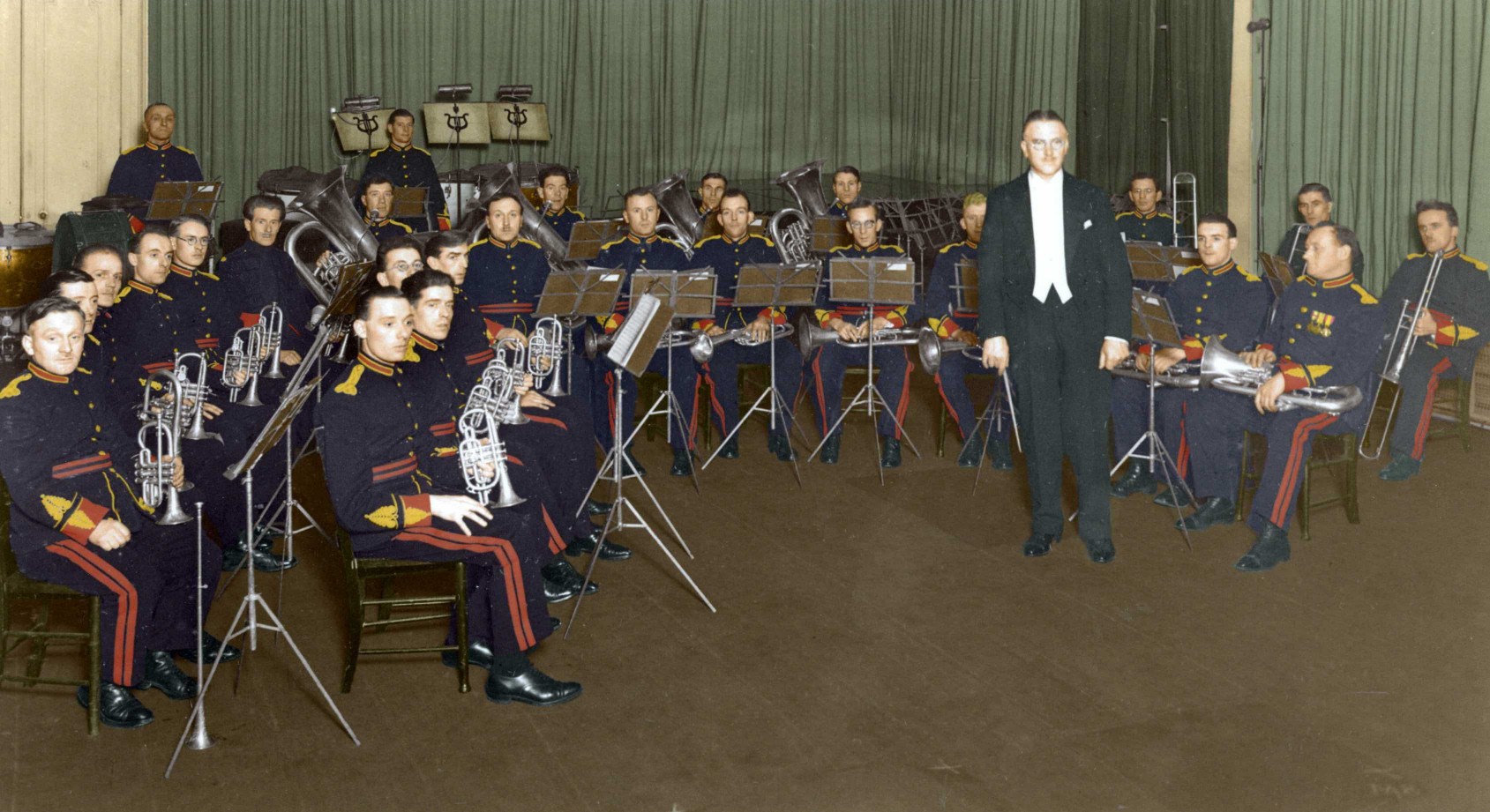
One of the most widely known companies to have a historic association with Erith was Callender's Cables, formerly known as The Callender Bitumen, Telegraph and Waterproof co. Originally the company was primarily concerned with the production of bitumen and waterproof damp course material for the building trade, with cable making little more than a side line. The rapid growth in telecommunications in the late Victorian era led to cables becoming the company's main product, and in 1896 the firm was reorganised as The Callender Cable and Construction co, which was later changed to British Insulated Callenders Cables, or BICC. By 1965 the Erith based factory was the principal manufacturing facility for the world's largest cable group - the production area covered some 65 acres and provided employment for 1,300 local workers. Callenders were one of the main manufacturers of PLUTO (Pipeline Under The Ocean). Callenders also contributed much to the area of culture and the arts; Callenders Cableworks Band, which was started in 1890 as a Salvation Army band. Some members wanted to play a wider variety of music, so the band was relaunched as a temperance promoting popular music band. Callender's employees included at least a hundred instrumentalists who spent their leisure time in four band groups. The Senior Band consisted of 31 picked men: this was the band which broadcast on BBC Radio. There was also the A-band, the B-band and a learner's class of beginners from school age onwards; the A- and B-band members and the learners could all be promoted upwards as their skills developed and vacancies occurred. There was also a degree of "poaching" of skilled instrumentalists from other bands, not necessarily local to the area; It was kept quiet at the time, but in August 1925 when the St Hilda Colliery in South Shields temporarily closed, seven members of the colliery band, which was undoubtedly one of the best in the UK at the time, were all offered positions working at Callenders, even though they were miners, not cabling engineers. It is understood that their "day jobs" were nominal at best - making the tea or doing a bit of sweeping up - they were actually recruited primarily for their musical talents, and the prestige that they would bring to the company. This "poaching" of the best musicians from other brass bands carried on over the next ten years or so - a period when the Callenders Cableworks Band were considered the very best in the country. They became popular around the country and gave many public performances, and had a regular feature on pioneering radio station 2LO during the early days of radio. The Band's first broadcast was from radio station 2LO on 27 February 1925. By 1932 the Band had twice toured all stations of BBC Radio, and they were to broadcast there twice again in April of that year, by which time they had broadcast 72 times on radio. By 16 December of that year, they had broadcast 80 times. They aspired to performing music which was "out of the rut of marches, operatic selections and other pier head pieces." They performed on 5 March 1932 at the Queen's Hall, London. On the afternoon and evening of Sunday 20 March of the same year, they performed at the opening of the new art deco frontage of the Central Bandstand, Herne Bay, Kent. On 18 December 1932 they took part in a special BBC Radio programme in which most of the music had been composed especially for them. Under the name of Callenders Senior Band they recorded Colonel Bogey, Entry of the Gladiators, Le Grenadier, Les Huguenots (parts 1 and 2), Three Dale Dances and Triana on 78 rpm disks. They recorded A Sailor's Life (Descriptive Fantasia), parts 1 and 2, conducted by Tom Morgan, on two Broadcast Twelve disks. Broadcast Twelve Records was a United Kingdom based record label introduced in 1928 to partner the regular "Broadcast" brand records introduced in 1927. These brands replaced the Aco Records label. The manufacturer of the discs were the Vocalion Gramophone Company. "Broadcast" discs were 8-inch (later increased to 9-inch) and "Broadcast Twelve" discs were 10-inch 78rpm gramophone records, but with small labels and a fine groove pitch so they would play as long as regular 10 and 12-inch discs respectively. They ceased production in 1934. The label was a subsidiary of the British branch of Vocalion Records. In brass band competitions over the years they had 25 wins, 11 second places and 3 third places. For some years they took part in the Elthorne Band Contest which started in 1919 at Elthorne Park. The competition had four sections with many entries, and a massed band concert. They won the competition on 20 May 1924 and 3 May 1925, and again on 7 June 1930. The band was disbanded at the start of World War 2, and reformed at the end of the war; though it never regained the prestige it had once held - and in any case brass band music was losing favour with the listening public. The band struggled on until 1961, when it was finally wound up due to a lack of members. Ironically the history of the band is now starting to come to the fore again, and interest in what Callenders did in the early decades of the twentieth century is now starting to grow. 

Bexley Council have finally codified something that I have been writing about for a couple of years. They have unanimously agreed that they support the extension of Crossrail (it will only get called The Elizabeth Line when it actually opens in December 2018) out to Ebbsfleet, and the planned new garden city to be built there. In a very unusual move, both the ruling Conservative councillors and the opposition Labour councillors were in complete agreement. Councillor Daniel Francis, the leader of the Labour opposition group said in an interview that:-"The regeneration of this borough is too fundamental to be a political football. Tonight we've committed to making Bexley better and to work with our local communities to make sure that regeneration works with them, not in spite of them". The Elizabeth line will launch in December 2018 and stretch from Reading to Abbey Wood. The Garden City in Ebbsfleet will feature 15,000 new homes as well as a new city centre. Much of this is also dependent on the troubled theme park development that Paramount recently pulled out from. Doubts exist as to the viability of any major theme park if it no longer has the themes to attract sufficient numbers of the paying public. I get the feeling this issue will continue to develop for some considerable time. You can see a video update on the latest Crossrail construction at the end of the update for this week. 


The winner of the competition to create a public art installation on Erith Pier has now been announced. Art commissioning group The Exchange made the following announcement:- "Artist Julia Snowdin has been chosen by public vote to be the first artist to reimagine the unique location of Erith Pier for the inaugural Pier Commission. Changing Sails will celebrate the ever-changing nature and dynamic history of the pier through the installation of decorated sails that will animate the space with the wind and light of the Thames. The sails will be produced through a series of community workshops that explore the town’s history as pleasure resort and industrial centre, and allow the public to work with the artist to decorate the sails using holes to draw shapes and patterns that will depict Erith’s past and present. The sails will be suspended on the pier to create new spaces for the community to relax and play within. The patterned holes will create light spots on the pier during the day and evening. At night, the sails will be lit with different hues of colour creating new ‘rooms’ in which the community can relax, picnic and unwind. Julia Snowdin uses textiles to create unexpected and interactive spaces for communities to come together to share experiences and craft new stories. She has created work across the country, including for the Herbert Art Gallery in Coventry, the Nuneaton Museum and Art Gallery, and at Art in the Park in Leamington Spa and the Kidderminster Arts Festival. Caroline Field, Regeneration Manager at Orbit, said: “Having worked in partnership with Wates Residential on the regeneration of Larner Road into the award-winning Erith Park, we understand our role in place making and the role our developments can play in regenerating the wider locality and this is why we are sponsoring this fantastic event, celebrating culture and creativity in Erith. We can’t wait to see Julia’s inspired concept transform the Pier.” Paul Nicholls, Managing Director at Wates Residential South, said: “We were really impressed with the standard of entries for this Commission and delighted that we could be involved in it with our partners. I’m now really looking forward to Julia’s designs coming to fruition and bringing the Pier back to life.” London Borough of Bexley’s Cabinet Member for Regeneration and Growth, Cllr Linda Bailey said: “Congratulations to Julia for being the first artist chosen by the public to install work at our fantastic Erith Pier. What is especially exciting are her plans to involve the local community in creating this original piece. Erith has a fantastic past and an exciting future and we hope that this artwork will set the scene for all the great things happening in the town.”The commission is organised by The Exchange and sponsored by Orbit and Wates Residential. The partners invited proposals from practitioners to develop an idea that would transform this new public art space for the period of the Totally Thames Festival. A total of 75 proposals were submitted from all over the world, and with the support of a group of judges, this number was whittled down to four. The judging panel consisted of the project partners, Totally Thames, Port of London Authority, The Decorators (the group responsible for Erith Lighthouse), and local artists Guy Tarrant and Gary Drostle". I am sure that I am not alone in looking forward to seeing this when it is revealed in place on the pier on the 6th September. It is really great to see something innovative and unusual happening locally; I get the feeling that this will be far from the only new and exciting project in the future. 


Do you know the identity of the individual in the photo above? If so, Bexley Police would like to hear from you. He was captured on a car dash cam when he started a "Road Rage" incident in Cedar Road, Slade Green back on June the 22nd. If you know who he is, you can dial 0800 555 111 and speak to Crime Stoppers; alternatively if you would like to pass on the information without getting involved, Email me at hugh.neal@gmail.com and I will inform the Police for you, keeping you completely anonymous. This week's reports as usual from the Bexley Borough Neighbourhood Watch Association:-  Belvedere Ward: From Police SNT Team - PCSO Jamie Worrall. "Over the last week, the team have completed reassurance visits and enquiries in relation to a recent attempted burglary in Coleman Road. We have been carrying out regular patrols of the newly opened Belvedere Beach park and the nearby Albert Road recreation ground as there is usually an upturn in anti - social behaviour by youths around this time of year. These patrols will continue throughout the summer months. A few days ago, after reports of a male begging in Picardy Street, the team stopped and spoke to a male well known to the team. He admitted his involvement and was given strong words of advice by PC Holmes. Lastly, with the help of the NHW office, we have now set up Shop Watch in Nuxley Road". Northumberland Heath Ward:- "There was a Northumberland PSP meeting On Monday 31st July, with the many partners present that have helped to reduce the problems in this ward, all were pleased to report that things have improved although all parties want to be keep on top of the situation.. A "week of action" to tidy up the area which will include litter picking, repainting signage, CCTV cameras made vandal proof, as well as improved street lighting in some areas, it is also hoped to recruit new NW-Coordinators in roads were we have no cover. This will be during the week of 21st August 2017". From Crayford Ward:- "Motor vehicle crime is still the most prevalent crime in Crayford. There have been two theft of motor vehicles, two criminal damage to motor vehicles and a theft from motor vehicle. These have not occurred in any one particular location. Our thanks to our hosts at Crayford Mosque for allowing us to hold our Ward Panel meeting there on Tuesday evening. Our promises will be to continue to reduce motorcycle crime and address traffic issues in CRAYFORD WAY. We have been reliably informed that the Post Office will be returning to Crayford at the end of September and will be based at the Library".

Many will know that I am not a fan of social media; I don't have a FaceBook account or any online presence with any of the other outlets such as Twitter - I simply don't personally feel the need' on top of this I can very tightly control information made public about myself with the Blog - with social media one loses much of this control - something I am personally not prepared to do. I am happy however, that some local people have set up a FaceBook page which acts like a village notice board for the Erith / Northumberland Heath / Barnehurst and surrounding areas. By the look of it, the page was set up to be primarily accessed via a mobile phone or tablet, as many of the images posted on it do not scale properly to a larger screen size; having said that, it is a great local asset that you may well wish to check out. You can find the Erith and North Heath News and Gossip page by clicking here. 

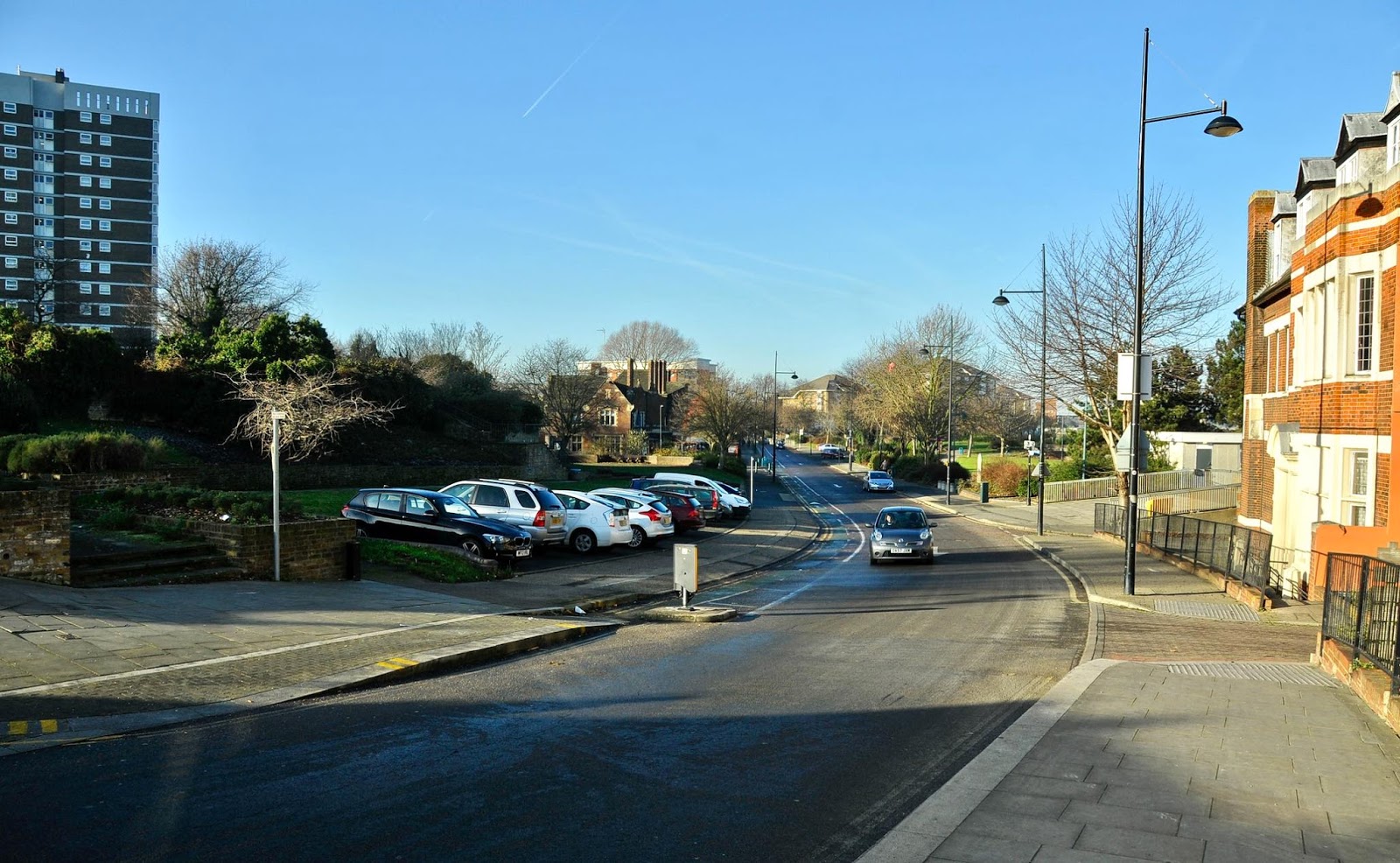
Some major disruptive road works in and around Bexleyheath has now begun. Albion Road has been closed since July the 31st for traffic travelling towards Crayford between the bowling alley to Townley Road. Traffic needing to access the area behind the Premier Inn has to use the bus lane from Townley Roundabout, which is currently suspended. Construction on the two new roundabouts planned on Gravel Hill at the junctions with Albion Road and Broadway and Watling Street is now under way. Bexley Council are currently claiming that the number of road traffic accidents has gone down since the new "Shared Space" road and pavement designs were introduced in 2014 - including the "non - roundabout" at the junction of Albion Road and Bexleyheath Broadway. in an interview with the News Shopper, a council representative said:- "Looking at collisions across the whole of the first phase of the scheme, including both the Albion Road/Broadway junction and the similar junction at the police station, collisions resulting in injury have reduced by 25 per cent.” I find this very hard to believe, and I know I am not alone in this. There have been 21 collisions resulting in injury since the scheme first started three years ago. The severity of collisions has reduced according to the council, with five serious injuries in the three years before the scheme and none since. Much has been written about Bexley Council and their policy of installing "Shared Space" street furniture, and paying contractors to redesign areas including Sidcup High Street and Bexleyheath Broadway to blur the distinction between the road and the pavement; the idea being that bother drivers and pedestrians will proceed more cautiously when they are unsure of what is road and what is actually pavement. The origin of term is generally linked with the work of Dutch traffic engineer Hans Monderman, who pioneered the method in the Dutch province of Friesland. Prior to the adoption of the term, street design projects carried out in ChambĂ©ry, France, by Michel Deronzier from the 1980s used the term "pedestrian priority".found that some of the claims made for shared space schemes were not justified by the evidence—particularly the claims that pedestrians are able to follow desire lines, and that shared space reduces traffic speeds. Their primary research in Ashford, Kent, suggested that in streets with high volumes of traffic, pedestrians are more likely to give way to vehicles than vice versa. Most people, but particularly women and older people, found the shared space intimidating and preferred the previous layout with conventional crossings. A study by space planning academics Hammond and Musselwhite using a case study of Widemarsh Street in Hereford found that if traffic volume was relatively low and speeds of vehicles slow anyway then vulnerable road users found it easier to share the area with vehicles, including those blind or partially sighted and older people with mobility impairments. There are wide-ranging reservations about the practicality of the shared space philosophy. In a 2006 report from the Associated Press, it was commented that traditionalists in town planning departments say the schemes rob the motorists of vital information, and reported that a spokesman for Royal National Institute of Blind People criticised the removal of familiar features such as railings, kerbs, and barriers. Shared space is bitterly opposed by many organisations representing blind, partially sighted and deaf people. Some of their members avoid shared space areas entirely. Shared surfaces, which are generally used in shared space schemes, can cause concern for the blind and partially sighted who cannot visually negotiate their way with other road users, as the lack of separation implicit in these features has also removed their safe space. The UK's Guide Dogs for the Blind Association's "Say No to Shared Streets" campaign has the support of more than thirty other disability organisations. There have been similar concerns raised by other groups representing some of the more vulnerable members of society, including Leonard Cheshire Disability, Action on Hearing Loss, and Mencap, who have noted problems when negotiating a route with motor vehicle users, leading them to challenge its fundamental premise. Lord Holmes' 2015 report Accidents by Design found that sixty-three per cent of respondents reported a negative experience of shared space, and thirty-five per cent said they actively avoided it. Lord Holmes attacked the concept as a recipe for "confusion, chaos and catastrophe". What do you think? Leave a comment below, or alternatively Email me at hugh.neal@gmail.com. 

The end video this week is the latest quarterly update on the progress on The Crossrail Project, which is on schedule to be completed and operational by Christmas of 2018. Give it a watch and see what you think. It is certainly a very impressive feat of engineering. 

Sunday, January 15, 2017

Shared Space.


The photo above (click on it for a larger view) shows Erith High Street looking West; to the right you can see the former Police station - now (badly) converted into flats, and in the centre distance you can see The Running Horses, the only pub in Erith town centre, and sadly a shadow of its' former self. What used to be a top notch carvery and pub is pretty much a "zombie business" being kept alive by a handful of regulars. The place needs a fortune spent on it, and the only way that I can see it regaining any of its previous success is if it gets taken over by a pub company or large brewing chain. Widespread local rumours suggest that it is a toss - up between The Running Horses and the old Carnegie gifted library building in Walnut Tree Road as to which gets taken over and converted into a Wetherspoon's - if the library gets it, The Running Horses would be dead inside of six weeks in my opinion, as all trade to it would cease. Sad, for what once used to be an excellent pub that has been slowly going downhill over the last twenty years or so. 

On Wednesday afternoon, I was walking through the underpass that leads to Bexley College and Erith Station, lurking in the middle of the underpass were a group of half a dozen or so teenagers wearing hoodies and jogging bottoms; they were trying (unsuccessfully) to look intimidating whilst listening to music being played on a mobile phone. As I approached the group, I fully expected them to be listening to gangsta rap or something of that ilk. I struggled to keep a straight face when I neared them and realised that they were listening to "Mamma Mia" by Abba! They obviously were not familiar with the group (none of the teeneagers would have been born when Abba were active) and they all seemed to think that Abba were very cool. What goes around comes around. 

Notorious convicted criminal, ultra-right wing neo Nazi Joshua Bonehill has managed to get himself into the press yet again, despite being banged up in Wandsworth jail for multiple offences, the most recent of which involved the racially motivated harassment of Labour MP Luciana Berger. In addition to his original sentence of three years and four months for inciting racial hatred, he got another two years added to this for his abuse of Luciana Berger. If this was not enough, he has now sent a letter to his local newspapers – Somerset Live, the Western Gazette, in which he states that he doesn't accept the outcome of the trial and gave a catalogue of excuses while also claiming victory. In a rant, he wrote:- "With regard to the jury itself, I am told by multiple sources that several members were in fact secret service agents working for the government and the establishment I have worked to expose. And part this was a massive victory- this due to the failure of Luciana Berger to explain what actually offended her. When young Garron Helm was arrested and sent to prison for sending this woman a tweet, I promised to bring Berger to count and expose her true nature. At the end of this trial I feel that I have delivered on that promise and for that reason alone I call victory." He also gave a host of other excuses and directed more abuse towards the government and establishment including:- It was an "abortion" of justice / He was very proud of the articles he wrote / The verdict of the "Orwellian courtroom" has no impact on him / Free speech does not exist in England anymore / It was a "trial-by-Dalek" / He was subject to North Korea-style persecution / What is happening in England is "systematic rape" / White people in London are becoming extinct". He rants on for several more paragraphs, but I don’t think I will give him any more of a platform to broadcast his hateful and deluded views. I know that fellow local Bloggers, Richard of the Thamesmead Grump, and Malcolm of Bexley is Bonkers also share my opinion of Joshua Bonehill; to be honest I would not cover the deluded and hateful waste of space had he not sent me a threatening and abusive Email some time ago, which you can read in full by clicking here. The man is in entirely the right place for him – prison; I hope he stays there for a very long time to come.

Much has been written about Bexley Council and their policy of installing "Shared Space" street furniture, and paying contractors to redesign areas including Sidcup High Street and Bexleyheath Broadway to blur the distinction between the road and the pavement; the idea being that bother drivers and pedestrians will proceed more cautiously when they are unsure of what is road and what is actually pavement. The origin of term is generally linked with the work of Dutch traffic engineer Hans Monderman, who pioneered the method in the Dutch province of Friesland. Prior to the adoption of the term, street design projects carried out in ChambĂ©ry, France, by Michel Deronzier from the 1980s used the term "pedestrian priority".found that some of the claims made for shared space schemes were not justified by the evidence—particularly the claims that pedestrians are able to follow desire lines, and that shared space reduces traffic speeds. Their primary research in Ashford, Kent, suggested that in streets with high volumes of traffic, pedestrians are more likely to give way to vehicles than vice versa. Most people, but particularly women and older people, found the shared space intimidating and preferred the previous layout with conventional crossings. A study by space planning academics Hammond and Musselwhite using a case study of Widemarsh Street in Hereford found that if traffic volume was relatively low and speeds of vehicles slow anyway then vulnerable road users found it easier to share the area with vehicles, including those blind or partially sighted and older people with mobility impairments. There are wide-ranging reservations about the practicality of the shared space philosophy. In a 2006 report from the Associated Press, it was commented that traditionalists in town planning departments say the schemes rob the motorists of vital information, and reported that a spokesman for Royal National Institute of Blind People criticised the removal of familiar features such as railings, kerbs, and barriers. Shared space is bitterly opposed by many organisations representing blind, partially sighted and deaf people. Some of their members avoid shared space areas entirely. Shared surfaces, which are generally used in shared space schemes, can cause concern for the blind and partially sighted who cannot visually negotiate their way with other road users, as the lack of separation implicit in these features has also removed their safe space. The UK's Guide Dogs for the Blind Associations "Say No to Shared Streets" campaign has the support of more than thirty other disability organisations. There have been similar concerns raised by other groups representing some of the more vulnerable members of society, including Leonard Cheshire Disability, the Royal National Institute for Deaf People, and Mencap, who have noted problems when negotiating a route with motor vehicle users, leading them to challenge its fundamental premise. Lord Holmes' 2015 report Accidents by Design found that sixty-three per cent of respondents reported a negative experience of shared space, and thirty-five per cent said they actively avoided it. Lord Holmes attacked the concept as a recipe for "confusion, chaos and catastrophe". The short video below explains why blind and partially sighted people find shared spaces to be difficult and often intimidating. One of the biggest criticisms is that previously highly coloured and textured paving denoting road crossings and bus stops have been toned down to aesthetically blend in with the new look surroundings. This is contrary to the whole idea of high visibility paving for the sight impaired.


In response to the first episode of the latest Sherlock series, The Six Thatchers, Guardian TV critic Ralph Jones recently wrote an opinion piece titled "Sherlock is slowly and perversely morphing into Bond. This cannot stand". The elaborate fight scene between Sherlock Holmes and the assassin known only as Ayjay was cited as an example of Holmes’ undesirable transmogrification into an “action figure”. Now Sherlock writer/actor/co-creator Mark Gatiss has followed in Sir Arthur Conan Doyle’s footsteps by replying to a critic in verse, playfully underlining the fact that the Sherlock Holmes canon includes numerous action scenes. If you have read the original Sherlock Holmes books and short stories, you will know that Mr. Holmes was more that a little handy when it comes to fisticuffs, and he was an acknowledged expert in the martial art of Bartitsiu. Having researched this method of unarmed combat, it seems to me that many more people would benefit what some experts call the very first mixed martial art. If you have seen the two Guy Ritchie directed Sherlock Holmes movies starring Robert Downey Junior, the hand to hand fighting technique employed by Holmes to great effect was Bartitsu. The martial art was specifically designed for use by a gentleman whilst wearing a three piece suit, overcoat and hat, and whilst possibly using a walking cane or umbrella – all of which could be deployed to devastating effect when required. Bartitsu was invented in 1898, when Edward William Barton-Wright, a British engineer who had spent the previous three years living in the Empire of Japan, returned to England and announced the formation of a "New Art of Self Defence". This art, he claimed, combined the best elements of a range of fighting styles into a unified whole, which he had named Bartitsu. Barton-Wright had previously also studied "boxing, wrestling, fencing, savate and the use of the stiletto under recognised masters", reportedly testing his skills by "engaging toughs (street fighters) until (he) was satisfied in their application." He defined Bartitsu as meaning "self-defence in all its forms"; the word was a combination of his own surname and of "Jujitsu". Barton -Wright summarised the essential principles of Bartitsu as: "1) To disturb the equilibrium of your assailant. 2) To surprise him before he has time to regain his balance and use his strength. 3) If necessary, to subject the joints of any parts of his body, whether neck, shoulder, elbow, wrist, back, knee, ankle, etc. to strains that they are anatomically and mechanically unable to resist". Bartitsu was popular in the early 20th century, but fell from favour for no apparent reason, and the unfortunate Mr. Barton – Wright died a pauper in 1951 at the ripe old age of 90. Bartitsu might have been completely forgotten if not for a cryptic reference by Sir Arthur Conan - Doyle in one of his Sherlock Holmes mystery stories. In 1901 Conan Doyle had revived Holmes for a further story, The Adventure of the Empty House, in which Holmes explained his victory over Professor Moriarty in their struggle at the Reichenbach Falls by the use of "baritsu, or the Japanese system of wrestling, which has more than once been very useful to me". It may well be that Conan – Doyle changed the name slightly to avoid accusations of copyright theft; in any case confusion was spread as to the correct name, and this did not help Bartitsu from declining in proponents. Until around ten years ago, the martial art was almost completely dead. Recently however, several societies and websites dedicated to this gentleman’s system for self-defence have been established. In October 2006, the Bartitsu Society was launched, which includes information on the history, theory and practice of Barton-Wright's martial art, as well as current events relating to the Bartitsu revival. The recent Sherlock Holmes movies, and the Bartitsu moves used by Colin Firth’s character in “Kingsmen – the Secret Service” have brought the martial art back into the public awareness.


And now an article from regular Maggot Sandwich reader, and occasional contributor Dana Whiffen, who is also a local transport enthusiast. Dana writes:- "In March 2017, Victoria Coach Station will be celebrating its 85th birthday with a three-day Coach Festival from 10th to 12th March. Featuring vehicles from every decade since the grand opening on 10th March 1932, the Festival will showcase coaches, artefacts and presentations on the history of coach travel in Britain. There will be stalls from current operators, as well as a number of competitions raising money for Transport for London’s chosen charity: The Transport Benevolent Fund. The most modern coaches will also be on display and available for inspection and boarding, alongside preserved vehicles dating from the late 1920s to the 1990s. The coach station, originally conceived, constructed and operated by a consortium of coach operators coming together under the banner of London Coastal Coaches Ltd, is now owned and operated by Transport for London.  Transport for London (TfL) are keen to celebrate the history of the coach station and also to demonstrate the continuing development of the facilities within the coach station to meet the needs of the much larger and complex vehicles now using VCS and the people who travel within them. The imposing 1930s’ Art Deco building on the corner of Buckingham Palace Road and Elizabeth Street is still at the heart of the operation providing the main passenger entrance with areas containing public facilities for enquiries and booking, seated waiting areas and a range of cafes, shops and snack bars. This building and the canopy behind covering a significant part of the coach departure area are Grade 2 listed by Historic England.  The Thames Valley and Great Western Omnibus Trust (TVGWOT) are assisting TfL in organising the event by encouraging the owners of preserved coaches to bring their vehicles to this iconic and nostalgic setting to celebrate its 85th Anniversary. Whether your coach was originally operated by one of the principal express coach companies or possibly ‘on-hire’ to one of these companies at peak holiday weekends,  please download and complete an entry form available from www.tvagwot.org.uk . Forms may be submitted to (TVGWOT) by post or email to the addresses given on the form. Vehicles on display will be parked in Lanes 1-4 which are at the eastern end of the coach departure area and nearest to the main passenger entrance and facilities. The display area will be cordoned off from the operational area to allow free circulation of the public around the preserved coaches".


Local MP Teresa Pearce has been campaigning to try and keep open the Post Office at Abbey Wood, which is currently yet another to be threatened with closure.  The Abbey Wood Road branch is one of 37 Crown offices earmarked for closure or franchising across the country, with a total of 300 staff and 127 financial specialists facing redundancy. According to recent reports, 62 Post Office branches were closed and franchised last year, and the Communication Workers Union said the latest round of job cuts would bring more “misery” to workers and the customers. This seems to be just the latest in a series of sell – off and closures of public amenities, the most recent of which to be announced was the National Westminster Bank in Northumberland Heath. We are losing local resources and little seems to be done to stop the rot. There have been arguments that with services moving online, there is less need for a face to face service; to an extent with banks I can understand this – but not agree with it, but people will always need post offices, even if it is to return something unsuitable that has been bought from EBay or Amazon. I don’t think that the same arguments can be used, and I also wonder just where this will end?

The law of unintended consequences has seemingly come into force yet again; I have been talking to a couple of (anonymous) contacts I have in retail management. It would seem that the ban on giving away free plastic carrier bags at supermarkets has been successful in reducing the number of disposable bags shifted by the stores, but it has had an effect that has at the time of writing proved to be far more economically damaging. What has happened is that criminals are now able to walk around supermarkets with large reusable shopping bags on their arms, and can easily shoplift items into the anonymous bags. For shop security staff, someone carrying a large shopping bag around the store used to be a significant indicator that they could well be a shoplifter, and the security staff would consequently pay them more attention. Now that virtually all shoppers carry their own bags round the store, the criminals can far more easily blend in with the innocent shoppers. I have been told that the increased levels of stock loss have completely wiped out the lowered costs of supplying single use shopping bags in many high - street stores, but the management do not want to highlight the issue for fear of being thought of as "anti environment".  On top of this, the loss levels of wire shopping baskets has markedly increased; major supermarkets have already ordered thousands of extra wire baskets, as more of them go missing as shoppers turn to theft rather than pay for plastic bags, and the figures would seem to back this up - but once again the industry is incredibly reticent about discussing the phenomenon, as they fear it will affect corporate images. Over the course of a year, one major store in Wales had almost five hundred wire shopping baskets stolen when it began charging 5p for plastic bags - resulting in a four-figure loss from just one site. Although research predicts it will cost shoppers just £6.50 a year, history shows that some shoppers will resort to theft to get around the new law. What retailers do not want to be seen doing is restricting the use of wire baskets in the way most already do with the more valuable shopping trolleys. Whilst many have debated fitting security tags to shopping baskets in the way trolleys have had for the best part of twenty years, the cost / benefit balance is far less compelling, and they are worried about discouraging shoppers in what is already a cut - throat market place. What do you think? Drop me a comment below, or Email me at hugh.neal@gmail.com.

Every town has what some would call "local colour" - one or more individuals who regularly appear in and around the town and make themselves noticeable for one or more reasons. Erith has had such a person for many years, and scruffy and unkempt chap of indeterminate age who normally can be seen sitting either on one of the benches outside the Post Office in Bexley Road, or alternatively on a bench outside of the Aglory African cash and carry store in Erith High Street. In either location he can usually be seen swigging from a can of Special Brew or White Cider, and later in the day he sometimes shouts at the pigeons, the passing traffic, or indeed something he has seen which nobody else can. Sadly this vulnerable individual has been reported missing, and at the time of writing he has not been seen since Tuesday last week. The person's name is Mark White, and according to a report in the News Shopper, he was last seen in Park Crescent last Tuesday afternoon. Although he looks to be in his mid to late 70's, he is in fact only 54 years old. As can be surmised, Mark White has serious mental health issues, as well as problems with his general health, and is known to sleep rough in various locations in Erith. You can read the original report, complete with a photo of him here. Concerns grow for his welfare; the current icy weather is most definitely not conducive to the outside life, and combined with his alcohol dependency problems, there are concerns that he may have passed out somewhere and then suffered from hypothermia. I have seen him asleep on a bench in the gardens at the junction of Saltford Road and Erith High Street on many occasions. Such a location, on the banks of the River Thames is bitterly cold, with the icy wind coming straight off the river. Police have asked that if anyone knows the location of Mark White, they should contact them immediately. *UPDATE* - Just as the Maggot Sandwich was going to press, an announcement has been released that Mark White has been found safe and well, despite the poor weather conditions. Hopefully he will now get some care and will be taken off the streets; maybe this scare will mean he gets the treatment and attention that he has been missing for so long - it is just possible that this is a positive outcome, after all.


The photo above shows the long established Belvedere Tandoori Indian restaurant in Nuxley Road, Upper Belvedere (there is no such place as Nuxley Village - it is a fictional invention of estate agents who don't live in the area). As you can see in the photograph, in addition to the menu there are several other notices in the windows. These are effectively the restaurant's suicide note. They announce that the restaurant no longer serves alcohol (and from reports I have heard, also does not allow "bring your own" either). In a predominantly non Muslim area this is a sure fire way to kill off a restaurant - most especially when there is a larger and more attractive rival less than two hundred metres away in the form of the rather good, very large (and serving alcohol) Spice Master restaurant, just ready to hoover up customers. I have heard rumours that the owner is trying to sell the place, but surrendering the drinks licence makes the place a lot less attractive to a potential buyer. If you know any more, please let me know. Leave a comment below, or Email me at hugh.neal@gmail.com.

The local area seems to be targeted by a number of companies offering credit cards to people on low incomes and with poor credit histories. I have had a series of envelopes posted through my front door, which I generally remove any personal details, then take round to be recycled. This time I decided to read through the documentation just to see what was on offer. Personally I don’t own a credit card, as I have little or no need for one. If I cannot afford something immediately, I save up until I can. I am not a believer in personal debt – I have my (miniscule) mortgage, but that is it. When I read the small print of the credit card application leaflet from a company called Vanquis Bank, I was appalled. You may recall that not long ago I wrote that being on a low income is very expensive. Lenders charge far higher interest rates to people they feel are a bad credit risk; conversely this means that the borrower is actually more likely to default due to the crippling interest charges. The Vanquis Bank credit card has a base interest rate of 39.9 to 59.9 percent, depending on the financial situation of the applicant. The card offers a very low initial credit limit, from £150 to £1,000, though the bank does state that if card repayments meet certain criteria, the credit limit can be raised every four months to a maximum level of £4,000. Compared to this, Barclaycard, MBNA, Sainsbury Nectar and Leeds Building Society all offer a credit card that charges a fixed 18.9 percent interest rate and far superior terms and conditions. Vanquis Bank is an operating arm of the Provident Financial Group, a financial services company with an income in excess of £1 billion a year, and Vanquis is designed to siphon as much of that cash from low income earners as possible. It may be legal, but in my view it is not moral. Once again the poor get financially hammered for being poor. I feel fortunate that I have a healthy income and don’t need to worry as the end of the month approaches, but I am acutely aware that many people are not nearly so fortunate.

I would imagine that you, like me were unaware that a large multinational company with a Royal Warrant from the Queen was based locally.  Quite by accident I came across details of Versapak, who describe themselves thus:- "The Versapak Group is a UK based company with subsidiaries in Europe and a distribution network worldwide. Specialising in the manufacture of tamper evident security containers, the Group operates through six main brands:  Versapak International - tamper evident reusable pouches and bags, ballot boxes, medical bags, cash security bags and document and mail carriers, which are secured using a unique security seal locking mechanism.  All International Customers should visit www.versapakinternational.com. Versapak Europe GmbH - Supplies all Versapak products in Germany. Versapak Romania - Our main manufacturing base, wholly owned by The Versapak Group. Supplies all Versapak products in Romania. Versapak Doping Control - Tamper evident security containers for the secure transport of urine and blood samples for anti-doping within sport. Versapak Manufacturing - We can make any bag, for any purpose, to meet a customers' exact requirements. Bond Mailroom - tamper evident reusable pouches and bags featuring the unique T-shaped security seal, and mailroom equipment such as mail trolleys, mail sorting units and sack holders".  Versapak have their international headquarters in 4 Veridion Way, Erith - which is actually in Abbey Wood, just off Yarnton Way, in one of those quirks of location naming I have moaned about in the past. You can see a short explanatory video regarding the company below.